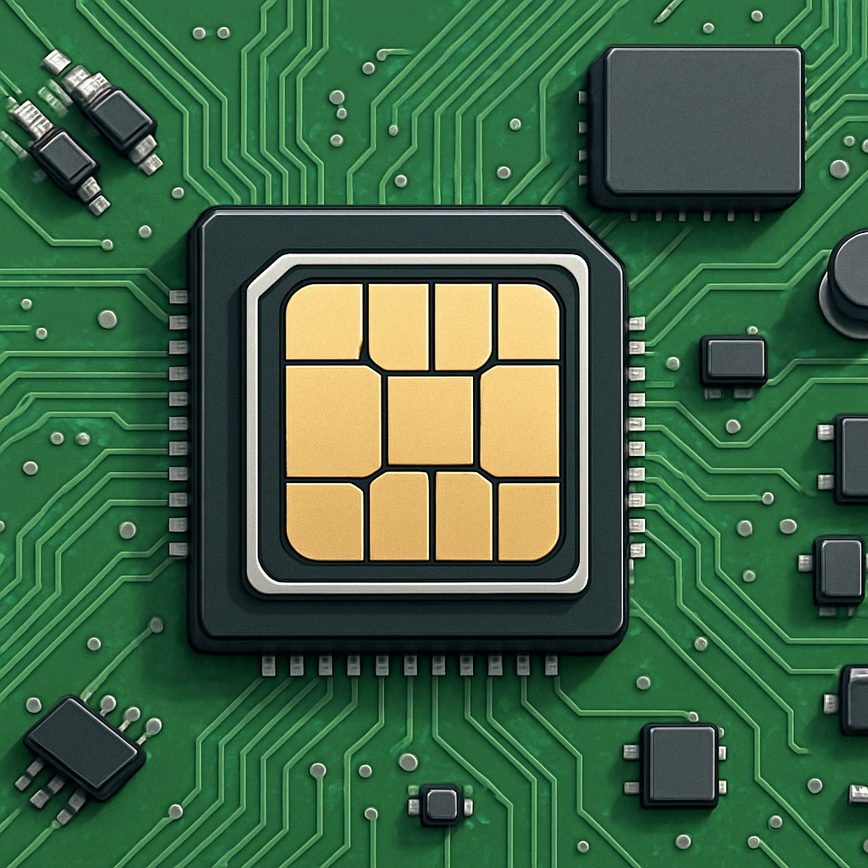
Understanding embedded SIM architecture
01/04/2026
Another advantage of the embedded SIM lies in its durability and design. Because it is soldered directly onto the device’s motherboard, it is less susceptible to damage from dust, moisture, or mechanical mishandling, unlike traditional SIM cards which can be lost or damaged easily. Additionally, the eSIM allows manufacturers to design slimmer and more compact devices by eliminating the SIM card slot.
In terms of security, both the traditional SIM and eSIM provide robust encryption for network authentication. However, the eSIM’s remote update capability enhances security by allowing carriers to deploy updates and patches quickly without user intervention. Overall, the eSIM vs SIM debate highlights a shift toward more integrated, flexible, and user-friendly mobile connectivity solutions.
Key Components of Embedded SIM Architecture
Embedded SIM (eSIM) technology integrates several crucial hardware and software components that work together to provide seamless connectivity and enhanced device functionality. Understanding these eSIM components is essential to grasp the full scope of SIM architecture elements within modern telecommunications.
At the hardware level, the core component of eSIM architecture is the embedded Universal Integrated Circuit Card (eUICC). Unlike traditional SIM cards, the eUICC is a soldered chip embedded directly into the device’s motherboard, making it a permanent fixture. This hardware element is designed to be more durable and secure than removable SIM cards, ensuring reliable service even in compact or rugged devices. The eUICC includes secure cryptographic modules that store subscriber identity data and manage communication with mobile networks, providing the foundation for SIM technology security and authentication.
Another important hardware aspect is the antenna and radio module, which work in conjunction with the eUICC to establish cellular connectivity. While these are not part of the SIM itself, they are closely integrated within the overall SIM architecture to facilitate signal transmission and reception, enabling devices to connect to various network operators seamlessly.
On the software side, the eSIM architecture relies heavily on a complex software stack that manages provisioning, management, and subscription switching. This includes the remote SIM provisioning (RSP) platform, which allows mobile network operators to securely send SIM profiles over-the-air (OTA) to the embedded SIM. Such profiles contain the subscriber credentials, enabling the device to connect to the chosen network without the need for physical SIM card swaps.
The profile management software within the device ensures secure storage and activation of these profiles, supporting multiple carrier profiles simultaneously. This capability is a key differentiator of eSIM technology, offering flexibility and convenience for users who need to switch networks or maintain multiple subscriptions.
In addition, SIM technology relies on standardized interfaces and secure elements software that guarantee interoperability across different devices and network operators globally. Security protocols embedded in the SIM software prevent unauthorized access and tampering, preserving the integrity and confidentiality of user data.
Together, these hardware and software elements form the backbone of embedded SIM architecture, enabling it to deliver advanced connectivity solutions and transform how devices connect to mobile networks. Understanding these components clarifies how eSIM technology supports the evolving demands of modern telecommunications.
Embedded Universal Integrated Circuit Card (eUICC)
The Embedded Universal Integrated Circuit Card, commonly known as eUICC, plays a fundamental role in the architecture of embedded SIM (eSIM) technology. Unlike traditional SIM cards, the eUICC is a secure embedded SIM chip built directly into the device hardware, eliminating the need for a physical SIM card slot. This embedded SIM hardware allows for remote provisioning and management of multiple mobile network profiles on a single chip.
Technically, the eUICC is a programmable integrated circuit that supports secure generation, storage, and execution of SIM profiles. Its architecture is designed to meet stringent security standards, protecting user data and ensuring integrity in mobile network authentication processes. The eUICC can accommodate numerous operator profiles, enabling users to switch or add mobile carriers without changing the physical hardware.
In addition, the embedded SIM chip’s structure includes a secure element that is tamper-resistant and is equipped to handle cryptographic keys, which are essential for authenticating with network providers. This technical characteristic ensures that the eUICC can facilitate over-the-air (OTA) updates, making it highly versatile and future-proof in terms of network compatibility and user convenience.
Overall, the eUICC is central to the flexibility and efficiency of eSIM technology, serving as the core SIM hardware that integrates connectivity within modern devices seamlessly and securely.
Profile Management and Remote Provisioning
Profile management and remote provisioning are fundamental components of the embedded SIM (eSIM) architecture, enabling seamless and flexible control over SIM profiles without the need for physical swaps. Through remote provisioning, users can download, activate, and manage multiple SIM profiles on their devices via wireless communication. This capability eliminates the constraints of traditional SIM cards, facilitating instant connectivity with various carriers worldwide.
The process starts with a subscription request to a mobile network operator, which then sends the necessary SIM profiles encoded in a secure format. These SIM profiles are managed centrally on a remote server called the Subscription Manager (SM), which ensures secure transmission and storage. When a profile is provisioned, the device’s eSIM software accesses the Subscription Manager to retrieve and install the specific SIM profile needed.
eSIM software plays a crucial role in profile management by providing a user interface and background services to handle profile downloads, activations, and deletions. This software can securely authenticate with carriers, manage profile states, and support multiple profiles simultaneously, allowing users to switch between them effortlessly. Remote provisioning streamlines the experience, enabling activation of cellular plans digitally without visiting a store or waiting for a physical SIM delivery.
Overall, the combination of remote provisioning and advanced eSIM software empowers users with unparalleled flexibility and control over their cellular connectivity while maintaining robust security and compliance with mobile network standards.
Benefits and Challenges of Embedded SIM Architecture
Embedded SIM (eSIM) architecture is transforming mobile connectivity by offering numerous advantages to both consumers and device manufacturers. One of the primary eSIM benefits is the convenience it brings to users. Unlike traditional SIM cards, eSIMs are embedded directly into the device’s hardware, eliminating the need for physical card swapping. This seamless integration supports remote provisioning, allowing users to switch carriers or plans instantly without visiting a store or waiting for a physical SIM to be shipped. Such flexibility is particularly valuable for frequent travelers and those who require multiple mobile plans.
Moreover, eSIM technology contributes to improved device design and durability. Manufacturers can create slimmer, more compact devices by removing the SIM card slot, thus saving space for additional features or larger batteries. This can also enhance the waterproof and dustproof qualities of smartphones and other mobile devices, making them more resilient under various conditions. Additionally, the embedded nature of eSIMs offers a higher level of security since it’s less prone to physical tampering or loss compared to traditional SIM cards.
Despite these clear advantages, embedded SIM technology faces several challenges that affect widespread adoption. One significant embedded SIM challenge is the lack of universal standards and inconsistent support among carriers globally. Although many leading mobile operators have begun adopting eSIM-compatible services, others are slower due to infrastructure limitations or strategic business reasons. This fragmented ecosystem can create confusion and limit user options, hindering the full potential of eSIM benefits.
Another challenge concerns user awareness and ease of use. While tech-savvy consumers might quickly embrace eSIM adoption, many users remain unfamiliar with how eSIMs work or how to activate them. The process requires a shift in mindset away from physical SIM cards to digital profiles, which can initially appear complex or intimidating. Additionally, service providers need to invest in customer education and streamlined activation processes to enhance adoption rates.
In summary, embedded SIM architecture offers transformative benefits for mobile connectivity through enhanced convenience, security, and device design. However, the journey to widespread eSIM adoption must overcome challenges related to carrier support variability, ecosystem fragmentation, and consumer education. Addressing these hurdles will be essential for unlocking the full promise of embedded SIM technology in the rapidly evolving mobile communication landscape.
Advantages of Embedded SIMs
Embedded SIMs, or eSIMs, offer a range of advantages that are transforming the mobile device landscape. One of the most significant benefits is enhanced security. Unlike traditional SIM cards, eSIMs are soldered directly into the device, making them much harder to remove or tamper with, which helps protect user data and prevents SIM-related fraud.
Another key advantage is flexibility. eSIMs allow users to switch carriers more easily without needing to physically change SIM cards. This flexibility is particularly valuable for frequent travelers and those who want to take advantage of different carrier plans quickly and efficiently. This seamless carrier switching is a major step forward compared to the constraints of traditional SIM cards.
In terms of device design, eSIMs save precious space inside the hardware. By eliminating the physical SIM card slot, manufacturers can design slimmer, more compact devices or use the extra space for larger batteries or additional features. This space-saving aspect of eSIM technology is a driving force behind the sleek designs of modern smartphones, wearables, and IoT devices.
In summary, the eSIM advantages include improved security, increased flexibility for carrier switching, and more efficient device design. These benefits collectively contribute to a better user experience and innovation in mobile technology.
Limitations and Industry Adoption Challenges
Despite the growing interest in embedded SIM (eSIM) technology, several limitations and adoption barriers continue to hinder its widespread implementation. From a technical perspective, eSIM integration requires updates to device hardware and software, which can be costly and complex for manufacturers. Compatibility issues between different eSIM standards and mobile network operators also create interoperability challenges that slow down adoption.
Regulatory challenges further complicate the growth of eSIM usage. Different countries have varying regulations regarding remote SIM provisioning, data security, and user privacy, which can delay approvals and create fragmentation in the market. Ensuring compliance with these diverse regulatory frameworks demands significant resources from companies looking to deploy eSIM solutions globally.
Finally, industry challenges such as consumer awareness and carrier adoption play a critical role. Many consumers remain unfamiliar with eSIM benefits and how to activate them, leading to hesitation in transitioning from physical SIM cards. Similarly, some carriers resist adopting eSIM technology due to concerns over control and potential impacts on traditional SIM-based revenue streams. Overcoming these adoption barriers will require coordinated efforts among device makers, network operators, and regulators to foster a more uniform and supportive ecosystem.

From a SIM comparison perspective, the traditional SIM requires manual swapping when changing carriers or plans. This can be inconvenient and risks physical damage or loss of the SIM card. The eSIM, however, enables remote provisioning and management, allowing users to switch carriers digitally without needing to handle a physical card. This flexibility is particularly beneficial for travelers or those who frequently change mobile plans.
Another advantage of the embedded SIM lies in its durability and design. Because it is soldered directly onto the device’s motherboard, it is less susceptible to damage from dust, moisture, or mechanical mishandling, unlike traditional SIM cards which can be lost or damaged easily. Additionally, the eSIM allows manufacturers to design slimmer and more compact devices by eliminating the SIM card slot.
In terms of security, both the traditional SIM and eSIM provide robust encryption for network authentication. However, the eSIM’s remote update capability enhances security by allowing carriers to deploy updates and patches quickly without user intervention. Overall, the eSIM vs SIM debate highlights a shift toward more integrated, flexible, and user-friendly mobile connectivity solutions.
Key Components of Embedded SIM Architecture
Embedded SIM (eSIM) technology integrates several crucial hardware and software components that work together to provide seamless connectivity and enhanced device functionality. Understanding these eSIM components is essential to grasp the full scope of SIM architecture elements within modern telecommunications.
At the hardware level, the core component of eSIM architecture is the embedded Universal Integrated Circuit Card (eUICC). Unlike traditional SIM cards, the eUICC is a soldered chip embedded directly into the device’s motherboard, making it a permanent fixture. This hardware element is designed to be more durable and secure than removable SIM cards, ensuring reliable service even in compact or rugged devices. The eUICC includes secure cryptographic modules that store subscriber identity data and manage communication with mobile networks, providing the foundation for SIM technology security and authentication.
Another important hardware aspect is the antenna and radio module, which work in conjunction with the eUICC to establish cellular connectivity. While these are not part of the SIM itself, they are closely integrated within the overall SIM architecture to facilitate signal transmission and reception, enabling devices to connect to various network operators seamlessly.
On the software side, the eSIM architecture relies heavily on a complex software stack that manages provisioning, management, and subscription switching. This includes the remote SIM provisioning (RSP) platform, which allows mobile network operators to securely send SIM profiles over-the-air (OTA) to the embedded SIM. Such profiles contain the subscriber credentials, enabling the device to connect to the chosen network without the need for physical SIM card swaps.
The profile management software within the device ensures secure storage and activation of these profiles, supporting multiple carrier profiles simultaneously. This capability is a key differentiator of eSIM technology, offering flexibility and convenience for users who need to switch networks or maintain multiple subscriptions.
In addition, SIM technology relies on standardized interfaces and secure elements software that guarantee interoperability across different devices and network operators globally. Security protocols embedded in the SIM software prevent unauthorized access and tampering, preserving the integrity and confidentiality of user data.
Together, these hardware and software elements form the backbone of embedded SIM architecture, enabling it to deliver advanced connectivity solutions and transform how devices connect to mobile networks. Understanding these components clarifies how eSIM technology supports the evolving demands of modern telecommunications.
Embedded Universal Integrated Circuit Card (eUICC)
The Embedded Universal Integrated Circuit Card, commonly known as eUICC, plays a fundamental role in the architecture of embedded SIM (eSIM) technology. Unlike traditional SIM cards, the eUICC is a secure embedded SIM chip built directly into the device hardware, eliminating the need for a physical SIM card slot. This embedded SIM hardware allows for remote provisioning and management of multiple mobile network profiles on a single chip.
Technically, the eUICC is a programmable integrated circuit that supports secure generation, storage, and execution of SIM profiles. Its architecture is designed to meet stringent security standards, protecting user data and ensuring integrity in mobile network authentication processes. The eUICC can accommodate numerous operator profiles, enabling users to switch or add mobile carriers without changing the physical hardware.
In addition, the embedded SIM chip’s structure includes a secure element that is tamper-resistant and is equipped to handle cryptographic keys, which are essential for authenticating with network providers. This technical characteristic ensures that the eUICC can facilitate over-the-air (OTA) updates, making it highly versatile and future-proof in terms of network compatibility and user convenience.
Overall, the eUICC is central to the flexibility and efficiency of eSIM technology, serving as the core SIM hardware that integrates connectivity within modern devices seamlessly and securely.
Profile Management and Remote Provisioning
Profile management and remote provisioning are fundamental components of the embedded SIM (eSIM) architecture, enabling seamless and flexible control over SIM profiles without the need for physical swaps. Through remote provisioning, users can download, activate, and manage multiple SIM profiles on their devices via wireless communication. This capability eliminates the constraints of traditional SIM cards, facilitating instant connectivity with various carriers worldwide.
The process starts with a subscription request to a mobile network operator, which then sends the necessary SIM profiles encoded in a secure format. These SIM profiles are managed centrally on a remote server called the Subscription Manager (SM), which ensures secure transmission and storage. When a profile is provisioned, the device’s eSIM software accesses the Subscription Manager to retrieve and install the specific SIM profile needed.
eSIM software plays a crucial role in profile management by providing a user interface and background services to handle profile downloads, activations, and deletions. This software can securely authenticate with carriers, manage profile states, and support multiple profiles simultaneously, allowing users to switch between them effortlessly. Remote provisioning streamlines the experience, enabling activation of cellular plans digitally without visiting a store or waiting for a physical SIM delivery.
Overall, the combination of remote provisioning and advanced eSIM software empowers users with unparalleled flexibility and control over their cellular connectivity while maintaining robust security and compliance with mobile network standards.
Benefits and Challenges of Embedded SIM Architecture
Embedded SIM (eSIM) architecture is transforming mobile connectivity by offering numerous advantages to both consumers and device manufacturers. One of the primary eSIM benefits is the convenience it brings to users. Unlike traditional SIM cards, eSIMs are embedded directly into the device’s hardware, eliminating the need for physical card swapping. This seamless integration supports remote provisioning, allowing users to switch carriers or plans instantly without visiting a store or waiting for a physical SIM to be shipped. Such flexibility is particularly valuable for frequent travelers and those who require multiple mobile plans.
Moreover, eSIM technology contributes to improved device design and durability. Manufacturers can create slimmer, more compact devices by removing the SIM card slot, thus saving space for additional features or larger batteries. This can also enhance the waterproof and dustproof qualities of smartphones and other mobile devices, making them more resilient under various conditions. Additionally, the embedded nature of eSIMs offers a higher level of security since it’s less prone to physical tampering or loss compared to traditional SIM cards.
Despite these clear advantages, embedded SIM technology faces several challenges that affect widespread adoption. One significant embedded SIM challenge is the lack of universal standards and inconsistent support among carriers globally. Although many leading mobile operators have begun adopting eSIM-compatible services, others are slower due to infrastructure limitations or strategic business reasons. This fragmented ecosystem can create confusion and limit user options, hindering the full potential of eSIM benefits.
Another challenge concerns user awareness and ease of use. While tech-savvy consumers might quickly embrace eSIM adoption, many users remain unfamiliar with how eSIMs work or how to activate them. The process requires a shift in mindset away from physical SIM cards to digital profiles, which can initially appear complex or intimidating. Additionally, service providers need to invest in customer education and streamlined activation processes to enhance adoption rates.
In summary, embedded SIM architecture offers transformative benefits for mobile connectivity through enhanced convenience, security, and device design. However, the journey to widespread eSIM adoption must overcome challenges related to carrier support variability, ecosystem fragmentation, and consumer education. Addressing these hurdles will be essential for unlocking the full promise of embedded SIM technology in the rapidly evolving mobile communication landscape.
Advantages of Embedded SIMs
Embedded SIMs, or eSIMs, offer a range of advantages that are transforming the mobile device landscape. One of the most significant benefits is enhanced security. Unlike traditional SIM cards, eSIMs are soldered directly into the device, making them much harder to remove or tamper with, which helps protect user data and prevents SIM-related fraud.
Another key advantage is flexibility. eSIMs allow users to switch carriers more easily without needing to physically change SIM cards. This flexibility is particularly valuable for frequent travelers and those who want to take advantage of different carrier plans quickly and efficiently. This seamless carrier switching is a major step forward compared to the constraints of traditional SIM cards.
In terms of device design, eSIMs save precious space inside the hardware. By eliminating the physical SIM card slot, manufacturers can design slimmer, more compact devices or use the extra space for larger batteries or additional features. This space-saving aspect of eSIM technology is a driving force behind the sleek designs of modern smartphones, wearables, and IoT devices.
In summary, the eSIM advantages include improved security, increased flexibility for carrier switching, and more efficient device design. These benefits collectively contribute to a better user experience and innovation in mobile technology.
Limitations and Industry Adoption Challenges
Despite the growing interest in embedded SIM (eSIM) technology, several limitations and adoption barriers continue to hinder its widespread implementation. From a technical perspective, eSIM integration requires updates to device hardware and software, which can be costly and complex for manufacturers. Compatibility issues between different eSIM standards and mobile network operators also create interoperability challenges that slow down adoption.
Regulatory challenges further complicate the growth of eSIM usage. Different countries have varying regulations regarding remote SIM provisioning, data security, and user privacy, which can delay approvals and create fragmentation in the market. Ensuring compliance with these diverse regulatory frameworks demands significant resources from companies looking to deploy eSIM solutions globally.
Finally, industry challenges such as consumer awareness and carrier adoption play a critical role. Many consumers remain unfamiliar with eSIM benefits and how to activate them, leading to hesitation in transitioning from physical SIM cards. Similarly, some carriers resist adopting eSIM technology due to concerns over control and potential impacts on traditional SIM-based revenue streams. Overcoming these adoption barriers will require coordinated efforts among device makers, network operators, and regulators to foster a more uniform and supportive ecosystem.
From a SIM comparison perspective, the traditional SIM requires manual swapping when changing carriers or plans. This can be inconvenient and risks physical damage or loss of the SIM card. The eSIM, however, enables remote provisioning and management, allowing users to switch carriers digitally without needing to handle a physical card. This flexibility is particularly beneficial for travelers or those who frequently change mobile plans.
Another advantage of the embedded SIM lies in its durability and design. Because it is soldered directly onto the device’s motherboard, it is less susceptible to damage from dust, moisture, or mechanical mishandling, unlike traditional SIM cards which can be lost or damaged easily. Additionally, the eSIM allows manufacturers to design slimmer and more compact devices by eliminating the SIM card slot.
In terms of security, both the traditional SIM and eSIM provide robust encryption for network authentication. However, the eSIM’s remote update capability enhances security by allowing carriers to deploy updates and patches quickly without user intervention. Overall, the eSIM vs SIM debate highlights a shift toward more integrated, flexible, and user-friendly mobile connectivity solutions.
Key Components of Embedded SIM Architecture
Embedded SIM (eSIM) technology integrates several crucial hardware and software components that work together to provide seamless connectivity and enhanced device functionality. Understanding these eSIM components is essential to grasp the full scope of SIM architecture elements within modern telecommunications.
At the hardware level, the core component of eSIM architecture is the embedded Universal Integrated Circuit Card (eUICC). Unlike traditional SIM cards, the eUICC is a soldered chip embedded directly into the device’s motherboard, making it a permanent fixture. This hardware element is designed to be more durable and secure than removable SIM cards, ensuring reliable service even in compact or rugged devices. The eUICC includes secure cryptographic modules that store subscriber identity data and manage communication with mobile networks, providing the foundation for SIM technology security and authentication.
Another important hardware aspect is the antenna and radio module, which work in conjunction with the eUICC to establish cellular connectivity. While these are not part of the SIM itself, they are closely integrated within the overall SIM architecture to facilitate signal transmission and reception, enabling devices to connect to various network operators seamlessly.
On the software side, the eSIM architecture relies heavily on a complex software stack that manages provisioning, management, and subscription switching. This includes the remote SIM provisioning (RSP) platform, which allows mobile network operators to securely send SIM profiles over-the-air (OTA) to the embedded SIM. Such profiles contain the subscriber credentials, enabling the device to connect to the chosen network without the need for physical SIM card swaps.
The profile management software within the device ensures secure storage and activation of these profiles, supporting multiple carrier profiles simultaneously. This capability is a key differentiator of eSIM technology, offering flexibility and convenience for users who need to switch networks or maintain multiple subscriptions.
In addition, SIM technology relies on standardized interfaces and secure elements software that guarantee interoperability across different devices and network operators globally. Security protocols embedded in the SIM software prevent unauthorized access and tampering, preserving the integrity and confidentiality of user data.
Together, these hardware and software elements form the backbone of embedded SIM architecture, enabling it to deliver advanced connectivity solutions and transform how devices connect to mobile networks. Understanding these components clarifies how eSIM technology supports the evolving demands of modern telecommunications.
Embedded Universal Integrated Circuit Card (eUICC)
The Embedded Universal Integrated Circuit Card, commonly known as eUICC, plays a fundamental role in the architecture of embedded SIM (eSIM) technology. Unlike traditional SIM cards, the eUICC is a secure embedded SIM chip built directly into the device hardware, eliminating the need for a physical SIM card slot. This embedded SIM hardware allows for remote provisioning and management of multiple mobile network profiles on a single chip.
Technically, the eUICC is a programmable integrated circuit that supports secure generation, storage, and execution of SIM profiles. Its architecture is designed to meet stringent security standards, protecting user data and ensuring integrity in mobile network authentication processes. The eUICC can accommodate numerous operator profiles, enabling users to switch or add mobile carriers without changing the physical hardware.
In addition, the embedded SIM chip’s structure includes a secure element that is tamper-resistant and is equipped to handle cryptographic keys, which are essential for authenticating with network providers. This technical characteristic ensures that the eUICC can facilitate over-the-air (OTA) updates, making it highly versatile and future-proof in terms of network compatibility and user convenience.
Overall, the eUICC is central to the flexibility and efficiency of eSIM technology, serving as the core SIM hardware that integrates connectivity within modern devices seamlessly and securely.
Profile Management and Remote Provisioning
Profile management and remote provisioning are fundamental components of the embedded SIM (eSIM) architecture, enabling seamless and flexible control over SIM profiles without the need for physical swaps. Through remote provisioning, users can download, activate, and manage multiple SIM profiles on their devices via wireless communication. This capability eliminates the constraints of traditional SIM cards, facilitating instant connectivity with various carriers worldwide.
The process starts with a subscription request to a mobile network operator, which then sends the necessary SIM profiles encoded in a secure format. These SIM profiles are managed centrally on a remote server called the Subscription Manager (SM), which ensures secure transmission and storage. When a profile is provisioned, the device’s eSIM software accesses the Subscription Manager to retrieve and install the specific SIM profile needed.
eSIM software plays a crucial role in profile management by providing a user interface and background services to handle profile downloads, activations, and deletions. This software can securely authenticate with carriers, manage profile states, and support multiple profiles simultaneously, allowing users to switch between them effortlessly. Remote provisioning streamlines the experience, enabling activation of cellular plans digitally without visiting a store or waiting for a physical SIM delivery.
Overall, the combination of remote provisioning and advanced eSIM software empowers users with unparalleled flexibility and control over their cellular connectivity while maintaining robust security and compliance with mobile network standards.
Benefits and Challenges of Embedded SIM Architecture
Embedded SIM (eSIM) architecture is transforming mobile connectivity by offering numerous advantages to both consumers and device manufacturers. One of the primary eSIM benefits is the convenience it brings to users. Unlike traditional SIM cards, eSIMs are embedded directly into the device’s hardware, eliminating the need for physical card swapping. This seamless integration supports remote provisioning, allowing users to switch carriers or plans instantly without visiting a store or waiting for a physical SIM to be shipped. Such flexibility is particularly valuable for frequent travelers and those who require multiple mobile plans.
Moreover, eSIM technology contributes to improved device design and durability. Manufacturers can create slimmer, more compact devices by removing the SIM card slot, thus saving space for additional features or larger batteries. This can also enhance the waterproof and dustproof qualities of smartphones and other mobile devices, making them more resilient under various conditions. Additionally, the embedded nature of eSIMs offers a higher level of security since it’s less prone to physical tampering or loss compared to traditional SIM cards.
Despite these clear advantages, embedded SIM technology faces several challenges that affect widespread adoption. One significant embedded SIM challenge is the lack of universal standards and inconsistent support among carriers globally. Although many leading mobile operators have begun adopting eSIM-compatible services, others are slower due to infrastructure limitations or strategic business reasons. This fragmented ecosystem can create confusion and limit user options, hindering the full potential of eSIM benefits.
Another challenge concerns user awareness and ease of use. While tech-savvy consumers might quickly embrace eSIM adoption, many users remain unfamiliar with how eSIMs work or how to activate them. The process requires a shift in mindset away from physical SIM cards to digital profiles, which can initially appear complex or intimidating. Additionally, service providers need to invest in customer education and streamlined activation processes to enhance adoption rates.
In summary, embedded SIM architecture offers transformative benefits for mobile connectivity through enhanced convenience, security, and device design. However, the journey to widespread eSIM adoption must overcome challenges related to carrier support variability, ecosystem fragmentation, and consumer education. Addressing these hurdles will be essential for unlocking the full promise of embedded SIM technology in the rapidly evolving mobile communication landscape.
Advantages of Embedded SIMs
Embedded SIMs, or eSIMs, offer a range of advantages that are transforming the mobile device landscape. One of the most significant benefits is enhanced security. Unlike traditional SIM cards, eSIMs are soldered directly into the device, making them much harder to remove or tamper with, which helps protect user data and prevents SIM-related fraud.
Another key advantage is flexibility. eSIMs allow users to switch carriers more easily without needing to physically change SIM cards. This flexibility is particularly valuable for frequent travelers and those who want to take advantage of different carrier plans quickly and efficiently. This seamless carrier switching is a major step forward compared to the constraints of traditional SIM cards.
In terms of device design, eSIMs save precious space inside the hardware. By eliminating the physical SIM card slot, manufacturers can design slimmer, more compact devices or use the extra space for larger batteries or additional features. This space-saving aspect of eSIM technology is a driving force behind the sleek designs of modern smartphones, wearables, and IoT devices.
In summary, the eSIM advantages include improved security, increased flexibility for carrier switching, and more efficient device design. These benefits collectively contribute to a better user experience and innovation in mobile technology.
Limitations and Industry Adoption Challenges
Despite the growing interest in embedded SIM (eSIM) technology, several limitations and adoption barriers continue to hinder its widespread implementation. From a technical perspective, eSIM integration requires updates to device hardware and software, which can be costly and complex for manufacturers. Compatibility issues between different eSIM standards and mobile network operators also create interoperability challenges that slow down adoption.
Regulatory challenges further complicate the growth of eSIM usage. Different countries have varying regulations regarding remote SIM provisioning, data security, and user privacy, which can delay approvals and create fragmentation in the market. Ensuring compliance with these diverse regulatory frameworks demands significant resources from companies looking to deploy eSIM solutions globally.
Finally, industry challenges such as consumer awareness and carrier adoption play a critical role. Many consumers remain unfamiliar with eSIM benefits and how to activate them, leading to hesitation in transitioning from physical SIM cards. Similarly, some carriers resist adopting eSIM technology due to concerns over control and potential impacts on traditional SIM-based revenue streams. Overcoming these adoption barriers will require coordinated efforts among device makers, network operators, and regulators to foster a more uniform and supportive ecosystem.
Introduction to Embedded SIM Architecture
Embedded SIM, commonly known as eSIM, represents a significant evolution in mobile connectivity technology. Unlike traditional SIM cards, which are physical, removable chips that must be inserted into a device, embedded SIMs are built directly into the device’s hardware. This embedded SIM architecture allows users and device manufacturers to access and switch mobile network profiles without the need to swap physical cards.
The primary purpose of embedded SIM architecture is to simplify the management of mobile subscriptions and enhance the flexibility of connectivity. With eSIM basics, users can activate, switch, or deactivate cellular plans remotely via software, without visiting a store or waiting for a physical SIM to be shipped. This digital approach to SIM management not only improves user convenience but also enables devices to be more compact and secure, as there is no SIM card slot vulnerable to physical damage or tampering.
When comparing embedded SIM architecture to traditional SIM card technology, several key differences emerge. Traditional SIM cards require physical handling and installation, which can be cumbersome for users who change networks frequently or travel internationally. They also limit device design due to the need for a SIM slot and tray. Conversely, eSIMs are integrated within the device chipset, reducing the hardware footprint and allowing for slimmer or more waterproof device designs.
Moreover, embedded SIM technology enhances security by using cryptographic techniques embedded within the chip, making it more difficult to clone or tamper with compared to physical SIM cards. The architecture supports multiple profiles, meaning a single eSIM can store several network operator credentials and switch between them as needed—a feature that traditional SIM cards can’t offer without physically changing the card.
In summary, embedded SIMs represent a leap forward in SIM architecture, optimizing mobile connectivity by increasing flexibility, security, and convenience. As devices increasingly adopt eSIM technology, understanding the eSIM basics and how this embedded SIM architecture contrasts with traditional SIM cards becomes essential for both consumers and industry participants.
What is an Embedded SIM (eSIM)?
An embedded SIM, or eSIM, is a modern iteration of the traditional SIM card technology, designed to offer greater flexibility and convenience in mobile device connectivity. Unlike traditional SIM cards, which are physical cards that can be removed and swapped, an eSIM is integrated directly into the device’s hardware. This embedded SIM chip is soldered onto the device’s motherboard, making it a permanent component that eliminates the need for a removable card.
The eSIM architecture consists of both physical and software components. Physically, it is a tiny chip embedded within the device, such as smartphones, tablets, wearables, or IoT devices. The software component, sometimes referred to as the remote SIM provisioning platform, allows users to download and manage multiple carrier profiles digitally without needing to replace a physical SIM card. This software interface provides critical functions such as activation, profile switching, and subscription management.
In terms of functionality, the eSIM provides basic SIM card services such as identification and authentication on mobile networks, but with added advantages. Its digital nature enables seamless switching between network operators, supports multiple profiles on a single device, and simplifies connectivity setup, especially for global travelers or devices that require constant network changes. Overall, the eSIM offers an advanced embedded SIM overview that represents the future of SIM card technology by enhancing user convenience and operational efficiency.
Differences Between Embedded SIM and Traditional SIM
The traditional SIM card, a removable physical component, has been the standard for mobile connectivity for decades. In contrast, the embedded SIM (eSIM) is a small chip permanently integrated into the device. This fundamental difference brings several notable distinctions in how each operates and serves users.
From a SIM comparison perspective, the traditional SIM requires manual swapping when changing carriers or plans. This can be inconvenient and risks physical damage or loss of the SIM card. The eSIM, however, enables remote provisioning and management, allowing users to switch carriers digitally without needing to handle a physical card. This flexibility is particularly beneficial for travelers or those who frequently change mobile plans.
Another advantage of the embedded SIM lies in its durability and design. Because it is soldered directly onto the device’s motherboard, it is less susceptible to damage from dust, moisture, or mechanical mishandling, unlike traditional SIM cards which can be lost or damaged easily. Additionally, the eSIM allows manufacturers to design slimmer and more compact devices by eliminating the SIM card slot.
In terms of security, both the traditional SIM and eSIM provide robust encryption for network authentication. However, the eSIM’s remote update capability enhances security by allowing carriers to deploy updates and patches quickly without user intervention. Overall, the eSIM vs SIM debate highlights a shift toward more integrated, flexible, and user-friendly mobile connectivity solutions.
Key Components of Embedded SIM Architecture
Embedded SIM (eSIM) technology integrates several crucial hardware and software components that work together to provide seamless connectivity and enhanced device functionality. Understanding these eSIM components is essential to grasp the full scope of SIM architecture elements within modern telecommunications.
At the hardware level, the core component of eSIM architecture is the embedded Universal Integrated Circuit Card (eUICC). Unlike traditional SIM cards, the eUICC is a soldered chip embedded directly into the device’s motherboard, making it a permanent fixture. This hardware element is designed to be more durable and secure than removable SIM cards, ensuring reliable service even in compact or rugged devices. The eUICC includes secure cryptographic modules that store subscriber identity data and manage communication with mobile networks, providing the foundation for SIM technology security and authentication.
Another important hardware aspect is the antenna and radio module, which work in conjunction with the eUICC to establish cellular connectivity. While these are not part of the SIM itself, they are closely integrated within the overall SIM architecture to facilitate signal transmission and reception, enabling devices to connect to various network operators seamlessly.
On the software side, the eSIM architecture relies heavily on a complex software stack that manages provisioning, management, and subscription switching. This includes the remote SIM provisioning (RSP) platform, which allows mobile network operators to securely send SIM profiles over-the-air (OTA) to the embedded SIM. Such profiles contain the subscriber credentials, enabling the device to connect to the chosen network without the need for physical SIM card swaps.
The profile management software within the device ensures secure storage and activation of these profiles, supporting multiple carrier profiles simultaneously. This capability is a key differentiator of eSIM technology, offering flexibility and convenience for users who need to switch networks or maintain multiple subscriptions.
In addition, SIM technology relies on standardized interfaces and secure elements software that guarantee interoperability across different devices and network operators globally. Security protocols embedded in the SIM software prevent unauthorized access and tampering, preserving the integrity and confidentiality of user data.
Together, these hardware and software elements form the backbone of embedded SIM architecture, enabling it to deliver advanced connectivity solutions and transform how devices connect to mobile networks. Understanding these components clarifies how eSIM technology supports the evolving demands of modern telecommunications.
Embedded Universal Integrated Circuit Card (eUICC)
The Embedded Universal Integrated Circuit Card, commonly known as eUICC, plays a fundamental role in the architecture of embedded SIM (eSIM) technology. Unlike traditional SIM cards, the eUICC is a secure embedded SIM chip built directly into the device hardware, eliminating the need for a physical SIM card slot. This embedded SIM hardware allows for remote provisioning and management of multiple mobile network profiles on a single chip.
Technically, the eUICC is a programmable integrated circuit that supports secure generation, storage, and execution of SIM profiles. Its architecture is designed to meet stringent security standards, protecting user data and ensuring integrity in mobile network authentication processes. The eUICC can accommodate numerous operator profiles, enabling users to switch or add mobile carriers without changing the physical hardware.
In addition, the embedded SIM chip’s structure includes a secure element that is tamper-resistant and is equipped to handle cryptographic keys, which are essential for authenticating with network providers. This technical characteristic ensures that the eUICC can facilitate over-the-air (OTA) updates, making it highly versatile and future-proof in terms of network compatibility and user convenience.
Overall, the eUICC is central to the flexibility and efficiency of eSIM technology, serving as the core SIM hardware that integrates connectivity within modern devices seamlessly and securely.
Profile Management and Remote Provisioning
Profile management and remote provisioning are fundamental components of the embedded SIM (eSIM) architecture, enabling seamless and flexible control over SIM profiles without the need for physical swaps. Through remote provisioning, users can download, activate, and manage multiple SIM profiles on their devices via wireless communication. This capability eliminates the constraints of traditional SIM cards, facilitating instant connectivity with various carriers worldwide.
The process starts with a subscription request to a mobile network operator, which then sends the necessary SIM profiles encoded in a secure format. These SIM profiles are managed centrally on a remote server called the Subscription Manager (SM), which ensures secure transmission and storage. When a profile is provisioned, the device’s eSIM software accesses the Subscription Manager to retrieve and install the specific SIM profile needed.
eSIM software plays a crucial role in profile management by providing a user interface and background services to handle profile downloads, activations, and deletions. This software can securely authenticate with carriers, manage profile states, and support multiple profiles simultaneously, allowing users to switch between them effortlessly. Remote provisioning streamlines the experience, enabling activation of cellular plans digitally without visiting a store or waiting for a physical SIM delivery.
Overall, the combination of remote provisioning and advanced eSIM software empowers users with unparalleled flexibility and control over their cellular connectivity while maintaining robust security and compliance with mobile network standards.
Benefits and Challenges of Embedded SIM Architecture
Embedded SIM (eSIM) architecture is transforming mobile connectivity by offering numerous advantages to both consumers and device manufacturers. One of the primary eSIM benefits is the convenience it brings to users. Unlike traditional SIM cards, eSIMs are embedded directly into the device’s hardware, eliminating the need for physical card swapping. This seamless integration supports remote provisioning, allowing users to switch carriers or plans instantly without visiting a store or waiting for a physical SIM to be shipped. Such flexibility is particularly valuable for frequent travelers and those who require multiple mobile plans.
Moreover, eSIM technology contributes to improved device design and durability. Manufacturers can create slimmer, more compact devices by removing the SIM card slot, thus saving space for additional features or larger batteries. This can also enhance the waterproof and dustproof qualities of smartphones and other mobile devices, making them more resilient under various conditions. Additionally, the embedded nature of eSIMs offers a higher level of security since it’s less prone to physical tampering or loss compared to traditional SIM cards.
Despite these clear advantages, embedded SIM technology faces several challenges that affect widespread adoption. One significant embedded SIM challenge is the lack of universal standards and inconsistent support among carriers globally. Although many leading mobile operators have begun adopting eSIM-compatible services, others are slower due to infrastructure limitations or strategic business reasons. This fragmented ecosystem can create confusion and limit user options, hindering the full potential of eSIM benefits.
Another challenge concerns user awareness and ease of use. While tech-savvy consumers might quickly embrace eSIM adoption, many users remain unfamiliar with how eSIMs work or how to activate them. The process requires a shift in mindset away from physical SIM cards to digital profiles, which can initially appear complex or intimidating. Additionally, service providers need to invest in customer education and streamlined activation processes to enhance adoption rates.
In summary, embedded SIM architecture offers transformative benefits for mobile connectivity through enhanced convenience, security, and device design. However, the journey to widespread eSIM adoption must overcome challenges related to carrier support variability, ecosystem fragmentation, and consumer education. Addressing these hurdles will be essential for unlocking the full promise of embedded SIM technology in the rapidly evolving mobile communication landscape.
Advantages of Embedded SIMs
Embedded SIMs, or eSIMs, offer a range of advantages that are transforming the mobile device landscape. One of the most significant benefits is enhanced security. Unlike traditional SIM cards, eSIMs are soldered directly into the device, making them much harder to remove or tamper with, which helps protect user data and prevents SIM-related fraud.
Another key advantage is flexibility. eSIMs allow users to switch carriers more easily without needing to physically change SIM cards. This flexibility is particularly valuable for frequent travelers and those who want to take advantage of different carrier plans quickly and efficiently. This seamless carrier switching is a major step forward compared to the constraints of traditional SIM cards.
In terms of device design, eSIMs save precious space inside the hardware. By eliminating the physical SIM card slot, manufacturers can design slimmer, more compact devices or use the extra space for larger batteries or additional features. This space-saving aspect of eSIM technology is a driving force behind the sleek designs of modern smartphones, wearables, and IoT devices.
In summary, the eSIM advantages include improved security, increased flexibility for carrier switching, and more efficient device design. These benefits collectively contribute to a better user experience and innovation in mobile technology.
Limitations and Industry Adoption Challenges
Despite the growing interest in embedded SIM (eSIM) technology, several limitations and adoption barriers continue to hinder its widespread implementation. From a technical perspective, eSIM integration requires updates to device hardware and software, which can be costly and complex for manufacturers. Compatibility issues between different eSIM standards and mobile network operators also create interoperability challenges that slow down adoption.
Regulatory challenges further complicate the growth of eSIM usage. Different countries have varying regulations regarding remote SIM provisioning, data security, and user privacy, which can delay approvals and create fragmentation in the market. Ensuring compliance with these diverse regulatory frameworks demands significant resources from companies looking to deploy eSIM solutions globally.
Finally, industry challenges such as consumer awareness and carrier adoption play a critical role. Many consumers remain unfamiliar with eSIM benefits and how to activate them, leading to hesitation in transitioning from physical SIM cards. Similarly, some carriers resist adopting eSIM technology due to concerns over control and potential impacts on traditional SIM-based revenue streams. Overcoming these adoption barriers will require coordinated efforts among device makers, network operators, and regulators to foster a more uniform and supportive ecosystem.
From a SIM comparison perspective, the traditional SIM requires manual swapping when changing carriers or plans. This can be inconvenient and risks physical damage or loss of the SIM card. The eSIM, however, enables remote provisioning and management, allowing users to switch carriers digitally without needing to handle a physical card. This flexibility is particularly beneficial for travelers or those who frequently change mobile plans.
Another advantage of the embedded SIM lies in its durability and design. Because it is soldered directly onto the device’s motherboard, it is less susceptible to damage from dust, moisture, or mechanical mishandling, unlike traditional SIM cards which can be lost or damaged easily. Additionally, the eSIM allows manufacturers to design slimmer and more compact devices by eliminating the SIM card slot.
In terms of security, both the traditional SIM and eSIM provide robust encryption for network authentication. However, the eSIM’s remote update capability enhances security by allowing carriers to deploy updates and patches quickly without user intervention. Overall, the eSIM vs SIM debate highlights a shift toward more integrated, flexible, and user-friendly mobile connectivity solutions.
Key Components of Embedded SIM Architecture
Embedded SIM (eSIM) technology integrates several crucial hardware and software components that work together to provide seamless connectivity and enhanced device functionality. Understanding these eSIM components is essential to grasp the full scope of SIM architecture elements within modern telecommunications.
At the hardware level, the core component of eSIM architecture is the embedded Universal Integrated Circuit Card (eUICC). Unlike traditional SIM cards, the eUICC is a soldered chip embedded directly into the device’s motherboard, making it a permanent fixture. This hardware element is designed to be more durable and secure than removable SIM cards, ensuring reliable service even in compact or rugged devices. The eUICC includes secure cryptographic modules that store subscriber identity data and manage communication with mobile networks, providing the foundation for SIM technology security and authentication.
Another important hardware aspect is the antenna and radio module, which work in conjunction with the eUICC to establish cellular connectivity. While these are not part of the SIM itself, they are closely integrated within the overall SIM architecture to facilitate signal transmission and reception, enabling devices to connect to various network operators seamlessly.
On the software side, the eSIM architecture relies heavily on a complex software stack that manages provisioning, management, and subscription switching. This includes the remote SIM provisioning (RSP) platform, which allows mobile network operators to securely send SIM profiles over-the-air (OTA) to the embedded SIM. Such profiles contain the subscriber credentials, enabling the device to connect to the chosen network without the need for physical SIM card swaps.
The profile management software within the device ensures secure storage and activation of these profiles, supporting multiple carrier profiles simultaneously. This capability is a key differentiator of eSIM technology, offering flexibility and convenience for users who need to switch networks or maintain multiple subscriptions.
In addition, SIM technology relies on standardized interfaces and secure elements software that guarantee interoperability across different devices and network operators globally. Security protocols embedded in the SIM software prevent unauthorized access and tampering, preserving the integrity and confidentiality of user data.
Together, these hardware and software elements form the backbone of embedded SIM architecture, enabling it to deliver advanced connectivity solutions and transform how devices connect to mobile networks. Understanding these components clarifies how eSIM technology supports the evolving demands of modern telecommunications.
Embedded Universal Integrated Circuit Card (eUICC)
The Embedded Universal Integrated Circuit Card, commonly known as eUICC, plays a fundamental role in the architecture of embedded SIM (eSIM) technology. Unlike traditional SIM cards, the eUICC is a secure embedded SIM chip built directly into the device hardware, eliminating the need for a physical SIM card slot. This embedded SIM hardware allows for remote provisioning and management of multiple mobile network profiles on a single chip.
Technically, the eUICC is a programmable integrated circuit that supports secure generation, storage, and execution of SIM profiles. Its architecture is designed to meet stringent security standards, protecting user data and ensuring integrity in mobile network authentication processes. The eUICC can accommodate numerous operator profiles, enabling users to switch or add mobile carriers without changing the physical hardware.
In addition, the embedded SIM chip’s structure includes a secure element that is tamper-resistant and is equipped to handle cryptographic keys, which are essential for authenticating with network providers. This technical characteristic ensures that the eUICC can facilitate over-the-air (OTA) updates, making it highly versatile and future-proof in terms of network compatibility and user convenience.
Overall, the eUICC is central to the flexibility and efficiency of eSIM technology, serving as the core SIM hardware that integrates connectivity within modern devices seamlessly and securely.
Profile Management and Remote Provisioning
Profile management and remote provisioning are fundamental components of the embedded SIM (eSIM) architecture, enabling seamless and flexible control over SIM profiles without the need for physical swaps. Through remote provisioning, users can download, activate, and manage multiple SIM profiles on their devices via wireless communication. This capability eliminates the constraints of traditional SIM cards, facilitating instant connectivity with various carriers worldwide.
The process starts with a subscription request to a mobile network operator, which then sends the necessary SIM profiles encoded in a secure format. These SIM profiles are managed centrally on a remote server called the Subscription Manager (SM), which ensures secure transmission and storage. When a profile is provisioned, the device’s eSIM software accesses the Subscription Manager to retrieve and install the specific SIM profile needed.
eSIM software plays a crucial role in profile management by providing a user interface and background services to handle profile downloads, activations, and deletions. This software can securely authenticate with carriers, manage profile states, and support multiple profiles simultaneously, allowing users to switch between them effortlessly. Remote provisioning streamlines the experience, enabling activation of cellular plans digitally without visiting a store or waiting for a physical SIM delivery.
Overall, the combination of remote provisioning and advanced eSIM software empowers users with unparalleled flexibility and control over their cellular connectivity while maintaining robust security and compliance with mobile network standards.
Benefits and Challenges of Embedded SIM Architecture
Embedded SIM (eSIM) architecture is transforming mobile connectivity by offering numerous advantages to both consumers and device manufacturers. One of the primary eSIM benefits is the convenience it brings to users. Unlike traditional SIM cards, eSIMs are embedded directly into the device’s hardware, eliminating the need for physical card swapping. This seamless integration supports remote provisioning, allowing users to switch carriers or plans instantly without visiting a store or waiting for a physical SIM to be shipped. Such flexibility is particularly valuable for frequent travelers and those who require multiple mobile plans.
Moreover, eSIM technology contributes to improved device design and durability. Manufacturers can create slimmer, more compact devices by removing the SIM card slot, thus saving space for additional features or larger batteries. This can also enhance the waterproof and dustproof qualities of smartphones and other mobile devices, making them more resilient under various conditions. Additionally, the embedded nature of eSIMs offers a higher level of security since it’s less prone to physical tampering or loss compared to traditional SIM cards.
Despite these clear advantages, embedded SIM technology faces several challenges that affect widespread adoption. One significant embedded SIM challenge is the lack of universal standards and inconsistent support among carriers globally. Although many leading mobile operators have begun adopting eSIM-compatible services, others are slower due to infrastructure limitations or strategic business reasons. This fragmented ecosystem can create confusion and limit user options, hindering the full potential of eSIM benefits.
Another challenge concerns user awareness and ease of use. While tech-savvy consumers might quickly embrace eSIM adoption, many users remain unfamiliar with how eSIMs work or how to activate them. The process requires a shift in mindset away from physical SIM cards to digital profiles, which can initially appear complex or intimidating. Additionally, service providers need to invest in customer education and streamlined activation processes to enhance adoption rates.
In summary, embedded SIM architecture offers transformative benefits for mobile connectivity through enhanced convenience, security, and device design. However, the journey to widespread eSIM adoption must overcome challenges related to carrier support variability, ecosystem fragmentation, and consumer education. Addressing these hurdles will be essential for unlocking the full promise of embedded SIM technology in the rapidly evolving mobile communication landscape.
Advantages of Embedded SIMs
Embedded SIMs, or eSIMs, offer a range of advantages that are transforming the mobile device landscape. One of the most significant benefits is enhanced security. Unlike traditional SIM cards, eSIMs are soldered directly into the device, making them much harder to remove or tamper with, which helps protect user data and prevents SIM-related fraud.
Another key advantage is flexibility. eSIMs allow users to switch carriers more easily without needing to physically change SIM cards. This flexibility is particularly valuable for frequent travelers and those who want to take advantage of different carrier plans quickly and efficiently. This seamless carrier switching is a major step forward compared to the constraints of traditional SIM cards.
In terms of device design, eSIMs save precious space inside the hardware. By eliminating the physical SIM card slot, manufacturers can design slimmer, more compact devices or use the extra space for larger batteries or additional features. This space-saving aspect of eSIM technology is a driving force behind the sleek designs of modern smartphones, wearables, and IoT devices.
In summary, the eSIM advantages include improved security, increased flexibility for carrier switching, and more efficient device design. These benefits collectively contribute to a better user experience and innovation in mobile technology.
Limitations and Industry Adoption Challenges
Despite the growing interest in embedded SIM (eSIM) technology, several limitations and adoption barriers continue to hinder its widespread implementation. From a technical perspective, eSIM integration requires updates to device hardware and software, which can be costly and complex for manufacturers. Compatibility issues between different eSIM standards and mobile network operators also create interoperability challenges that slow down adoption.
Regulatory challenges further complicate the growth of eSIM usage. Different countries have varying regulations regarding remote SIM provisioning, data security, and user privacy, which can delay approvals and create fragmentation in the market. Ensuring compliance with these diverse regulatory frameworks demands significant resources from companies looking to deploy eSIM solutions globally.
Finally, industry challenges such as consumer awareness and carrier adoption play a critical role. Many consumers remain unfamiliar with eSIM benefits and how to activate them, leading to hesitation in transitioning from physical SIM cards. Similarly, some carriers resist adopting eSIM technology due to concerns over control and potential impacts on traditional SIM-based revenue streams. Overcoming these adoption barriers will require coordinated efforts among device makers, network operators, and regulators to foster a more uniform and supportive ecosystem.
Introduction to Embedded SIM Architecture
Embedded SIM, commonly known as eSIM, represents a significant evolution in mobile connectivity technology. Unlike traditional SIM cards, which are physical, removable chips that must be inserted into a device, embedded SIMs are built directly into the device’s hardware. This embedded SIM architecture allows users and device manufacturers to access and switch mobile network profiles without the need to swap physical cards.
The primary purpose of embedded SIM architecture is to simplify the management of mobile subscriptions and enhance the flexibility of connectivity. With eSIM basics, users can activate, switch, or deactivate cellular plans remotely via software, without visiting a store or waiting for a physical SIM to be shipped. This digital approach to SIM management not only improves user convenience but also enables devices to be more compact and secure, as there is no SIM card slot vulnerable to physical damage or tampering.
When comparing embedded SIM architecture to traditional SIM card technology, several key differences emerge. Traditional SIM cards require physical handling and installation, which can be cumbersome for users who change networks frequently or travel internationally. They also limit device design due to the need for a SIM slot and tray. Conversely, eSIMs are integrated within the device chipset, reducing the hardware footprint and allowing for slimmer or more waterproof device designs.
Moreover, embedded SIM technology enhances security by using cryptographic techniques embedded within the chip, making it more difficult to clone or tamper with compared to physical SIM cards. The architecture supports multiple profiles, meaning a single eSIM can store several network operator credentials and switch between them as needed—a feature that traditional SIM cards can’t offer without physically changing the card.
In summary, embedded SIMs represent a leap forward in SIM architecture, optimizing mobile connectivity by increasing flexibility, security, and convenience. As devices increasingly adopt eSIM technology, understanding the eSIM basics and how this embedded SIM architecture contrasts with traditional SIM cards becomes essential for both consumers and industry participants.
What is an Embedded SIM (eSIM)?
An embedded SIM, or eSIM, is a modern iteration of the traditional SIM card technology, designed to offer greater flexibility and convenience in mobile device connectivity. Unlike traditional SIM cards, which are physical cards that can be removed and swapped, an eSIM is integrated directly into the device’s hardware. This embedded SIM chip is soldered onto the device’s motherboard, making it a permanent component that eliminates the need for a removable card.
The eSIM architecture consists of both physical and software components. Physically, it is a tiny chip embedded within the device, such as smartphones, tablets, wearables, or IoT devices. The software component, sometimes referred to as the remote SIM provisioning platform, allows users to download and manage multiple carrier profiles digitally without needing to replace a physical SIM card. This software interface provides critical functions such as activation, profile switching, and subscription management.
In terms of functionality, the eSIM provides basic SIM card services such as identification and authentication on mobile networks, but with added advantages. Its digital nature enables seamless switching between network operators, supports multiple profiles on a single device, and simplifies connectivity setup, especially for global travelers or devices that require constant network changes. Overall, the eSIM offers an advanced embedded SIM overview that represents the future of SIM card technology by enhancing user convenience and operational efficiency.
Differences Between Embedded SIM and Traditional SIM
The traditional SIM card, a removable physical component, has been the standard for mobile connectivity for decades. In contrast, the embedded SIM (eSIM) is a small chip permanently integrated into the device. This fundamental difference brings several notable distinctions in how each operates and serves users.
From a SIM comparison perspective, the traditional SIM requires manual swapping when changing carriers or plans. This can be inconvenient and risks physical damage or loss of the SIM card. The eSIM, however, enables remote provisioning and management, allowing users to switch carriers digitally without needing to handle a physical card. This flexibility is particularly beneficial for travelers or those who frequently change mobile plans.
Another advantage of the embedded SIM lies in its durability and design. Because it is soldered directly onto the device’s motherboard, it is less susceptible to damage from dust, moisture, or mechanical mishandling, unlike traditional SIM cards which can be lost or damaged easily. Additionally, the eSIM allows manufacturers to design slimmer and more compact devices by eliminating the SIM card slot.
In terms of security, both the traditional SIM and eSIM provide robust encryption for network authentication. However, the eSIM’s remote update capability enhances security by allowing carriers to deploy updates and patches quickly without user intervention. Overall, the eSIM vs SIM debate highlights a shift toward more integrated, flexible, and user-friendly mobile connectivity solutions.
Key Components of Embedded SIM Architecture
Embedded SIM (eSIM) technology integrates several crucial hardware and software components that work together to provide seamless connectivity and enhanced device functionality. Understanding these eSIM components is essential to grasp the full scope of SIM architecture elements within modern telecommunications.
At the hardware level, the core component of eSIM architecture is the embedded Universal Integrated Circuit Card (eUICC). Unlike traditional SIM cards, the eUICC is a soldered chip embedded directly into the device’s motherboard, making it a permanent fixture. This hardware element is designed to be more durable and secure than removable SIM cards, ensuring reliable service even in compact or rugged devices. The eUICC includes secure cryptographic modules that store subscriber identity data and manage communication with mobile networks, providing the foundation for SIM technology security and authentication.
Another important hardware aspect is the antenna and radio module, which work in conjunction with the eUICC to establish cellular connectivity. While these are not part of the SIM itself, they are closely integrated within the overall SIM architecture to facilitate signal transmission and reception, enabling devices to connect to various network operators seamlessly.
On the software side, the eSIM architecture relies heavily on a complex software stack that manages provisioning, management, and subscription switching. This includes the remote SIM provisioning (RSP) platform, which allows mobile network operators to securely send SIM profiles over-the-air (OTA) to the embedded SIM. Such profiles contain the subscriber credentials, enabling the device to connect to the chosen network without the need for physical SIM card swaps.
The profile management software within the device ensures secure storage and activation of these profiles, supporting multiple carrier profiles simultaneously. This capability is a key differentiator of eSIM technology, offering flexibility and convenience for users who need to switch networks or maintain multiple subscriptions.
In addition, SIM technology relies on standardized interfaces and secure elements software that guarantee interoperability across different devices and network operators globally. Security protocols embedded in the SIM software prevent unauthorized access and tampering, preserving the integrity and confidentiality of user data.
Together, these hardware and software elements form the backbone of embedded SIM architecture, enabling it to deliver advanced connectivity solutions and transform how devices connect to mobile networks. Understanding these components clarifies how eSIM technology supports the evolving demands of modern telecommunications.
Embedded Universal Integrated Circuit Card (eUICC)
The Embedded Universal Integrated Circuit Card, commonly known as eUICC, plays a fundamental role in the architecture of embedded SIM (eSIM) technology. Unlike traditional SIM cards, the eUICC is a secure embedded SIM chip built directly into the device hardware, eliminating the need for a physical SIM card slot. This embedded SIM hardware allows for remote provisioning and management of multiple mobile network profiles on a single chip.
Technically, the eUICC is a programmable integrated circuit that supports secure generation, storage, and execution of SIM profiles. Its architecture is designed to meet stringent security standards, protecting user data and ensuring integrity in mobile network authentication processes. The eUICC can accommodate numerous operator profiles, enabling users to switch or add mobile carriers without changing the physical hardware.
In addition, the embedded SIM chip’s structure includes a secure element that is tamper-resistant and is equipped to handle cryptographic keys, which are essential for authenticating with network providers. This technical characteristic ensures that the eUICC can facilitate over-the-air (OTA) updates, making it highly versatile and future-proof in terms of network compatibility and user convenience.
Overall, the eUICC is central to the flexibility and efficiency of eSIM technology, serving as the core SIM hardware that integrates connectivity within modern devices seamlessly and securely.
Profile Management and Remote Provisioning
Profile management and remote provisioning are fundamental components of the embedded SIM (eSIM) architecture, enabling seamless and flexible control over SIM profiles without the need for physical swaps. Through remote provisioning, users can download, activate, and manage multiple SIM profiles on their devices via wireless communication. This capability eliminates the constraints of traditional SIM cards, facilitating instant connectivity with various carriers worldwide.
The process starts with a subscription request to a mobile network operator, which then sends the necessary SIM profiles encoded in a secure format. These SIM profiles are managed centrally on a remote server called the Subscription Manager (SM), which ensures secure transmission and storage. When a profile is provisioned, the device’s eSIM software accesses the Subscription Manager to retrieve and install the specific SIM profile needed.
eSIM software plays a crucial role in profile management by providing a user interface and background services to handle profile downloads, activations, and deletions. This software can securely authenticate with carriers, manage profile states, and support multiple profiles simultaneously, allowing users to switch between them effortlessly. Remote provisioning streamlines the experience, enabling activation of cellular plans digitally without visiting a store or waiting for a physical SIM delivery.
Overall, the combination of remote provisioning and advanced eSIM software empowers users with unparalleled flexibility and control over their cellular connectivity while maintaining robust security and compliance with mobile network standards.
Benefits and Challenges of Embedded SIM Architecture
Embedded SIM (eSIM) architecture is transforming mobile connectivity by offering numerous advantages to both consumers and device manufacturers. One of the primary eSIM benefits is the convenience it brings to users. Unlike traditional SIM cards, eSIMs are embedded directly into the device’s hardware, eliminating the need for physical card swapping. This seamless integration supports remote provisioning, allowing users to switch carriers or plans instantly without visiting a store or waiting for a physical SIM to be shipped. Such flexibility is particularly valuable for frequent travelers and those who require multiple mobile plans.
Moreover, eSIM technology contributes to improved device design and durability. Manufacturers can create slimmer, more compact devices by removing the SIM card slot, thus saving space for additional features or larger batteries. This can also enhance the waterproof and dustproof qualities of smartphones and other mobile devices, making them more resilient under various conditions. Additionally, the embedded nature of eSIMs offers a higher level of security since it’s less prone to physical tampering or loss compared to traditional SIM cards.
Despite these clear advantages, embedded SIM technology faces several challenges that affect widespread adoption. One significant embedded SIM challenge is the lack of universal standards and inconsistent support among carriers globally. Although many leading mobile operators have begun adopting eSIM-compatible services, others are slower due to infrastructure limitations or strategic business reasons. This fragmented ecosystem can create confusion and limit user options, hindering the full potential of eSIM benefits.
Another challenge concerns user awareness and ease of use. While tech-savvy consumers might quickly embrace eSIM adoption, many users remain unfamiliar with how eSIMs work or how to activate them. The process requires a shift in mindset away from physical SIM cards to digital profiles, which can initially appear complex or intimidating. Additionally, service providers need to invest in customer education and streamlined activation processes to enhance adoption rates.
In summary, embedded SIM architecture offers transformative benefits for mobile connectivity through enhanced convenience, security, and device design. However, the journey to widespread eSIM adoption must overcome challenges related to carrier support variability, ecosystem fragmentation, and consumer education. Addressing these hurdles will be essential for unlocking the full promise of embedded SIM technology in the rapidly evolving mobile communication landscape.
Advantages of Embedded SIMs
Embedded SIMs, or eSIMs, offer a range of advantages that are transforming the mobile device landscape. One of the most significant benefits is enhanced security. Unlike traditional SIM cards, eSIMs are soldered directly into the device, making them much harder to remove or tamper with, which helps protect user data and prevents SIM-related fraud.
Another key advantage is flexibility. eSIMs allow users to switch carriers more easily without needing to physically change SIM cards. This flexibility is particularly valuable for frequent travelers and those who want to take advantage of different carrier plans quickly and efficiently. This seamless carrier switching is a major step forward compared to the constraints of traditional SIM cards.
In terms of device design, eSIMs save precious space inside the hardware. By eliminating the physical SIM card slot, manufacturers can design slimmer, more compact devices or use the extra space for larger batteries or additional features. This space-saving aspect of eSIM technology is a driving force behind the sleek designs of modern smartphones, wearables, and IoT devices.
In summary, the eSIM advantages include improved security, increased flexibility for carrier switching, and more efficient device design. These benefits collectively contribute to a better user experience and innovation in mobile technology.
Limitations and Industry Adoption Challenges
Despite the growing interest in embedded SIM (eSIM) technology, several limitations and adoption barriers continue to hinder its widespread implementation. From a technical perspective, eSIM integration requires updates to device hardware and software, which can be costly and complex for manufacturers. Compatibility issues between different eSIM standards and mobile network operators also create interoperability challenges that slow down adoption.
Regulatory challenges further complicate the growth of eSIM usage. Different countries have varying regulations regarding remote SIM provisioning, data security, and user privacy, which can delay approvals and create fragmentation in the market. Ensuring compliance with these diverse regulatory frameworks demands significant resources from companies looking to deploy eSIM solutions globally.
Finally, industry challenges such as consumer awareness and carrier adoption play a critical role. Many consumers remain unfamiliar with eSIM benefits and how to activate them, leading to hesitation in transitioning from physical SIM cards. Similarly, some carriers resist adopting eSIM technology due to concerns over control and potential impacts on traditional SIM-based revenue streams. Overcoming these adoption barriers will require coordinated efforts among device makers, network operators, and regulators to foster a more uniform and supportive ecosystem.
From a SIM comparison perspective, the traditional SIM requires manual swapping when changing carriers or plans. This can be inconvenient and risks physical damage or loss of the SIM card. The eSIM, however, enables remote provisioning and management, allowing users to switch carriers digitally without needing to handle a physical card. This flexibility is particularly beneficial for travelers or those who frequently change mobile plans.
Another advantage of the embedded SIM lies in its durability and design. Because it is soldered directly onto the device’s motherboard, it is less susceptible to damage from dust, moisture, or mechanical mishandling, unlike traditional SIM cards which can be lost or damaged easily. Additionally, the eSIM allows manufacturers to design slimmer and more compact devices by eliminating the SIM card slot.
In terms of security, both the traditional SIM and eSIM provide robust encryption for network authentication. However, the eSIM’s remote update capability enhances security by allowing carriers to deploy updates and patches quickly without user intervention. Overall, the eSIM vs SIM debate highlights a shift toward more integrated, flexible, and user-friendly mobile connectivity solutions.
Key Components of Embedded SIM Architecture
Embedded SIM (eSIM) technology integrates several crucial hardware and software components that work together to provide seamless connectivity and enhanced device functionality. Understanding these eSIM components is essential to grasp the full scope of SIM architecture elements within modern telecommunications.
At the hardware level, the core component of eSIM architecture is the embedded Universal Integrated Circuit Card (eUICC). Unlike traditional SIM cards, the eUICC is a soldered chip embedded directly into the device’s motherboard, making it a permanent fixture. This hardware element is designed to be more durable and secure than removable SIM cards, ensuring reliable service even in compact or rugged devices. The eUICC includes secure cryptographic modules that store subscriber identity data and manage communication with mobile networks, providing the foundation for SIM technology security and authentication.
Another important hardware aspect is the antenna and radio module, which work in conjunction with the eUICC to establish cellular connectivity. While these are not part of the SIM itself, they are closely integrated within the overall SIM architecture to facilitate signal transmission and reception, enabling devices to connect to various network operators seamlessly.
On the software side, the eSIM architecture relies heavily on a complex software stack that manages provisioning, management, and subscription switching. This includes the remote SIM provisioning (RSP) platform, which allows mobile network operators to securely send SIM profiles over-the-air (OTA) to the embedded SIM. Such profiles contain the subscriber credentials, enabling the device to connect to the chosen network without the need for physical SIM card swaps.
The profile management software within the device ensures secure storage and activation of these profiles, supporting multiple carrier profiles simultaneously. This capability is a key differentiator of eSIM technology, offering flexibility and convenience for users who need to switch networks or maintain multiple subscriptions.
In addition, SIM technology relies on standardized interfaces and secure elements software that guarantee interoperability across different devices and network operators globally. Security protocols embedded in the SIM software prevent unauthorized access and tampering, preserving the integrity and confidentiality of user data.
Together, these hardware and software elements form the backbone of embedded SIM architecture, enabling it to deliver advanced connectivity solutions and transform how devices connect to mobile networks. Understanding these components clarifies how eSIM technology supports the evolving demands of modern telecommunications.
Embedded Universal Integrated Circuit Card (eUICC)
The Embedded Universal Integrated Circuit Card, commonly known as eUICC, plays a fundamental role in the architecture of embedded SIM (eSIM) technology. Unlike traditional SIM cards, the eUICC is a secure embedded SIM chip built directly into the device hardware, eliminating the need for a physical SIM card slot. This embedded SIM hardware allows for remote provisioning and management of multiple mobile network profiles on a single chip.
Technically, the eUICC is a programmable integrated circuit that supports secure generation, storage, and execution of SIM profiles. Its architecture is designed to meet stringent security standards, protecting user data and ensuring integrity in mobile network authentication processes. The eUICC can accommodate numerous operator profiles, enabling users to switch or add mobile carriers without changing the physical hardware.
In addition, the embedded SIM chip’s structure includes a secure element that is tamper-resistant and is equipped to handle cryptographic keys, which are essential for authenticating with network providers. This technical characteristic ensures that the eUICC can facilitate over-the-air (OTA) updates, making it highly versatile and future-proof in terms of network compatibility and user convenience.
Overall, the eUICC is central to the flexibility and efficiency of eSIM technology, serving as the core SIM hardware that integrates connectivity within modern devices seamlessly and securely.
Profile Management and Remote Provisioning
Profile management and remote provisioning are fundamental components of the embedded SIM (eSIM) architecture, enabling seamless and flexible control over SIM profiles without the need for physical swaps. Through remote provisioning, users can download, activate, and manage multiple SIM profiles on their devices via wireless communication. This capability eliminates the constraints of traditional SIM cards, facilitating instant connectivity with various carriers worldwide.
The process starts with a subscription request to a mobile network operator, which then sends the necessary SIM profiles encoded in a secure format. These SIM profiles are managed centrally on a remote server called the Subscription Manager (SM), which ensures secure transmission and storage. When a profile is provisioned, the device’s eSIM software accesses the Subscription Manager to retrieve and install the specific SIM profile needed.
eSIM software plays a crucial role in profile management by providing a user interface and background services to handle profile downloads, activations, and deletions. This software can securely authenticate with carriers, manage profile states, and support multiple profiles simultaneously, allowing users to switch between them effortlessly. Remote provisioning streamlines the experience, enabling activation of cellular plans digitally without visiting a store or waiting for a physical SIM delivery.
Overall, the combination of remote provisioning and advanced eSIM software empowers users with unparalleled flexibility and control over their cellular connectivity while maintaining robust security and compliance with mobile network standards.
Benefits and Challenges of Embedded SIM Architecture
Embedded SIM (eSIM) architecture is transforming mobile connectivity by offering numerous advantages to both consumers and device manufacturers. One of the primary eSIM benefits is the convenience it brings to users. Unlike traditional SIM cards, eSIMs are embedded directly into the device’s hardware, eliminating the need for physical card swapping. This seamless integration supports remote provisioning, allowing users to switch carriers or plans instantly without visiting a store or waiting for a physical SIM to be shipped. Such flexibility is particularly valuable for frequent travelers and those who require multiple mobile plans.
Moreover, eSIM technology contributes to improved device design and durability. Manufacturers can create slimmer, more compact devices by removing the SIM card slot, thus saving space for additional features or larger batteries. This can also enhance the waterproof and dustproof qualities of smartphones and other mobile devices, making them more resilient under various conditions. Additionally, the embedded nature of eSIMs offers a higher level of security since it’s less prone to physical tampering or loss compared to traditional SIM cards.
Despite these clear advantages, embedded SIM technology faces several challenges that affect widespread adoption. One significant embedded SIM challenge is the lack of universal standards and inconsistent support among carriers globally. Although many leading mobile operators have begun adopting eSIM-compatible services, others are slower due to infrastructure limitations or strategic business reasons. This fragmented ecosystem can create confusion and limit user options, hindering the full potential of eSIM benefits.
Another challenge concerns user awareness and ease of use. While tech-savvy consumers might quickly embrace eSIM adoption, many users remain unfamiliar with how eSIMs work or how to activate them. The process requires a shift in mindset away from physical SIM cards to digital profiles, which can initially appear complex or intimidating. Additionally, service providers need to invest in customer education and streamlined activation processes to enhance adoption rates.
In summary, embedded SIM architecture offers transformative benefits for mobile connectivity through enhanced convenience, security, and device design. However, the journey to widespread eSIM adoption must overcome challenges related to carrier support variability, ecosystem fragmentation, and consumer education. Addressing these hurdles will be essential for unlocking the full promise of embedded SIM technology in the rapidly evolving mobile communication landscape.
Advantages of Embedded SIMs
Embedded SIMs, or eSIMs, offer a range of advantages that are transforming the mobile device landscape. One of the most significant benefits is enhanced security. Unlike traditional SIM cards, eSIMs are soldered directly into the device, making them much harder to remove or tamper with, which helps protect user data and prevents SIM-related fraud.
Another key advantage is flexibility. eSIMs allow users to switch carriers more easily without needing to physically change SIM cards. This flexibility is particularly valuable for frequent travelers and those who want to take advantage of different carrier plans quickly and efficiently. This seamless carrier switching is a major step forward compared to the constraints of traditional SIM cards.
In terms of device design, eSIMs save precious space inside the hardware. By eliminating the physical SIM card slot, manufacturers can design slimmer, more compact devices or use the extra space for larger batteries or additional features. This space-saving aspect of eSIM technology is a driving force behind the sleek designs of modern smartphones, wearables, and IoT devices.
In summary, the eSIM advantages include improved security, increased flexibility for carrier switching, and more efficient device design. These benefits collectively contribute to a better user experience and innovation in mobile technology.
Limitations and Industry Adoption Challenges
Despite the growing interest in embedded SIM (eSIM) technology, several limitations and adoption barriers continue to hinder its widespread implementation. From a technical perspective, eSIM integration requires updates to device hardware and software, which can be costly and complex for manufacturers. Compatibility issues between different eSIM standards and mobile network operators also create interoperability challenges that slow down adoption.
Regulatory challenges further complicate the growth of eSIM usage. Different countries have varying regulations regarding remote SIM provisioning, data security, and user privacy, which can delay approvals and create fragmentation in the market. Ensuring compliance with these diverse regulatory frameworks demands significant resources from companies looking to deploy eSIM solutions globally.
Finally, industry challenges such as consumer awareness and carrier adoption play a critical role. Many consumers remain unfamiliar with eSIM benefits and how to activate them, leading to hesitation in transitioning from physical SIM cards. Similarly, some carriers resist adopting eSIM technology due to concerns over control and potential impacts on traditional SIM-based revenue streams. Overcoming these adoption barriers will require coordinated efforts among device makers, network operators, and regulators to foster a more uniform and supportive ecosystem.
Introduction to Embedded SIM Architecture
Embedded SIM, commonly known as eSIM, represents a significant evolution in mobile connectivity technology. Unlike traditional SIM cards, which are physical, removable chips that must be inserted into a device, embedded SIMs are built directly into the device’s hardware. This embedded SIM architecture allows users and device manufacturers to access and switch mobile network profiles without the need to swap physical cards.
The primary purpose of embedded SIM architecture is to simplify the management of mobile subscriptions and enhance the flexibility of connectivity. With eSIM basics, users can activate, switch, or deactivate cellular plans remotely via software, without visiting a store or waiting for a physical SIM to be shipped. This digital approach to SIM management not only improves user convenience but also enables devices to be more compact and secure, as there is no SIM card slot vulnerable to physical damage or tampering.
When comparing embedded SIM architecture to traditional SIM card technology, several key differences emerge. Traditional SIM cards require physical handling and installation, which can be cumbersome for users who change networks frequently or travel internationally. They also limit device design due to the need for a SIM slot and tray. Conversely, eSIMs are integrated within the device chipset, reducing the hardware footprint and allowing for slimmer or more waterproof device designs.
Moreover, embedded SIM technology enhances security by using cryptographic techniques embedded within the chip, making it more difficult to clone or tamper with compared to physical SIM cards. The architecture supports multiple profiles, meaning a single eSIM can store several network operator credentials and switch between them as needed—a feature that traditional SIM cards can’t offer without physically changing the card.
In summary, embedded SIMs represent a leap forward in SIM architecture, optimizing mobile connectivity by increasing flexibility, security, and convenience. As devices increasingly adopt eSIM technology, understanding the eSIM basics and how this embedded SIM architecture contrasts with traditional SIM cards becomes essential for both consumers and industry participants.
What is an Embedded SIM (eSIM)?
An embedded SIM, or eSIM, is a modern iteration of the traditional SIM card technology, designed to offer greater flexibility and convenience in mobile device connectivity. Unlike traditional SIM cards, which are physical cards that can be removed and swapped, an eSIM is integrated directly into the device’s hardware. This embedded SIM chip is soldered onto the device’s motherboard, making it a permanent component that eliminates the need for a removable card.
The eSIM architecture consists of both physical and software components. Physically, it is a tiny chip embedded within the device, such as smartphones, tablets, wearables, or IoT devices. The software component, sometimes referred to as the remote SIM provisioning platform, allows users to download and manage multiple carrier profiles digitally without needing to replace a physical SIM card. This software interface provides critical functions such as activation, profile switching, and subscription management.
In terms of functionality, the eSIM provides basic SIM card services such as identification and authentication on mobile networks, but with added advantages. Its digital nature enables seamless switching between network operators, supports multiple profiles on a single device, and simplifies connectivity setup, especially for global travelers or devices that require constant network changes. Overall, the eSIM offers an advanced embedded SIM overview that represents the future of SIM card technology by enhancing user convenience and operational efficiency.
Differences Between Embedded SIM and Traditional SIM
The traditional SIM card, a removable physical component, has been the standard for mobile connectivity for decades. In contrast, the embedded SIM (eSIM) is a small chip permanently integrated into the device. This fundamental difference brings several notable distinctions in how each operates and serves users.
From a SIM comparison perspective, the traditional SIM requires manual swapping when changing carriers or plans. This can be inconvenient and risks physical damage or loss of the SIM card. The eSIM, however, enables remote provisioning and management, allowing users to switch carriers digitally without needing to handle a physical card. This flexibility is particularly beneficial for travelers or those who frequently change mobile plans.
Another advantage of the embedded SIM lies in its durability and design. Because it is soldered directly onto the device’s motherboard, it is less susceptible to damage from dust, moisture, or mechanical mishandling, unlike traditional SIM cards which can be lost or damaged easily. Additionally, the eSIM allows manufacturers to design slimmer and more compact devices by eliminating the SIM card slot.
In terms of security, both the traditional SIM and eSIM provide robust encryption for network authentication. However, the eSIM’s remote update capability enhances security by allowing carriers to deploy updates and patches quickly without user intervention. Overall, the eSIM vs SIM debate highlights a shift toward more integrated, flexible, and user-friendly mobile connectivity solutions.
Key Components of Embedded SIM Architecture
Embedded SIM (eSIM) technology integrates several crucial hardware and software components that work together to provide seamless connectivity and enhanced device functionality. Understanding these eSIM components is essential to grasp the full scope of SIM architecture elements within modern telecommunications.
At the hardware level, the core component of eSIM architecture is the embedded Universal Integrated Circuit Card (eUICC). Unlike traditional SIM cards, the eUICC is a soldered chip embedded directly into the device’s motherboard, making it a permanent fixture. This hardware element is designed to be more durable and secure than removable SIM cards, ensuring reliable service even in compact or rugged devices. The eUICC includes secure cryptographic modules that store subscriber identity data and manage communication with mobile networks, providing the foundation for SIM technology security and authentication.
Another important hardware aspect is the antenna and radio module, which work in conjunction with the eUICC to establish cellular connectivity. While these are not part of the SIM itself, they are closely integrated within the overall SIM architecture to facilitate signal transmission and reception, enabling devices to connect to various network operators seamlessly.
On the software side, the eSIM architecture relies heavily on a complex software stack that manages provisioning, management, and subscription switching. This includes the remote SIM provisioning (RSP) platform, which allows mobile network operators to securely send SIM profiles over-the-air (OTA) to the embedded SIM. Such profiles contain the subscriber credentials, enabling the device to connect to the chosen network without the need for physical SIM card swaps.
The profile management software within the device ensures secure storage and activation of these profiles, supporting multiple carrier profiles simultaneously. This capability is a key differentiator of eSIM technology, offering flexibility and convenience for users who need to switch networks or maintain multiple subscriptions.
In addition, SIM technology relies on standardized interfaces and secure elements software that guarantee interoperability across different devices and network operators globally. Security protocols embedded in the SIM software prevent unauthorized access and tampering, preserving the integrity and confidentiality of user data.
Together, these hardware and software elements form the backbone of embedded SIM architecture, enabling it to deliver advanced connectivity solutions and transform how devices connect to mobile networks. Understanding these components clarifies how eSIM technology supports the evolving demands of modern telecommunications.
Embedded Universal Integrated Circuit Card (eUICC)
The Embedded Universal Integrated Circuit Card, commonly known as eUICC, plays a fundamental role in the architecture of embedded SIM (eSIM) technology. Unlike traditional SIM cards, the eUICC is a secure embedded SIM chip built directly into the device hardware, eliminating the need for a physical SIM card slot. This embedded SIM hardware allows for remote provisioning and management of multiple mobile network profiles on a single chip.
Technically, the eUICC is a programmable integrated circuit that supports secure generation, storage, and execution of SIM profiles. Its architecture is designed to meet stringent security standards, protecting user data and ensuring integrity in mobile network authentication processes. The eUICC can accommodate numerous operator profiles, enabling users to switch or add mobile carriers without changing the physical hardware.
In addition, the embedded SIM chip’s structure includes a secure element that is tamper-resistant and is equipped to handle cryptographic keys, which are essential for authenticating with network providers. This technical characteristic ensures that the eUICC can facilitate over-the-air (OTA) updates, making it highly versatile and future-proof in terms of network compatibility and user convenience.
Overall, the eUICC is central to the flexibility and efficiency of eSIM technology, serving as the core SIM hardware that integrates connectivity within modern devices seamlessly and securely.
Profile Management and Remote Provisioning
Profile management and remote provisioning are fundamental components of the embedded SIM (eSIM) architecture, enabling seamless and flexible control over SIM profiles without the need for physical swaps. Through remote provisioning, users can download, activate, and manage multiple SIM profiles on their devices via wireless communication. This capability eliminates the constraints of traditional SIM cards, facilitating instant connectivity with various carriers worldwide.
The process starts with a subscription request to a mobile network operator, which then sends the necessary SIM profiles encoded in a secure format. These SIM profiles are managed centrally on a remote server called the Subscription Manager (SM), which ensures secure transmission and storage. When a profile is provisioned, the device’s eSIM software accesses the Subscription Manager to retrieve and install the specific SIM profile needed.
eSIM software plays a crucial role in profile management by providing a user interface and background services to handle profile downloads, activations, and deletions. This software can securely authenticate with carriers, manage profile states, and support multiple profiles simultaneously, allowing users to switch between them effortlessly. Remote provisioning streamlines the experience, enabling activation of cellular plans digitally without visiting a store or waiting for a physical SIM delivery.
Overall, the combination of remote provisioning and advanced eSIM software empowers users with unparalleled flexibility and control over their cellular connectivity while maintaining robust security and compliance with mobile network standards.
Benefits and Challenges of Embedded SIM Architecture
Embedded SIM (eSIM) architecture is transforming mobile connectivity by offering numerous advantages to both consumers and device manufacturers. One of the primary eSIM benefits is the convenience it brings to users. Unlike traditional SIM cards, eSIMs are embedded directly into the device’s hardware, eliminating the need for physical card swapping. This seamless integration supports remote provisioning, allowing users to switch carriers or plans instantly without visiting a store or waiting for a physical SIM to be shipped. Such flexibility is particularly valuable for frequent travelers and those who require multiple mobile plans.
Moreover, eSIM technology contributes to improved device design and durability. Manufacturers can create slimmer, more compact devices by removing the SIM card slot, thus saving space for additional features or larger batteries. This can also enhance the waterproof and dustproof qualities of smartphones and other mobile devices, making them more resilient under various conditions. Additionally, the embedded nature of eSIMs offers a higher level of security since it’s less prone to physical tampering or loss compared to traditional SIM cards.
Despite these clear advantages, embedded SIM technology faces several challenges that affect widespread adoption. One significant embedded SIM challenge is the lack of universal standards and inconsistent support among carriers globally. Although many leading mobile operators have begun adopting eSIM-compatible services, others are slower due to infrastructure limitations or strategic business reasons. This fragmented ecosystem can create confusion and limit user options, hindering the full potential of eSIM benefits.
Another challenge concerns user awareness and ease of use. While tech-savvy consumers might quickly embrace eSIM adoption, many users remain unfamiliar with how eSIMs work or how to activate them. The process requires a shift in mindset away from physical SIM cards to digital profiles, which can initially appear complex or intimidating. Additionally, service providers need to invest in customer education and streamlined activation processes to enhance adoption rates.
In summary, embedded SIM architecture offers transformative benefits for mobile connectivity through enhanced convenience, security, and device design. However, the journey to widespread eSIM adoption must overcome challenges related to carrier support variability, ecosystem fragmentation, and consumer education. Addressing these hurdles will be essential for unlocking the full promise of embedded SIM technology in the rapidly evolving mobile communication landscape.
Advantages of Embedded SIMs
Embedded SIMs, or eSIMs, offer a range of advantages that are transforming the mobile device landscape. One of the most significant benefits is enhanced security. Unlike traditional SIM cards, eSIMs are soldered directly into the device, making them much harder to remove or tamper with, which helps protect user data and prevents SIM-related fraud.
Another key advantage is flexibility. eSIMs allow users to switch carriers more easily without needing to physically change SIM cards. This flexibility is particularly valuable for frequent travelers and those who want to take advantage of different carrier plans quickly and efficiently. This seamless carrier switching is a major step forward compared to the constraints of traditional SIM cards.
In terms of device design, eSIMs save precious space inside the hardware. By eliminating the physical SIM card slot, manufacturers can design slimmer, more compact devices or use the extra space for larger batteries or additional features. This space-saving aspect of eSIM technology is a driving force behind the sleek designs of modern smartphones, wearables, and IoT devices.
In summary, the eSIM advantages include improved security, increased flexibility for carrier switching, and more efficient device design. These benefits collectively contribute to a better user experience and innovation in mobile technology.
Limitations and Industry Adoption Challenges
Despite the growing interest in embedded SIM (eSIM) technology, several limitations and adoption barriers continue to hinder its widespread implementation. From a technical perspective, eSIM integration requires updates to device hardware and software, which can be costly and complex for manufacturers. Compatibility issues between different eSIM standards and mobile network operators also create interoperability challenges that slow down adoption.
Regulatory challenges further complicate the growth of eSIM usage. Different countries have varying regulations regarding remote SIM provisioning, data security, and user privacy, which can delay approvals and create fragmentation in the market. Ensuring compliance with these diverse regulatory frameworks demands significant resources from companies looking to deploy eSIM solutions globally.
Finally, industry challenges such as consumer awareness and carrier adoption play a critical role. Many consumers remain unfamiliar with eSIM benefits and how to activate them, leading to hesitation in transitioning from physical SIM cards. Similarly, some carriers resist adopting eSIM technology due to concerns over control and potential impacts on traditional SIM-based revenue streams. Overcoming these adoption barriers will require coordinated efforts among device makers, network operators, and regulators to foster a more uniform and supportive ecosystem.
From a SIM comparison perspective, the traditional SIM requires manual swapping when changing carriers or plans. This can be inconvenient and risks physical damage or loss of the SIM card. The eSIM, however, enables remote provisioning and management, allowing users to switch carriers digitally without needing to handle a physical card. This flexibility is particularly beneficial for travelers or those who frequently change mobile plans.
Another advantage of the embedded SIM lies in its durability and design. Because it is soldered directly onto the device’s motherboard, it is less susceptible to damage from dust, moisture, or mechanical mishandling, unlike traditional SIM cards which can be lost or damaged easily. Additionally, the eSIM allows manufacturers to design slimmer and more compact devices by eliminating the SIM card slot.
In terms of security, both the traditional SIM and eSIM provide robust encryption for network authentication. However, the eSIM’s remote update capability enhances security by allowing carriers to deploy updates and patches quickly without user intervention. Overall, the eSIM vs SIM debate highlights a shift toward more integrated, flexible, and user-friendly mobile connectivity solutions.
Key Components of Embedded SIM Architecture
Embedded SIM (eSIM) technology integrates several crucial hardware and software components that work together to provide seamless connectivity and enhanced device functionality. Understanding these eSIM components is essential to grasp the full scope of SIM architecture elements within modern telecommunications.
At the hardware level, the core component of eSIM architecture is the embedded Universal Integrated Circuit Card (eUICC). Unlike traditional SIM cards, the eUICC is a soldered chip embedded directly into the device’s motherboard, making it a permanent fixture. This hardware element is designed to be more durable and secure than removable SIM cards, ensuring reliable service even in compact or rugged devices. The eUICC includes secure cryptographic modules that store subscriber identity data and manage communication with mobile networks, providing the foundation for SIM technology security and authentication.
Another important hardware aspect is the antenna and radio module, which work in conjunction with the eUICC to establish cellular connectivity. While these are not part of the SIM itself, they are closely integrated within the overall SIM architecture to facilitate signal transmission and reception, enabling devices to connect to various network operators seamlessly.
On the software side, the eSIM architecture relies heavily on a complex software stack that manages provisioning, management, and subscription switching. This includes the remote SIM provisioning (RSP) platform, which allows mobile network operators to securely send SIM profiles over-the-air (OTA) to the embedded SIM. Such profiles contain the subscriber credentials, enabling the device to connect to the chosen network without the need for physical SIM card swaps.
The profile management software within the device ensures secure storage and activation of these profiles, supporting multiple carrier profiles simultaneously. This capability is a key differentiator of eSIM technology, offering flexibility and convenience for users who need to switch networks or maintain multiple subscriptions.
In addition, SIM technology relies on standardized interfaces and secure elements software that guarantee interoperability across different devices and network operators globally. Security protocols embedded in the SIM software prevent unauthorized access and tampering, preserving the integrity and confidentiality of user data.
Together, these hardware and software elements form the backbone of embedded SIM architecture, enabling it to deliver advanced connectivity solutions and transform how devices connect to mobile networks. Understanding these components clarifies how eSIM technology supports the evolving demands of modern telecommunications.
Embedded Universal Integrated Circuit Card (eUICC)
The Embedded Universal Integrated Circuit Card, commonly known as eUICC, plays a fundamental role in the architecture of embedded SIM (eSIM) technology. Unlike traditional SIM cards, the eUICC is a secure embedded SIM chip built directly into the device hardware, eliminating the need for a physical SIM card slot. This embedded SIM hardware allows for remote provisioning and management of multiple mobile network profiles on a single chip.
Technically, the eUICC is a programmable integrated circuit that supports secure generation, storage, and execution of SIM profiles. Its architecture is designed to meet stringent security standards, protecting user data and ensuring integrity in mobile network authentication processes. The eUICC can accommodate numerous operator profiles, enabling users to switch or add mobile carriers without changing the physical hardware.
In addition, the embedded SIM chip’s structure includes a secure element that is tamper-resistant and is equipped to handle cryptographic keys, which are essential for authenticating with network providers. This technical characteristic ensures that the eUICC can facilitate over-the-air (OTA) updates, making it highly versatile and future-proof in terms of network compatibility and user convenience.
Overall, the eUICC is central to the flexibility and efficiency of eSIM technology, serving as the core SIM hardware that integrates connectivity within modern devices seamlessly and securely.
Profile Management and Remote Provisioning
Profile management and remote provisioning are fundamental components of the embedded SIM (eSIM) architecture, enabling seamless and flexible control over SIM profiles without the need for physical swaps. Through remote provisioning, users can download, activate, and manage multiple SIM profiles on their devices via wireless communication. This capability eliminates the constraints of traditional SIM cards, facilitating instant connectivity with various carriers worldwide.
The process starts with a subscription request to a mobile network operator, which then sends the necessary SIM profiles encoded in a secure format. These SIM profiles are managed centrally on a remote server called the Subscription Manager (SM), which ensures secure transmission and storage. When a profile is provisioned, the device’s eSIM software accesses the Subscription Manager to retrieve and install the specific SIM profile needed.
eSIM software plays a crucial role in profile management by providing a user interface and background services to handle profile downloads, activations, and deletions. This software can securely authenticate with carriers, manage profile states, and support multiple profiles simultaneously, allowing users to switch between them effortlessly. Remote provisioning streamlines the experience, enabling activation of cellular plans digitally without visiting a store or waiting for a physical SIM delivery.
Overall, the combination of remote provisioning and advanced eSIM software empowers users with unparalleled flexibility and control over their cellular connectivity while maintaining robust security and compliance with mobile network standards.
Benefits and Challenges of Embedded SIM Architecture
Embedded SIM (eSIM) architecture is transforming mobile connectivity by offering numerous advantages to both consumers and device manufacturers. One of the primary eSIM benefits is the convenience it brings to users. Unlike traditional SIM cards, eSIMs are embedded directly into the device’s hardware, eliminating the need for physical card swapping. This seamless integration supports remote provisioning, allowing users to switch carriers or plans instantly without visiting a store or waiting for a physical SIM to be shipped. Such flexibility is particularly valuable for frequent travelers and those who require multiple mobile plans.
Moreover, eSIM technology contributes to improved device design and durability. Manufacturers can create slimmer, more compact devices by removing the SIM card slot, thus saving space for additional features or larger batteries. This can also enhance the waterproof and dustproof qualities of smartphones and other mobile devices, making them more resilient under various conditions. Additionally, the embedded nature of eSIMs offers a higher level of security since it’s less prone to physical tampering or loss compared to traditional SIM cards.
Despite these clear advantages, embedded SIM technology faces several challenges that affect widespread adoption. One significant embedded SIM challenge is the lack of universal standards and inconsistent support among carriers globally. Although many leading mobile operators have begun adopting eSIM-compatible services, others are slower due to infrastructure limitations or strategic business reasons. This fragmented ecosystem can create confusion and limit user options, hindering the full potential of eSIM benefits.
Another challenge concerns user awareness and ease of use. While tech-savvy consumers might quickly embrace eSIM adoption, many users remain unfamiliar with how eSIMs work or how to activate them. The process requires a shift in mindset away from physical SIM cards to digital profiles, which can initially appear complex or intimidating. Additionally, service providers need to invest in customer education and streamlined activation processes to enhance adoption rates.
In summary, embedded SIM architecture offers transformative benefits for mobile connectivity through enhanced convenience, security, and device design. However, the journey to widespread eSIM adoption must overcome challenges related to carrier support variability, ecosystem fragmentation, and consumer education. Addressing these hurdles will be essential for unlocking the full promise of embedded SIM technology in the rapidly evolving mobile communication landscape.
Advantages of Embedded SIMs
Embedded SIMs, or eSIMs, offer a range of advantages that are transforming the mobile device landscape. One of the most significant benefits is enhanced security. Unlike traditional SIM cards, eSIMs are soldered directly into the device, making them much harder to remove or tamper with, which helps protect user data and prevents SIM-related fraud.
Another key advantage is flexibility. eSIMs allow users to switch carriers more easily without needing to physically change SIM cards. This flexibility is particularly valuable for frequent travelers and those who want to take advantage of different carrier plans quickly and efficiently. This seamless carrier switching is a major step forward compared to the constraints of traditional SIM cards.
In terms of device design, eSIMs save precious space inside the hardware. By eliminating the physical SIM card slot, manufacturers can design slimmer, more compact devices or use the extra space for larger batteries or additional features. This space-saving aspect of eSIM technology is a driving force behind the sleek designs of modern smartphones, wearables, and IoT devices.
In summary, the eSIM advantages include improved security, increased flexibility for carrier switching, and more efficient device design. These benefits collectively contribute to a better user experience and innovation in mobile technology.
Limitations and Industry Adoption Challenges
Despite the growing interest in embedded SIM (eSIM) technology, several limitations and adoption barriers continue to hinder its widespread implementation. From a technical perspective, eSIM integration requires updates to device hardware and software, which can be costly and complex for manufacturers. Compatibility issues between different eSIM standards and mobile network operators also create interoperability challenges that slow down adoption.
Regulatory challenges further complicate the growth of eSIM usage. Different countries have varying regulations regarding remote SIM provisioning, data security, and user privacy, which can delay approvals and create fragmentation in the market. Ensuring compliance with these diverse regulatory frameworks demands significant resources from companies looking to deploy eSIM solutions globally.
Finally, industry challenges such as consumer awareness and carrier adoption play a critical role. Many consumers remain unfamiliar with eSIM benefits and how to activate them, leading to hesitation in transitioning from physical SIM cards. Similarly, some carriers resist adopting eSIM technology due to concerns over control and potential impacts on traditional SIM-based revenue streams. Overcoming these adoption barriers will require coordinated efforts among device makers, network operators, and regulators to foster a more uniform and supportive ecosystem.
From a SIM comparison perspective, the traditional SIM requires manual swapping when changing carriers or plans. This can be inconvenient and risks physical damage or loss of the SIM card. The eSIM, however, enables remote provisioning and management, allowing users to switch carriers digitally without needing to handle a physical card. This flexibility is particularly beneficial for travelers or those who frequently change mobile plans.
Another advantage of the embedded SIM lies in its durability and design. Because it is soldered directly onto the device’s motherboard, it is less susceptible to damage from dust, moisture, or mechanical mishandling, unlike traditional SIM cards which can be lost or damaged easily. Additionally, the eSIM allows manufacturers to design slimmer and more compact devices by eliminating the SIM card slot.
In terms of security, both the traditional SIM and eSIM provide robust encryption for network authentication. However, the eSIM’s remote update capability enhances security by allowing carriers to deploy updates and patches quickly without user intervention. Overall, the eSIM vs SIM debate highlights a shift toward more integrated, flexible, and user-friendly mobile connectivity solutions.
Key Components of Embedded SIM Architecture
Embedded SIM (eSIM) technology integrates several crucial hardware and software components that work together to provide seamless connectivity and enhanced device functionality. Understanding these eSIM components is essential to grasp the full scope of SIM architecture elements within modern telecommunications.
At the hardware level, the core component of eSIM architecture is the embedded Universal Integrated Circuit Card (eUICC). Unlike traditional SIM cards, the eUICC is a soldered chip embedded directly into the device’s motherboard, making it a permanent fixture. This hardware element is designed to be more durable and secure than removable SIM cards, ensuring reliable service even in compact or rugged devices. The eUICC includes secure cryptographic modules that store subscriber identity data and manage communication with mobile networks, providing the foundation for SIM technology security and authentication.
Another important hardware aspect is the antenna and radio module, which work in conjunction with the eUICC to establish cellular connectivity. While these are not part of the SIM itself, they are closely integrated within the overall SIM architecture to facilitate signal transmission and reception, enabling devices to connect to various network operators seamlessly.
On the software side, the eSIM architecture relies heavily on a complex software stack that manages provisioning, management, and subscription switching. This includes the remote SIM provisioning (RSP) platform, which allows mobile network operators to securely send SIM profiles over-the-air (OTA) to the embedded SIM. Such profiles contain the subscriber credentials, enabling the device to connect to the chosen network without the need for physical SIM card swaps.
The profile management software within the device ensures secure storage and activation of these profiles, supporting multiple carrier profiles simultaneously. This capability is a key differentiator of eSIM technology, offering flexibility and convenience for users who need to switch networks or maintain multiple subscriptions.
In addition, SIM technology relies on standardized interfaces and secure elements software that guarantee interoperability across different devices and network operators globally. Security protocols embedded in the SIM software prevent unauthorized access and tampering, preserving the integrity and confidentiality of user data.
Together, these hardware and software elements form the backbone of embedded SIM architecture, enabling it to deliver advanced connectivity solutions and transform how devices connect to mobile networks. Understanding these components clarifies how eSIM technology supports the evolving demands of modern telecommunications.
Embedded Universal Integrated Circuit Card (eUICC)
The Embedded Universal Integrated Circuit Card, commonly known as eUICC, plays a fundamental role in the architecture of embedded SIM (eSIM) technology. Unlike traditional SIM cards, the eUICC is a secure embedded SIM chip built directly into the device hardware, eliminating the need for a physical SIM card slot. This embedded SIM hardware allows for remote provisioning and management of multiple mobile network profiles on a single chip.
Technically, the eUICC is a programmable integrated circuit that supports secure generation, storage, and execution of SIM profiles. Its architecture is designed to meet stringent security standards, protecting user data and ensuring integrity in mobile network authentication processes. The eUICC can accommodate numerous operator profiles, enabling users to switch or add mobile carriers without changing the physical hardware.
In addition, the embedded SIM chip’s structure includes a secure element that is tamper-resistant and is equipped to handle cryptographic keys, which are essential for authenticating with network providers. This technical characteristic ensures that the eUICC can facilitate over-the-air (OTA) updates, making it highly versatile and future-proof in terms of network compatibility and user convenience.
Overall, the eUICC is central to the flexibility and efficiency of eSIM technology, serving as the core SIM hardware that integrates connectivity within modern devices seamlessly and securely.
Profile Management and Remote Provisioning
Profile management and remote provisioning are fundamental components of the embedded SIM (eSIM) architecture, enabling seamless and flexible control over SIM profiles without the need for physical swaps. Through remote provisioning, users can download, activate, and manage multiple SIM profiles on their devices via wireless communication. This capability eliminates the constraints of traditional SIM cards, facilitating instant connectivity with various carriers worldwide.
The process starts with a subscription request to a mobile network operator, which then sends the necessary SIM profiles encoded in a secure format. These SIM profiles are managed centrally on a remote server called the Subscription Manager (SM), which ensures secure transmission and storage. When a profile is provisioned, the device’s eSIM software accesses the Subscription Manager to retrieve and install the specific SIM profile needed.
eSIM software plays a crucial role in profile management by providing a user interface and background services to handle profile downloads, activations, and deletions. This software can securely authenticate with carriers, manage profile states, and support multiple profiles simultaneously, allowing users to switch between them effortlessly. Remote provisioning streamlines the experience, enabling activation of cellular plans digitally without visiting a store or waiting for a physical SIM delivery.
Overall, the combination of remote provisioning and advanced eSIM software empowers users with unparalleled flexibility and control over their cellular connectivity while maintaining robust security and compliance with mobile network standards.
Benefits and Challenges of Embedded SIM Architecture
Embedded SIM (eSIM) architecture is transforming mobile connectivity by offering numerous advantages to both consumers and device manufacturers. One of the primary eSIM benefits is the convenience it brings to users. Unlike traditional SIM cards, eSIMs are embedded directly into the device’s hardware, eliminating the need for physical card swapping. This seamless integration supports remote provisioning, allowing users to switch carriers or plans instantly without visiting a store or waiting for a physical SIM to be shipped. Such flexibility is particularly valuable for frequent travelers and those who require multiple mobile plans.
Moreover, eSIM technology contributes to improved device design and durability. Manufacturers can create slimmer, more compact devices by removing the SIM card slot, thus saving space for additional features or larger batteries. This can also enhance the waterproof and dustproof qualities of smartphones and other mobile devices, making them more resilient under various conditions. Additionally, the embedded nature of eSIMs offers a higher level of security since it’s less prone to physical tampering or loss compared to traditional SIM cards.
Despite these clear advantages, embedded SIM technology faces several challenges that affect widespread adoption. One significant embedded SIM challenge is the lack of universal standards and inconsistent support among carriers globally. Although many leading mobile operators have begun adopting eSIM-compatible services, others are slower due to infrastructure limitations or strategic business reasons. This fragmented ecosystem can create confusion and limit user options, hindering the full potential of eSIM benefits.
Another challenge concerns user awareness and ease of use. While tech-savvy consumers might quickly embrace eSIM adoption, many users remain unfamiliar with how eSIMs work or how to activate them. The process requires a shift in mindset away from physical SIM cards to digital profiles, which can initially appear complex or intimidating. Additionally, service providers need to invest in customer education and streamlined activation processes to enhance adoption rates.
In summary, embedded SIM architecture offers transformative benefits for mobile connectivity through enhanced convenience, security, and device design. However, the journey to widespread eSIM adoption must overcome challenges related to carrier support variability, ecosystem fragmentation, and consumer education. Addressing these hurdles will be essential for unlocking the full promise of embedded SIM technology in the rapidly evolving mobile communication landscape.
Advantages of Embedded SIMs
Embedded SIMs, or eSIMs, offer a range of advantages that are transforming the mobile device landscape. One of the most significant benefits is enhanced security. Unlike traditional SIM cards, eSIMs are soldered directly into the device, making them much harder to remove or tamper with, which helps protect user data and prevents SIM-related fraud.
Another key advantage is flexibility. eSIMs allow users to switch carriers more easily without needing to physically change SIM cards. This flexibility is particularly valuable for frequent travelers and those who want to take advantage of different carrier plans quickly and efficiently. This seamless carrier switching is a major step forward compared to the constraints of traditional SIM cards.
In terms of device design, eSIMs save precious space inside the hardware. By eliminating the physical SIM card slot, manufacturers can design slimmer, more compact devices or use the extra space for larger batteries or additional features. This space-saving aspect of eSIM technology is a driving force behind the sleek designs of modern smartphones, wearables, and IoT devices.
In summary, the eSIM advantages include improved security, increased flexibility for carrier switching, and more efficient device design. These benefits collectively contribute to a better user experience and innovation in mobile technology.
Limitations and Industry Adoption Challenges
Despite the growing interest in embedded SIM (eSIM) technology, several limitations and adoption barriers continue to hinder its widespread implementation. From a technical perspective, eSIM integration requires updates to device hardware and software, which can be costly and complex for manufacturers. Compatibility issues between different eSIM standards and mobile network operators also create interoperability challenges that slow down adoption.
Regulatory challenges further complicate the growth of eSIM usage. Different countries have varying regulations regarding remote SIM provisioning, data security, and user privacy, which can delay approvals and create fragmentation in the market. Ensuring compliance with these diverse regulatory frameworks demands significant resources from companies looking to deploy eSIM solutions globally.
Finally, industry challenges such as consumer awareness and carrier adoption play a critical role. Many consumers remain unfamiliar with eSIM benefits and how to activate them, leading to hesitation in transitioning from physical SIM cards. Similarly, some carriers resist adopting eSIM technology due to concerns over control and potential impacts on traditional SIM-based revenue streams. Overcoming these adoption barriers will require coordinated efforts among device makers, network operators, and regulators to foster a more uniform and supportive ecosystem.
Introduction to Embedded SIM Architecture
Embedded SIM, commonly known as eSIM, represents a significant evolution in mobile connectivity technology. Unlike traditional SIM cards, which are physical, removable chips that must be inserted into a device, embedded SIMs are built directly into the device’s hardware. This embedded SIM architecture allows users and device manufacturers to access and switch mobile network profiles without the need to swap physical cards.
The primary purpose of embedded SIM architecture is to simplify the management of mobile subscriptions and enhance the flexibility of connectivity. With eSIM basics, users can activate, switch, or deactivate cellular plans remotely via software, without visiting a store or waiting for a physical SIM to be shipped. This digital approach to SIM management not only improves user convenience but also enables devices to be more compact and secure, as there is no SIM card slot vulnerable to physical damage or tampering.
When comparing embedded SIM architecture to traditional SIM card technology, several key differences emerge. Traditional SIM cards require physical handling and installation, which can be cumbersome for users who change networks frequently or travel internationally. They also limit device design due to the need for a SIM slot and tray. Conversely, eSIMs are integrated within the device chipset, reducing the hardware footprint and allowing for slimmer or more waterproof device designs.
Moreover, embedded SIM technology enhances security by using cryptographic techniques embedded within the chip, making it more difficult to clone or tamper with compared to physical SIM cards. The architecture supports multiple profiles, meaning a single eSIM can store several network operator credentials and switch between them as needed—a feature that traditional SIM cards can’t offer without physically changing the card.
In summary, embedded SIMs represent a leap forward in SIM architecture, optimizing mobile connectivity by increasing flexibility, security, and convenience. As devices increasingly adopt eSIM technology, understanding the eSIM basics and how this embedded SIM architecture contrasts with traditional SIM cards becomes essential for both consumers and industry participants.
What is an Embedded SIM (eSIM)?
An embedded SIM, or eSIM, is a modern iteration of the traditional SIM card technology, designed to offer greater flexibility and convenience in mobile device connectivity. Unlike traditional SIM cards, which are physical cards that can be removed and swapped, an eSIM is integrated directly into the device’s hardware. This embedded SIM chip is soldered onto the device’s motherboard, making it a permanent component that eliminates the need for a removable card.
The eSIM architecture consists of both physical and software components. Physically, it is a tiny chip embedded within the device, such as smartphones, tablets, wearables, or IoT devices. The software component, sometimes referred to as the remote SIM provisioning platform, allows users to download and manage multiple carrier profiles digitally without needing to replace a physical SIM card. This software interface provides critical functions such as activation, profile switching, and subscription management.
In terms of functionality, the eSIM provides basic SIM card services such as identification and authentication on mobile networks, but with added advantages. Its digital nature enables seamless switching between network operators, supports multiple profiles on a single device, and simplifies connectivity setup, especially for global travelers or devices that require constant network changes. Overall, the eSIM offers an advanced embedded SIM overview that represents the future of SIM card technology by enhancing user convenience and operational efficiency.
Differences Between Embedded SIM and Traditional SIM
The traditional SIM card, a removable physical component, has been the standard for mobile connectivity for decades. In contrast, the embedded SIM (eSIM) is a small chip permanently integrated into the device. This fundamental difference brings several notable distinctions in how each operates and serves users.
From a SIM comparison perspective, the traditional SIM requires manual swapping when changing carriers or plans. This can be inconvenient and risks physical damage or loss of the SIM card. The eSIM, however, enables remote provisioning and management, allowing users to switch carriers digitally without needing to handle a physical card. This flexibility is particularly beneficial for travelers or those who frequently change mobile plans.
Another advantage of the embedded SIM lies in its durability and design. Because it is soldered directly onto the device’s motherboard, it is less susceptible to damage from dust, moisture, or mechanical mishandling, unlike traditional SIM cards which can be lost or damaged easily. Additionally, the eSIM allows manufacturers to design slimmer and more compact devices by eliminating the SIM card slot.
In terms of security, both the traditional SIM and eSIM provide robust encryption for network authentication. However, the eSIM’s remote update capability enhances security by allowing carriers to deploy updates and patches quickly without user intervention. Overall, the eSIM vs SIM debate highlights a shift toward more integrated, flexible, and user-friendly mobile connectivity solutions.
Key Components of Embedded SIM Architecture
Embedded SIM (eSIM) technology integrates several crucial hardware and software components that work together to provide seamless connectivity and enhanced device functionality. Understanding these eSIM components is essential to grasp the full scope of SIM architecture elements within modern telecommunications.
At the hardware level, the core component of eSIM architecture is the embedded Universal Integrated Circuit Card (eUICC). Unlike traditional SIM cards, the eUICC is a soldered chip embedded directly into the device’s motherboard, making it a permanent fixture. This hardware element is designed to be more durable and secure than removable SIM cards, ensuring reliable service even in compact or rugged devices. The eUICC includes secure cryptographic modules that store subscriber identity data and manage communication with mobile networks, providing the foundation for SIM technology security and authentication.
Another important hardware aspect is the antenna and radio module, which work in conjunction with the eUICC to establish cellular connectivity. While these are not part of the SIM itself, they are closely integrated within the overall SIM architecture to facilitate signal transmission and reception, enabling devices to connect to various network operators seamlessly.
On the software side, the eSIM architecture relies heavily on a complex software stack that manages provisioning, management, and subscription switching. This includes the remote SIM provisioning (RSP) platform, which allows mobile network operators to securely send SIM profiles over-the-air (OTA) to the embedded SIM. Such profiles contain the subscriber credentials, enabling the device to connect to the chosen network without the need for physical SIM card swaps.
The profile management software within the device ensures secure storage and activation of these profiles, supporting multiple carrier profiles simultaneously. This capability is a key differentiator of eSIM technology, offering flexibility and convenience for users who need to switch networks or maintain multiple subscriptions.
In addition, SIM technology relies on standardized interfaces and secure elements software that guarantee interoperability across different devices and network operators globally. Security protocols embedded in the SIM software prevent unauthorized access and tampering, preserving the integrity and confidentiality of user data.
Together, these hardware and software elements form the backbone of embedded SIM architecture, enabling it to deliver advanced connectivity solutions and transform how devices connect to mobile networks. Understanding these components clarifies how eSIM technology supports the evolving demands of modern telecommunications.
Embedded Universal Integrated Circuit Card (eUICC)
The Embedded Universal Integrated Circuit Card, commonly known as eUICC, plays a fundamental role in the architecture of embedded SIM (eSIM) technology. Unlike traditional SIM cards, the eUICC is a secure embedded SIM chip built directly into the device hardware, eliminating the need for a physical SIM card slot. This embedded SIM hardware allows for remote provisioning and management of multiple mobile network profiles on a single chip.
Technically, the eUICC is a programmable integrated circuit that supports secure generation, storage, and execution of SIM profiles. Its architecture is designed to meet stringent security standards, protecting user data and ensuring integrity in mobile network authentication processes. The eUICC can accommodate numerous operator profiles, enabling users to switch or add mobile carriers without changing the physical hardware.
In addition, the embedded SIM chip’s structure includes a secure element that is tamper-resistant and is equipped to handle cryptographic keys, which are essential for authenticating with network providers. This technical characteristic ensures that the eUICC can facilitate over-the-air (OTA) updates, making it highly versatile and future-proof in terms of network compatibility and user convenience.
Overall, the eUICC is central to the flexibility and efficiency of eSIM technology, serving as the core SIM hardware that integrates connectivity within modern devices seamlessly and securely.
Profile Management and Remote Provisioning
Profile management and remote provisioning are fundamental components of the embedded SIM (eSIM) architecture, enabling seamless and flexible control over SIM profiles without the need for physical swaps. Through remote provisioning, users can download, activate, and manage multiple SIM profiles on their devices via wireless communication. This capability eliminates the constraints of traditional SIM cards, facilitating instant connectivity with various carriers worldwide.
The process starts with a subscription request to a mobile network operator, which then sends the necessary SIM profiles encoded in a secure format. These SIM profiles are managed centrally on a remote server called the Subscription Manager (SM), which ensures secure transmission and storage. When a profile is provisioned, the device’s eSIM software accesses the Subscription Manager to retrieve and install the specific SIM profile needed.
eSIM software plays a crucial role in profile management by providing a user interface and background services to handle profile downloads, activations, and deletions. This software can securely authenticate with carriers, manage profile states, and support multiple profiles simultaneously, allowing users to switch between them effortlessly. Remote provisioning streamlines the experience, enabling activation of cellular plans digitally without visiting a store or waiting for a physical SIM delivery.
Overall, the combination of remote provisioning and advanced eSIM software empowers users with unparalleled flexibility and control over their cellular connectivity while maintaining robust security and compliance with mobile network standards.
Benefits and Challenges of Embedded SIM Architecture
Embedded SIM (eSIM) architecture is transforming mobile connectivity by offering numerous advantages to both consumers and device manufacturers. One of the primary eSIM benefits is the convenience it brings to users. Unlike traditional SIM cards, eSIMs are embedded directly into the device’s hardware, eliminating the need for physical card swapping. This seamless integration supports remote provisioning, allowing users to switch carriers or plans instantly without visiting a store or waiting for a physical SIM to be shipped. Such flexibility is particularly valuable for frequent travelers and those who require multiple mobile plans.
Moreover, eSIM technology contributes to improved device design and durability. Manufacturers can create slimmer, more compact devices by removing the SIM card slot, thus saving space for additional features or larger batteries. This can also enhance the waterproof and dustproof qualities of smartphones and other mobile devices, making them more resilient under various conditions. Additionally, the embedded nature of eSIMs offers a higher level of security since it’s less prone to physical tampering or loss compared to traditional SIM cards.
Despite these clear advantages, embedded SIM technology faces several challenges that affect widespread adoption. One significant embedded SIM challenge is the lack of universal standards and inconsistent support among carriers globally. Although many leading mobile operators have begun adopting eSIM-compatible services, others are slower due to infrastructure limitations or strategic business reasons. This fragmented ecosystem can create confusion and limit user options, hindering the full potential of eSIM benefits.
Another challenge concerns user awareness and ease of use. While tech-savvy consumers might quickly embrace eSIM adoption, many users remain unfamiliar with how eSIMs work or how to activate them. The process requires a shift in mindset away from physical SIM cards to digital profiles, which can initially appear complex or intimidating. Additionally, service providers need to invest in customer education and streamlined activation processes to enhance adoption rates.
In summary, embedded SIM architecture offers transformative benefits for mobile connectivity through enhanced convenience, security, and device design. However, the journey to widespread eSIM adoption must overcome challenges related to carrier support variability, ecosystem fragmentation, and consumer education. Addressing these hurdles will be essential for unlocking the full promise of embedded SIM technology in the rapidly evolving mobile communication landscape.
Advantages of Embedded SIMs
Embedded SIMs, or eSIMs, offer a range of advantages that are transforming the mobile device landscape. One of the most significant benefits is enhanced security. Unlike traditional SIM cards, eSIMs are soldered directly into the device, making them much harder to remove or tamper with, which helps protect user data and prevents SIM-related fraud.
Another key advantage is flexibility. eSIMs allow users to switch carriers more easily without needing to physically change SIM cards. This flexibility is particularly valuable for frequent travelers and those who want to take advantage of different carrier plans quickly and efficiently. This seamless carrier switching is a major step forward compared to the constraints of traditional SIM cards.
In terms of device design, eSIMs save precious space inside the hardware. By eliminating the physical SIM card slot, manufacturers can design slimmer, more compact devices or use the extra space for larger batteries or additional features. This space-saving aspect of eSIM technology is a driving force behind the sleek designs of modern smartphones, wearables, and IoT devices.
In summary, the eSIM advantages include improved security, increased flexibility for carrier switching, and more efficient device design. These benefits collectively contribute to a better user experience and innovation in mobile technology.
Limitations and Industry Adoption Challenges
Despite the growing interest in embedded SIM (eSIM) technology, several limitations and adoption barriers continue to hinder its widespread implementation. From a technical perspective, eSIM integration requires updates to device hardware and software, which can be costly and complex for manufacturers. Compatibility issues between different eSIM standards and mobile network operators also create interoperability challenges that slow down adoption.
Regulatory challenges further complicate the growth of eSIM usage. Different countries have varying regulations regarding remote SIM provisioning, data security, and user privacy, which can delay approvals and create fragmentation in the market. Ensuring compliance with these diverse regulatory frameworks demands significant resources from companies looking to deploy eSIM solutions globally.
Finally, industry challenges such as consumer awareness and carrier adoption play a critical role. Many consumers remain unfamiliar with eSIM benefits and how to activate them, leading to hesitation in transitioning from physical SIM cards. Similarly, some carriers resist adopting eSIM technology due to concerns over control and potential impacts on traditional SIM-based revenue streams. Overcoming these adoption barriers will require coordinated efforts among device makers, network operators, and regulators to foster a more uniform and supportive ecosystem.