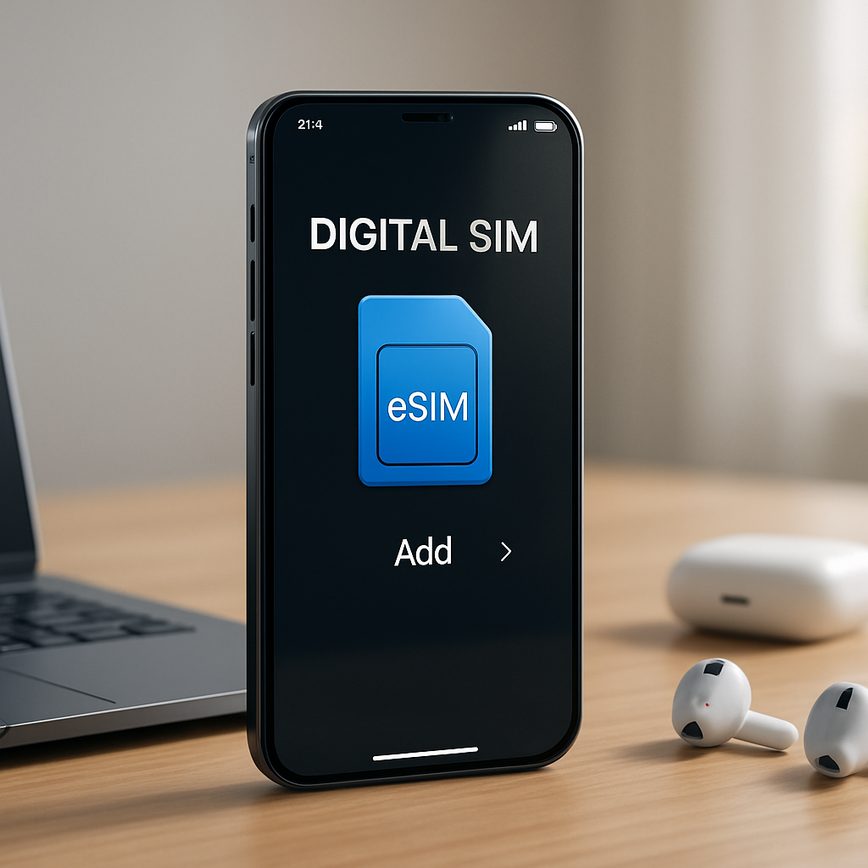
Why digital SIM management is important
27/05/2026
Understanding Digital SIM Management
Digital SIM management refers to the process of overseeing and controlling digital SIM cards, which are virtual representations of traditional physical SIM cards used in mobile devices. Unlike conventional SIM cards, digital SIMs, often realized through eSIM technology, are embedded directly in devices and can be programmed and managed remotely. This shift from physical to digital SIMs offers a new level of flexibility and convenience for users and service providers alike.
At the core of digital SIM management is eSIM technology. An eSIM, or embedded SIM, is a small chip soldered onto a device’s motherboard that replaces the need for a removable SIM card. This technology allows multiple cellular profiles to be downloaded, activated, and managed digitally without physically changing SIM cards. Users can switch carriers, choose different plans, or activate new cellular services over the air, streamlining the mobile connectivity experience significantly.
Managing digital SIMs involves several critical aspects, such as provisioning, activation, suspension, and switching of mobile network profiles. Service providers and device manufacturers utilize specialized platforms and software to handle these tasks securely and efficiently. Digital SIM management ensures that users maintain seamless connectivity, have easy access to multiple networks, and benefit from clearer billing and service customization options.
The relevance of digital SIM management in modern connectivity cannot be overstated. In today’s interconnected world, where devices range from smartphones to wearables and IoT gadgets, eSIM technology and digital SIM management enable greater device versatility and simplify network management. It empowers users to stay connected globally without the hassle of swapping physical SIM cards and supports businesses with scalable and remote device deployment.
In summary, digital SIM management, powered by eSIM technology, transforms the way mobile connectivity is delivered and maintained. It offers a comprehensive digital SIM overview that highlights enhanced flexibility, operational efficiency, and user control, making it a cornerstone of modern telecommunications infrastructure.
What is a Digital SIM?
A digital SIM, commonly known as an eSIM or embedded SIM, represents a significant evolution in SIM card technology. Unlike traditional SIM cards, which are physical chips that users insert into their devices, a digital SIM is a programmable embedded chip integrated directly into a device’s hardware. This technical innovation eliminates the need for a separate physical card, offering greater flexibility and convenience in managing mobile network connections.
The key difference between a digital SIM and a traditional SIM card lies in their form and functionality. Traditional SIM cards must be physically swapped to change carriers or plans, whereas a digital SIM can be remotely programmed and reprogrammed to connect to different mobile networks without any physical replacement. This dynamic capability supports seamless switching and better support for multiple network profiles within the same device.
Technically, a digital SIM contains secure hardware elements and software interfaces that store the subscriber’s credentials securely. Embedded within the device, it interfaces with the device’s operating system to authenticate and manage network connectivity. Its usage extends from smartphones and tablets to IoT devices, wearables, and connected vehicles, enhancing user experience by simplifying carrier activation, improving security, and supporting global connectivity with fewer logistical constraints.
Benefits of Digital SIM Management
Digital SIM management offers significant advantages that enhance user convenience and mobile connectivity. One of the standout digital SIM benefits is the ease of switching carriers without needing to physically replace SIM cards. This flexibility allows users to quickly adapt to different network providers, optimizing their service quality and cost-efficiency.
Moreover, digital SIMs simplify device management by consolidating multiple mobile profiles into a single device. This improvement reduces the clutter of physical SIM cards and streamlines the process of managing multiple numbers or plans. Whether for personal use or business purposes, the ability to control connectivity settings directly through software adds a layer of convenience previously unavailable with traditional SIM cards.
In addition to flexibility and convenience, digital SIM management enhances mobile connectivity by enabling seamless transitions between networks, especially useful for travelers or remote workers. The capacity to activate or deactivate plans instantly helps maintain continuous connectivity, which is crucial in today’s always-on digital world. Overall, these benefits demonstrate why digital SIM management is becoming an essential feature for modern mobile devices.
Importance of Efficient Digital SIM Management
Efficient digital SIM management is crucial in today’s mobile-centric world where seamless connectivity, network security, and user autonomy are paramount. Managing digital SIMs effectively ensures that users maintain control over their mobile networks, enabling them to switch carriers, manage plans, and monitor usage without hassle. This control significantly enhances the user experience by offering flexibility and convenience that traditional SIM cards cannot match.
One of the most compelling reasons for emphasizing SIM management importance is network security. Digital SIMs, also known as eSIMs, are embedded directly within devices and managed over the air, which requires robust security protocols to prevent unauthorized access and potential cyber threats. Efficient management practices help safeguard sensitive information related to user identity and mobile network credentials, reducing the risk of SIM swapping and fraudulent activities.
Beyond security, efficient digital SIM management plays a vital role in maintaining seamless connectivity. With the ability to switch carriers remotely, users can avoid disruptions caused by physical SIM swaps or network limitations. This agility supports continuous connection, especially for frequent travelers or individuals who rely heavily on mobile data. Additionally, carrier management becomes more straightforward as users can easily activate, suspend, or change plans from their device settings or service provider portals.
The importance of SIM management extends to optimizing costs and improving accessibility. Users can select plans that best fit their usage patterns, switch between local and international carriers as needed, and thus avoid roaming charges and expensive contracts. For enterprises, centralized SIM management allows for better monitoring and allocation of mobile resources, ensuring operational efficiency and cost-effectiveness.
In summary, managing digital SIMs efficiently is essential for enhancing network security, delivering a superior user experience, and streamlining carrier management. By leveraging the advanced capabilities of digital SIM technology, individuals and businesses alike can enjoy greater control over their mobile connections, ensuring reliability, security, and flexibility in an increasingly connected world.
Enhancing Security Through Digital SIM Control
Digital SIM management plays a crucial role in bolstering security by offering advanced SIM protection features that traditional SIM cards simply cannot match. With digital SIM control, users gain the ability to remotely activate or deactivate SIM profiles, significantly reducing the risk of unauthorized access or misuse. This proactive management helps prevent SIM-related fraud, such as SIM swapping attacks, where malicious actors hijack a phone number to access sensitive personal and financial information.
Moreover, the integration of robust authentication processes within digital SIM platforms adds an additional layer of network security, ensuring that only verified devices and users can connect to mobile networks. This minimizes the opportunities for fraudulent activities and unauthorized network access. By continuously monitoring SIM status and usage, digital SIM management systems can quickly detect anomalies and potential threats, enabling faster response times to security incidents.
In essence, digital SIM management not only safeguards individual devices but also strengthens the integrity of entire networks. It helps mobile operators maintain secure environments by reducing vulnerabilities associated with physical SIM cards and simplifying the administration of user identities. Organizations and consumers alike benefit from enhanced protection against fraud, making digital SIM control a critical component in the evolving landscape of mobile security.
Improving User Experience and Flexibility
Digital SIM technology revolutionizes user experience by offering unparalleled network flexibility. Users can seamlessly manage multiple carriers, plans, and devices without the usual hassle of physical SIM cards. This flexibility allows them to switch carriers instantly based on their needs, whether for better coverage, cost savings, or specific data plans.
With digital SIMs, switching between carriers becomes a swift and straightforward process, eliminating the need to visit a store or wait for a new physical SIM card to arrive. This improves overall user experience by reducing downtime and providing immediate access to desired network services. It also empowers users to optimize their mobile plans dynamically, choosing the best options available in real-time.
Additionally, digital SIM benefits extend to managing multiple devices effortlessly. Users can maintain several active profiles on one device or transfer profiles across devices without physically swapping cards. This seamless management enhances convenience for people who use different devices for personal, business, or travel purposes.
In summary, digital SIM management elevates user experience by combining ease of use with powerful network flexibility. It simplifies carrier switching and expands possibilities in plan management, giving users full control over their mobile connectivity like never before.
Future Trends in Digital SIM Management
The future trends in digital SIM management are poised to revolutionize connectivity across the globe. As the digital SIM evolution continues, innovations are driving more seamless, flexible, and secure mobile experiences. One of the crucial areas of development is the integration of digital SIMs with the Internet of Things (IoT), which is set to expand the role of SIM management far beyond traditional mobile devices.
Emerging innovations in digital SIM technology focus on enhanced automation and smarter management tools. These advancements enable users and businesses to remotely activate, switch, and manage profiles without ever needing physical SIM cards. This capability not only simplifies user experience but also supports dynamic connectivity models that adjust based on location, network quality, and usage demands. Such flexibility is essential in industries relying on constant and reliable communication.
As IoT devices become more prevalent—from smart cities and connected vehicles to industrial automation—the need for efficient IoT SIM management grows exponentially. Digital SIMs allow these devices to stay online globally without manual intervention, providing scalable solutions that can handle thousands or millions of connected endpoints. This scalability underpins the future of smart infrastructure and drives a new wave of connectivity trends focused on real-time data exchange and operational agility.
Moreover, the role of digital SIM management in global connectivity underscores a shift towards more inclusive and accessible communication networks. With digital SIMs enabling instant network switching and multi-operator access, consumers and enterprises can overcome traditional barriers such as roaming costs and network incompatibilities. This evolution supports the vision of ubiquitous connectivity, essential for digital transformation across sectors and regions.
Looking ahead, the fusion of artificial intelligence and machine learning with digital SIM ecosystems promises predictive and adaptive connectivity. Future applications will likely include intelligent network selection, automated troubleshooting, and proactive security measures—all managed through centralized platforms. These future trends highlight how digital SIM management is not just about replacing physical SIM cards, but about creating a smarter, more responsive, and interconnected world.
Integration of Digital SIMs in IoT Devices
The integration of digital SIMs in IoT devices represents a pivotal advancement in managing the growing ecosystem of connected devices. Digital SIM IoT solutions enable seamless scalability by allowing remote provisioning and management of cellular connectivity without physical SIM cards. This flexibility addresses the unique needs of IoT implementations, where fluctuating network requirements and device deployments are common. Through efficient SIM management IoT strategies, businesses can easily activate, deactivate, or switch network operators on millions of devices remotely, drastically reducing the operational complexities traditionally associated with large-scale IoT deployments.
Moreover, digital SIM management plays a crucial role in enhancing the security of connected devices. It provides robust mechanisms to authenticate and protect devices from unauthorized access, ensuring data integrity and confidentiality across the network. The ability to centrally control and monitor digital SIM usage strengthens defenses against potential cyber threats targeting IoT infrastructures. In essence, the combination of scalability and security facilitated by digital SIM IoT solutions empowers organizations to confidently expand their IoT networks while safeguarding critical information and infrastructure.
Overall, the adoption of digital SIMs for IoT underlines a modern approach to connectivity that supports the dynamic nature of connected ecosystems. By leveraging advanced SIM management IoT capabilities, enterprises can optimize device performance, minimize downtime, and maintain a secure communication environment, which are all essential for the sustainable growth and success of Internet of Things initiatives.
Advancements in Remote SIM Provisioning
Remote provisioning technology has significantly advanced the way SIM profiles are managed and updated. Traditionally, managing SIM cards involved physical swapping and manual configuration, but remote provisioning has streamlined this process by enabling over-the-air SIM updates. This innovation allows mobile operators and users to download, activate, and modify SIM profiles without needing to handle physical SIM cards.
One of the core advancements in remote provisioning is the enhanced capability to support multiple SIM profiles on a single eSIM. This enables seamless switching between carriers and plans without visiting a store or receiving a new SIM card. Over-the-air updates also improve the efficiency of SIM profile management by allowing real-time updates to provisioning data, security credentials, and network settings, ensuring users experience minimal disruption.
Advanced remote provisioning platforms integrate robust security measures, ensuring that SIM updates are safe from unauthorized access or tampering. They also simplify the eSIM management process by providing intuitive interfaces for both providers and end-users to control activation and profile downloads. This reduces operational costs for carriers and enhances user convenience, encouraging wider adoption of digital SIM technology.
Overall, these advancements in remote provisioning revolutionize how SIM cards are managed by making the process more flexible, secure, and user-friendly. The ability to perform SIM updates over-the-air is pivotal to the future of mobile connectivity, empowering users to easily switch networks and maintain optimal service without physical constraints.

I’m a lifelong traveler who fell in love with the freedom that eSIM technology offers. Exploring new places while staying seamlessly connected has become my personal mission, and I love sharing practical tips on managing mobile data abroad. When I’m not testing the latest eSIM platforms, I’m mapping out the next adventure.