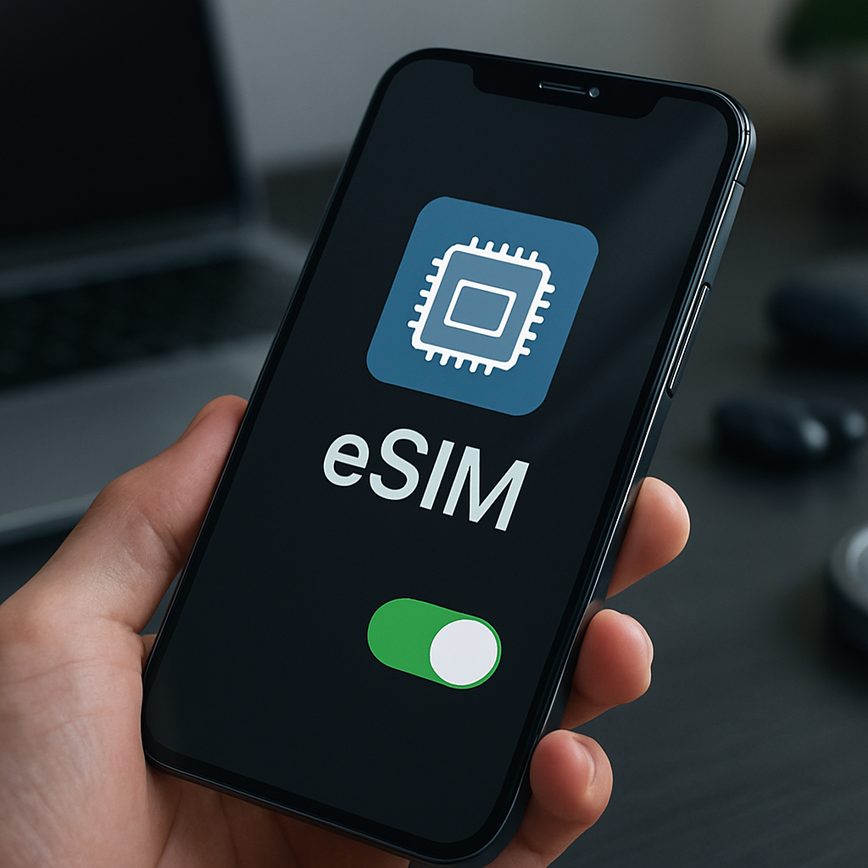
How eSIM supports secure mobile authentication
23/05/2026
Introduction to eSIM Technology
eSIM technology, short for embedded SIM, represents a significant evolution in mobile technology, transforming the way mobile devices connect to cellular networks. Unlike traditional SIM cards, which are physical cards that users insert into their devices, an eSIM is a programmable chip embedded directly within the device itself. This embedded SIM eliminates the need for a separate physical card, offering greater flexibility and convenience.
The evolution from traditional SIM cards to eSIM technology marks a major shift in the SIM landscape. Traditional SIM cards have been a staple in mobile technology for decades, serving as a secure element that authenticates a device to a mobile network. However, they come with limitations such as the need for physical swapping when changing carriers or plans. eSIM technology overcomes these constraints by enabling remote provisioning and management of carrier profiles, which can be activated or switched without physically replacing a card.
Modern mobile devices, including smartphones, tablets, and wearables, increasingly integrate eSIM technology. This integration supports many advantages for both consumers and network providers. For consumers, eSIMs simplify the process of switching carriers, activating mobile plans, and managing multiple subscriptions on a single device. It also enhances device design by saving space previously occupied by the SIM card slot, allowing for slimmer and more durable devices.
Moreover, the role of eSIM in modern mobile technology extends beyond convenience. It enhances the security framework within devices, as the embedded chip is physically harder to tamper with compared to traditional SIM cards. The remote management capability allows network operators to securely provision and update SIM profiles, thereby improving the protection of user data and mobile authentication.
In summary, eSIM technology is a progressive development in the evolution of SIM cards, driving the next generation of mobile connectivity. It enables seamless switching and management of mobile plans, facilitates innovative device designs, and strengthens security in mobile authentication. Understanding the eSIM basics is key to appreciating its transformative impact on contemporary mobile technology and its ongoing expansion across the digital landscape.
What is an eSIM?
An embedded SIM, commonly known as an eSIM or virtual SIM, is a modern alternative to the traditional physical SIM card. Unlike physical SIM cards which are removable and inserted into a device, an eSIM is a small chip that is embedded directly into the device’s hardware during manufacturing. This difference in design means that the eSIM is not visible or accessible in the same way as a conventional SIM card.
The eSIM definition centers on its ability to store multiple carrier profiles digitally, allowing users to switch between mobile network providers without physically swapping SIM cards. This virtual SIM functionality enhances convenience, especially for frequent travelers or those who require multiple numbers on one device. With an eSIM, the activation and management of cellular plans can be done remotely through software, eliminating the need for a physical card exchange.
Functionally, the embedded SIM supports better security and flexibility compared to physical SIMs. Since the eSIM is soldered onto the device motherboard, it is less prone to damage or loss. It also allows carriers to push updates and configurations over the air, simplifying the process of network authentication and improving overall device connectivity. This shift from a physical to a virtual SIM marks a significant evolution in mobile technology, providing users with an adaptable and secure mobile experience.
Benefits of eSIM over traditional SIM cards
eSIM technology offers significant advantages over traditional SIM cards, revolutionizing mobile connectivity. One of the main eSIM advantages is its enhanced flexibility. Unlike physical SIM cards that require manual insertion and swapping, eSIMs can be programmed remotely, allowing users to switch carriers or plans without needing a new card. This remote provisioning capability not only simplifies the process but also provides seamless access to multiple mobile networks from a single device.
From a size perspective, eSIMs are embedded directly into the device’s hardware, eliminating the need for a physical slot. This miniaturization contributes to more compact device designs and frees up space for other components or larger batteries. Additionally, as devices become thinner and sleeker, relying on eSIMs rather than bulky SIM trays is vital for maintaining aesthetic and functional innovation in mobile technology.
Security is another critical area where eSIMs excel in comparison to traditional SIM cards. Embedded securely within the device, eSIMs reduce the risk of tampering or SIM card theft. This integration supports advanced authentication methods, enhancing protection against unauthorized access and ensuring greater data integrity. Consequently, eSIMs play a crucial role in supporting secure mobile authentication, making devices more resilient to fraud and cyber threats.
Overall, the combination of flexibility, remote provisioning, compact size, and improved security makes eSIM technology a superior choice in the SIM card comparison landscape. As mobile connectivity continues to evolve, adopting eSIM solutions represents a forward-thinking approach to both user convenience and device protection.
How eSIM Enhances Secure Mobile Authentication
eSIM technology brings a new level of secure authentication by embedding SIM capabilities directly into devices, eliminating the vulnerabilities associated with traditional physical SIM cards. With eSIM security, the embedded hardware is tamper-resistant and cryptographically protected, making it extremely difficult for attackers to clone or manipulate the SIM credentials.
One of the most significant secure authentication features of eSIM is its ability to support remote provisioning over secure channels. This process uses strong encryption and mutual authentication protocols to ensure that only authorized profiles are downloaded and activated, preventing unauthorized access to the mobile network. The eSIM’s resilient security architecture actively guards sensitive subscriber information, such as authentication keys and encryption credentials, enhancing overall SIM security features.
Mobile authentication with eSIM goes beyond conventional challenges due to its integrated secure element that securely stores and manages private cryptographic keys. These keys are crucial for identity verification and play a vital role in multi-factor authentication schemes, making mobile authentication more reliable and robust. Additionally, eSIM supports seamless updates and profile management without compromising security, enabling continuous protection against emerging threats.
Furthermore, eSIM technology enhances SIM security features by enabling dynamic authentication mechanisms that adapt to varying service requirements. This flexibility allows service providers to implement advanced cryptographic methods and authentication protocols tailored to specific security levels. As a result, eSIM supports secure authentication not just in mobile connectivity but also in applications requiring strong identity verification, such as financial transactions, enterprise security, and IoT devices.
In conclusion, eSIM security revolutionizes mobile authentication by embedding advanced security protocols directly into the device hardware, supporting strong mobile authentication mechanisms, and enhancing SIM security features. This integrated approach ensures that mobile users and service providers benefit from a higher level of trust, protection against fraud, and a seamless secure experience in the increasingly connected digital world.
Built-in Security Features of eSIM
eSIM technology incorporates advanced hardware security through its embedded secure element, a tamper-resistant chip designed to safeguard sensitive data. This secure element functions as a dedicated space within the eSIM that stores user credentials and critical authentication keys, isolating them from the main device processor and software. By embedding these security measures directly into the hardware, eSIMs provide a robust defense against unauthorized access, cloning, and hacking attempts.
The secure element operates in conjunction with sophisticated authentication protocols that verify the authenticity of both the user and the network before granting access. This dual-layer security ensures that authentication keys remain protected throughout their lifecycle, preventing interception or misuse. Furthermore, the secure element supports cryptographic functions necessary for secure key generation, storage, and management, underpinning trust in mobile authentication processes.
By leveraging hardware security inherent in the secure element, eSIM technology elevates the overall security posture of mobile devices. It reduces reliance on software-based protections alone, which are more vulnerable to attacks. This built-in security architecture not only protects user identity and personal information but also reinforces the integrity of authentication protocols, making eSIM a critical component for secure mobile connectivity in today’s digital landscape.
eSIM’s Role in Two-Factor and Multi-Factor Authentication
eSIM technology plays a crucial role in enhancing mobile security by supporting two-factor authentication (2FA) and multi-factor authentication (MFA) methods. Unlike traditional SIM cards, eSIMs are embedded directly into the device, making them a trusted hardware component in authentication workflows. This physical integration allows the eSIM to securely store cryptographic keys and certificates that serve as a second or additional authentication factor beyond just a password.
In two-factor authentication, the eSIM can provide a secure channel to receive one-time passwords (OTPs) or authentication challenges, ensuring that the verification messages are delivered only to the authorized device. This mitigates risks such as SIM swapping and interception attacks, which are common vulnerabilities when relying solely on traditional SIM cards. For multi-factor authentication, the eSIM acts as a hardware token embedded within the mobile device, enabling strong verification mechanisms like public key cryptography that drastically improve the assurance of the user’s identity.
Additionally, the eSIM’s secure element features help protect sensitive authentication data from tampering or extraction by malicious actors. This hardware-backed security enhances mobile security by making it significantly more difficult for attackers to spoof authentication credentials or replicate the trusted device component. By integrating eSIM technology, service providers and enterprises can strengthen their authentication processes, delivering robust protection that aligns with modern security standards for two-factor and multi-factor authentication.
Preventing SIM Swap and Cloning Attacks
eSIM technology significantly enhances SIM swap prevention and clone protection by embedding the SIM profile digitally within the device, eliminating the need for a physical SIM card. This virtualization means that criminals face much greater difficulty executing SIM swap fraud since the process requires secure remote provisioning controlled by mobile network operators. Unlike traditional SIM cards that can be physically stolen or cloned, eSIMs rely on cryptographic authentication protocols and secure hardware elements to protect user identity and credentials.
With eSIM, mobile threat mitigation is elevated through multi-factor verification before any profile changes are authorized, limiting unauthorized access and reducing the risk of account hijacking. Users benefit from instant activation and remote management capabilities that also allow carriers to detect and block fraudulent SIM clone attempts more efficiently. This security-centric model ensures that users’ mobile authentication is tightly bound to their devices, making it more resilient against attacks that compromise mobile accounts via traditional SIM manipulation techniques.
Overall, eSIM technology improves user account security by preventing SIM swap fraud and cloning, enabling seamless and secure mobile authentication. As cybercriminals increasingly target mobile accounts, adopting eSIM solutions provides a robust defense mechanism that fortifies mobile communications and protects sensitive personal information from emerging mobile threats.
Future Trends and Challenges for eSIM in Mobile Security
The future of eSIM technology holds great promise for enhancing mobile security, yet it also presents several challenges that must be addressed. As eSIM adoption grows, driven by its seamless integration capabilities and improved user experience, the landscape of mobile authentication is expected to undergo significant transformation.
One of the most notable trends in the eSIM future is the increased focus on security innovation. Manufacturers and service providers are investing heavily in developing more robust authentication protocols and encryption methods to protect user data. The embedded nature of eSIMs makes them inherently more secure against physical tampering, yet this advantage must be complemented by software advancements to prevent sophisticated cyberattacks such as SIM swapping and identity theft.
Another key development is the expansion of eSIM usage beyond smartphones into a wide array of IoT devices. This proliferation increases the attack surface and introduces mobile security challenges that are unique to devices with varied functionalities and environments. These challenges necessitate comprehensive security frameworks that can manage and authenticate numerous devices securely and efficiently across diverse networks.
Despite these advancements, the pace of eSIM adoption itself poses a hurdle. Regulatory environments differ worldwide, and interoperability between carriers and device manufacturers remains a critical issue. Resolving these discrepancies is vital for enabling seamless global use and ensuring consistent security standards.
Looking ahead, the convergence of eSIM technology with emerging mobile authentication methods such as biometrics and blockchain could redefine how users verify their identities. These integrations promise to create multi-layered security systems that are both user-friendly and resistant to cyber threats.
In summary, while eSIM technology is set to drive significant improvements in mobile security, the road ahead includes navigating adoption challenges, evolving security threats, and ensuring innovation keeps pace. The future of mobile authentication will rely heavily on the ability to harness eSIM’s potential while proactively addressing the emerging mobile security challenges.
Emerging Security Protocols for eSIM
The integration of new security protocols within eSIM technology is revolutionizing mobile authentication by addressing critical vulnerabilities and enhancing overall protection. As eSIM standards evolve, they incorporate advanced cryptographic techniques designed to safeguard user identities and data integrity during device activation and network registration processes. These improvements significantly reduce the risk of unauthorized access and fraudulent activities on mobile networks.
One of the key innovations in emerging security protocols is the adoption of enhanced mutual authentication methods. These ensure that both the device and the network verify each other’s authenticity before establishing any communication. This bidirectional confirmation strengthens trust and minimizes the chances of man-in-the-middle attacks, which are a significant concern in mobile environments.
Furthermore, ongoing enhancements in security protocols leverage secure key storage within eSIM chips, preventing extraction or cloning of authentication credentials. Coupled with encrypted communication channels, these measures provide robust protection against interception and manipulation of sensitive information during transmission. The standardized security frameworks within eSIMs also enable seamless updates, allowing continuous improvement in response to emerging threats.
Overall, the fusion of these advanced security protocols and evolving eSIM standards marks a substantial step forward in mobile authentication. They offer a resilient and adaptable foundation that not only fortifies user privacy but also supports the expanding ecosystem of connected devices with uncompromised security.
Adoption Challenges and Regulatory Considerations
The adoption of eSIM technology faces significant challenges rooted in regulatory compliance, user adoption barriers, and infrastructure limitations. One major hurdle is navigating the complex landscape of eSIM regulation, which varies widely across different countries and regions. Telecommunications regulators require strict adherence to data protection, privacy standards, and secure authentication protocols, making it challenging for providers to launch universally compatible solutions without breaching local laws. These regulatory requirements are critical to ensuring mobile security compliance, but they also create delays and add complexity to eSIM rollout plans.
Moreover, user adoption presents its own set of obstacles. Many consumers and enterprises remain hesitant to switch from traditional SIM cards to eSIM, often due to concerns about security, device compatibility, and the perceived complexity of managing digital profiles. Awareness of the benefits of eSIM is still growing, and the market education necessary to overcome these psychological and technical barriers is a gradual process. This reluctance influences telecom operators and device manufacturers who must balance investment in new infrastructure with the uncertain pace of customer transition.
Infrastructure readiness is another critical factor. The effective deployment of eSIM solutions depends on robust backend support for remote provisioning, secure key management, and seamless integration with mobile network operators’ systems. In many regions, especially those with less developed telecom networks, this infrastructure is still evolving. Operators must also build partnerships and ecosystems that encourage interoperability between different devices and service providers, reducing adoption barriers.
Addressing these challenges requires coordinated efforts among regulators, industry stakeholders, and technology developers to create a secure, compliant, and user-friendly environment for eSIM adoption worldwide.

I’m a lifelong traveler who fell in love with the freedom that eSIM technology offers. Exploring new places while staying seamlessly connected has become my personal mission, and I love sharing practical tips on managing mobile data abroad. When I’m not testing the latest eSIM platforms, I’m mapping out the next adventure.