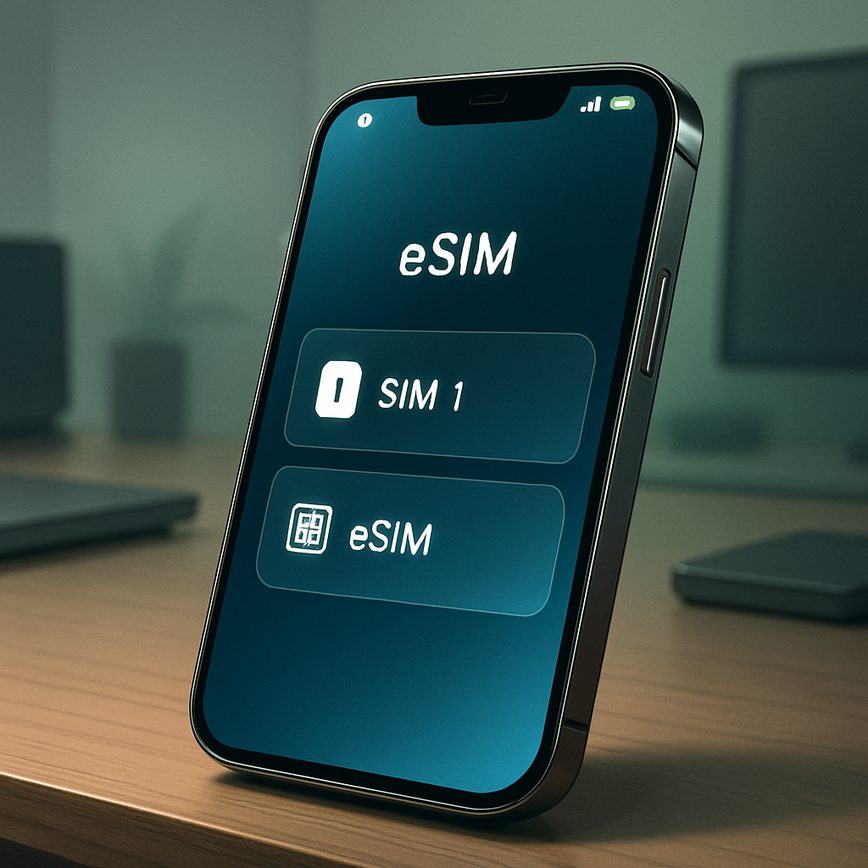
Why connected devices depend on eSIM
01/06/2026
Understanding eSIM Technology
eSIM technology, also known as embedded SIM or digital SIM, represents a significant evolution in the way mobile devices connect to cellular networks. Unlike traditional SIM cards that are physical and removable, an eSIM is a tiny chip embedded directly into a device’s motherboard. This integral design means that users no longer need to insert or swap SIM cards manually to switch carriers or plans.
At its core, the embedded SIM functions similarly to its physical predecessor by storing the subscriber identity used to authenticate and connect to mobile networks. However, the digital nature of eSIM technology allows for remote provisioning and management — users can download or change their mobile network profiles via software, without needing to visit a store or wait for a new SIM card to arrive. This flexibility is a key advantage in the ongoing SIM evolution, streamlining connectivity in an increasingly mobile and connected world.
The role of eSIM technology in modern devices is transformative. It enables manufacturers to design slimmer, more water-resistant products by eliminating the SIM card tray and slot. For consumers, it offers unparalleled convenience, especially when traveling internationally, as multiple network profiles can be stored and activated instantly. Additionally, eSIM technology supports the growing ecosystem of connected devices, including smartwatches, tablets, laptops, and IoT devices, all benefiting from simplified, efficient mobile data connectivity.
In summary, the embedded SIM represents more than just a new form factor; it is a foundational shift driving the future of connectivity. By embracing eSIM technology, the SIM evolution continues to enhance user experience, device design, and network flexibility, making it an essential feature in the landscape of modern communication.
What is an eSIM?
An eSIM, short for embedded SIM, is a modern digital SIM card that differs significantly from traditional physical SIM cards. Unlike the conventional plastic SIM cards that are removable and need to be inserted into a device, an eSIM is embedded directly into the device’s hardware. This small chip is soldered onto the device’s motherboard, making it a permanent part of the device’s form factor. The key advantage of the eSIM lies in its digital nature, as it allows users to activate a cellular plan without the need for a physical SIM card swap.
Understanding SIM basics is essential to grasp why the eSIM represents a significant advancement. Traditional SIM cards store your subscriber information on a removable card, which must be manually inserted or replaced to change the network provider or phone number. In contrast, an eSIM stores the same information digitally and securely, enabling multiple profiles to be downloaded and switched seamlessly through software, without the hassle of handling physical cards.
This digital SIM card technology supports the growing ecosystem of connected devices, adapting to the compact and integrated designs of modern smartphones, tablets, wearables, and IoT devices. The eSIM’s embedded nature simplifies connectivity setup and management, making it a key enabler of flexible and remote mobile service provisioning.
Advantages over Traditional SIM Cards
eSIM technology offers several significant eSIM benefits when compared to traditional SIM cards. One of the primary advantages is flexibility. Unlike physical SIM cards that require manual swapping, eSIMs can be remotely provisioned and managed, allowing users to switch carriers or plans without needing to replace the SIM physically. This makes managing mobile connectivity simpler and more convenient, especially for frequent travelers or users with multiple subscriptions.
Another crucial advantage is space-saving. Traditional SIM cards occupy physical space inside devices, which can limit design choices and reduce room for other components. Embedded SIMs, by contrast, are integrated directly into the device’s motherboard. This compact form factor not only frees up internal space but also allows manufacturers to design slimmer and more efficient gadgets without compromising connectivity.
The ability for remote provisioning is a standout SIM advantage offered by eSIMs. User profiles can be downloaded and activated over the air, eliminating the need for visiting stores or waiting for delivery of physical SIM cards. This capability greatly enhances user experience by simplifying onboarding and reducing downtime. It also provides operators with more agility in managing subscriptions and delivering services.
Overall, when taking into account eSIM benefits such as enhanced flexibility, space-saving design, and remote provisioning, the traditional SIM comparison clearly favors embedded SIM benefits that meet the demands of modern connected devices.
Why Connected Devices Rely on eSIM
Modern connected devices have become integral to everyday life, powering everything from smart homes to industrial IoT systems. The backbone of these devices’ seamless operation is reliable and efficient connectivity. This is where eSIM technology plays a crucial role, underpinning the ecosystem of connected devices and enabling enhanced IoT connectivity.
Unlike traditional SIM cards, eSIMs are embedded directly into devices, eliminating the need for physical card swaps and manual activation processes. This embedded nature facilitates instant activation and reprogramming of mobile network profiles over the air, which significantly simplifies the device management lifecycle. As a result, device manufacturers and service providers can remotely administer connectivity settings, ensuring swift responses to changing network conditions or customer requirements.
The dependency on eSIM technology by connected devices arises from its ability to support multiple network profiles on a single chip, enhancing flexibility and scalability. For IoT connectivity, this means devices can switch networks without physical intervention, maintaining uninterrupted communication critical to their function. Whether deployed in remote environments or mobile applications, devices leveraging eSIM can optimize network usage dynamically, a capability that is essential for robust and continuous device communication.
eSIM dependency also addresses the challenges of managing a vast fleet of connected devices. Centralized provisioning and remote updates allow IT administrators to oversee connectivity parameters from a single platform. This reduces operational costs and boosts efficiency, especially in sectors where device downtime can have substantial repercussions. Additionally, enhanced security features inherent to eSIMs provide an extra layer of protection for sensitive data transmitted through connected devices.
In summary, the reliance of connected devices on eSIM technology is driven by the need for seamless, flexible, and secure connectivity. By enabling effortless over-the-air management, multi-network support, and improved security, eSIMs empower the next generation of connected devices to meet the high demands of modern digital ecosystems. This dependency underscores eSIM’s role as a foundational enabler of future IoT innovations and smart device communication.
Enhanced Connectivity for IoT Devices
eSIM technology revolutionizes IoT connectivity by enabling seamless and dynamic device management through remote SIM provisioning. Unlike traditional SIM cards, eSIMs eliminate the need for physical swapping, allowing IoT devices to activate and switch carriers digitally without manual intervention. This capability is crucial for managing large fleets of devices deployed in diverse and often hard-to-reach locations.
With eSIM IoT integration, businesses gain unparalleled control over their connected devices. Remote provisioning allows service profiles to be updated, adjusted, or changed on the fly, ensuring optimal network coverage and reducing downtime. This flexibility enhances reliability and performance, which are essential for mission-critical IoT applications such as smart cities, industrial automation, and healthcare monitoring.
Furthermore, eSIMs simplify the logistics and operational complexity traditionally associated with IoT device deployment. Device management tasks such as activating devices, switching networks, or scaling connectivity can be executed remotely without physical access, lowering costs and improving efficiency. This adaptability supports global deployments by enabling devices to connect to local networks wherever they are, improving overall IoT connectivity.
In summary, eSIM technology, with its remote SIM provisioning capability, empowers IoT devices with enhanced connectivity and streamlined device management. It opens new possibilities for scalable, flexible, and reliable IoT ecosystems that drive smarter, more connected environments.
Space Efficiency and Design Flexibility
eSIM technology offers a significant advantage in terms of compact design by eliminating the need for physical SIM cards and their trays. This space-saving approach allows manufacturers to reclaim valuable internal device space that would otherwise be occupied by traditional SIM card hardware. By embedding the eSIM directly onto the device’s mainboard, engineers can optimize the internal layout and reduce bulk, enabling the creation of slimmer, more elegant products without compromising functionality.
This hardware design freedom granted by eSIM embedding is a game-changer for connected devices. With fewer physical constraints, device makers can focus on enhancing other features such as battery capacity, improved cooling solutions, or additional sensors, all while maintaining a sleek profile. The compact design facilitated by eSIM technology not only contributes to aesthetics but also to the overall versatility of the product, satisfying consumer demands for both style and performance.
Moreover, the space saved inside devices through eSIM implementation encourages innovation in device form factors and use cases. Wearables, IoT devices, smartphones, and other connected gadgets benefit from the ability to be smaller and lighter, which can lead to better portability and user experience. Ultimately, eSIM’s role in device space saving and flexible hardware design is essential for the next generation of smart, connected devices aiming for maximum efficiency and appeal.
Future Trends in eSIM and Connected Devices
The eSIM future is poised to significantly shape the connected device evolution, transforming mobile connectivity trends on a global scale. As digital SIM developments advance, they herald a new era in how devices communicate and operate across various industries, driving unprecedented levels of flexibility, efficiency, and integration.
One of the most prominent trends in eSIM technology is the increasing adoption across a diverse range of connected devices beyond smartphones. Industries such as automotive, healthcare, consumer electronics, and smart home systems are actively embracing eSIMs to enable seamless connectivity without the limitations of traditional SIM cards. This evolution paves the way for effortless device provisioning, enhanced security, and remote management capabilities, critical factors for IoT applications and smart infrastructure deployment.
Mobile connectivity trends are also shifting with eSIM integration becoming a standard feature in new device designs. Consumers and enterprises benefit from improved user experiences, such as instant carrier switching and simplified international roaming solutions. This is facilitated by the flexibility of eSIMs, which support multiple profiles on a single chip, allowing users to choose or change network providers without physical SIM card changes.
Looking ahead, digital SIM developments are expected to focus on enhanced interoperability and security enhancements through embedded encryption and authentication protocols. The rising demand for remote SIM provisioning and lifecycle management solutions will further empower service providers to deliver more dynamic and customer-centric connectivity services. This trend is critical for scaling connected device ecosystems and supporting growing data demands.
Furthermore, the integration of eSIM technology with emerging 5G networks and edge computing platforms will unlock new possibilities for real-time data transmission and low-latency applications. Connected devices will be able to leverage these advancements to optimize performance across smart cities, industrial automation, and telemedicine, among other sectors. The eSIM future thus represents a cornerstone of innovative digital transformation strategies and the next wave of mobile connectivity trends.
In summary, the evolution of connected devices driven by eSIM technology signifies a major leap forward in how industries approach connectivity solutions. Continuous innovation in digital SIM developments will ensure that connected ecosystems remain agile, scalable, and secure—setting the foundation for a more connected and digitally integrated world.
Expanding eSIM Adoption Across Industries
eSIM adoption is rapidly gaining momentum across several key industries, driven by the increasing need for seamless connectivity in a variety of smart devices. In the automotive sector, manufacturers are integrating eSIM technology into vehicles to enable constant network access for navigation, infotainment, and safety features without relying on physical SIM cards. This shift not only simplifies connectivity management for mobile operators but also enhances the user experience by allowing effortless switching between networks and plans.
Healthcare is another industry where eSIM adoption is proving transformative. Connected medical devices such as remote monitoring tools, wearable health trackers, and emergency responders rely on uninterrupted mobile connectivity to transmit critical data in real-time. eSIM technology ensures these devices maintain reliable network access, supporting better patient outcomes and more efficient healthcare delivery. For mobile operators, this opens new avenues to offer specialized connectivity solutions tailored to healthcare needs.
Consumer electronics, including smartphones, tablets, and smart home devices, are also embracing eSIM. As more consumers demand flexibility and convenience in managing mobile subscriptions, eSIM-equipped devices allow users to switch carriers easily and use multiple profiles on a single device. This convenience accelerates adoption among users and encourages mobile operators to develop innovative plans and services. Overall, expanding eSIM adoption across these industries underscores its critical role in the future of connected smart devices.
Improvements in Network and Security
Advancements in network security and management are pivotal in enhancing the reliability and safety of eSIM-connected devices. With the rise of next-gen mobile networks, robust security protocols have become essential to protect sensitive data and maintain secure connectivity. eSIM technology leverages sophisticated eSIM encryption methods that safeguard the information stored and transmitted by connected devices, effectively minimizing the risk of cyber threats and unauthorized access.
Network security improvements focus on end-to-end encryption, ensuring data integrity from device to network. This not only helps in thwarting hacking attempts but also strengthens the authentication processes. Management systems now offer dynamic and remote provisioning, enabling operators to monitor and update eSIM profiles in real-time without compromising security. Such innovations make the eSIM ecosystem more resilient against potential vulnerabilities.
Moreover, secure connectivity is bolstered through multi-layered defense mechanisms embedded within the network infrastructure. These include advanced firewalls, intrusion detection systems, and continuous security assessments that work seamlessly with eSIM technology. As mobile networks evolve, these enhancements are critical in maintaining the trustworthiness of connected devices, supporting a more secure and efficient mobile experience for users worldwide.

I’m a lifelong traveler who fell in love with the freedom that eSIM technology offers. Exploring new places while staying seamlessly connected has become my personal mission, and I love sharing practical tips on managing mobile data abroad. When I’m not testing the latest eSIM platforms, I’m mapping out the next adventure.