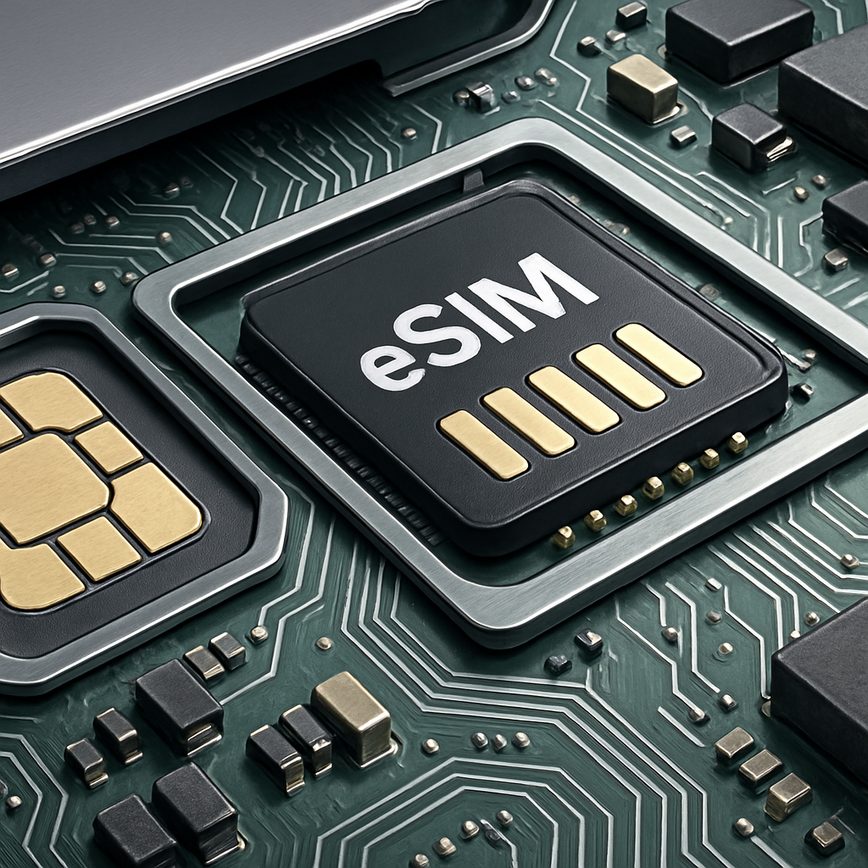
Why global connectivity relies on eSIM
24/05/2026
Understanding eSIM Technology
eSIM, short for embedded SIM or digital SIM, represents a revolutionary shift in connectivity technology. Unlike traditional physical SIM cards that require manual insertion into a device, an eSIM is embedded directly into a device’s hardware. This integration enables users to activate cellular plans digitally, eliminating the need for physical swapping of SIM cards. As a form of programmable SIM technology, the eSIM enhances flexibility and convenience in managing mobile connectivity.
The core advantage of the eSIM lies in its embedded nature, which means it is soldered directly onto the device’s motherboard. This design results in a more compact device footprint, improved durability, and water resistance, as there are no SIM card trays or slots that might compromise device integrity. The eSIM conforms to the GSMA’s specifications — the global body responsible for standardizing mobile technologies — ensuring seamless compatibility across carriers worldwide.
From a technical perspective, the eSIM houses a secure element that stores the subscriber’s network credentials. This secure element operates much like the traditional SIM card but is rewritable remotely. Through remote SIM provisioning (RSP), mobile network operators can securely download and update operator profiles over the air. This process empowers end users to switch carriers, subscribe to different plans, or manage multiple profiles without needing to physically change a SIM card.
The technology behind eSIM integrates elements of cryptography and secure authentication. This ensures that communications between the device and mobile networks remain protected against unauthorized access and fraud. Devices equipped with eSIM technology support multiple profiles that can be stored simultaneously, allowing users, for example, to maintain separate personal and business numbers on the same device, enhancing both connectivity and user convenience.
Overall, eSIM technology marks a significant advance in digital SIM technologies and connectivity technology. It enables smoother transitions between network providers, reduces physical waste associated with plastic SIM cards, and prepares mobile devices for an increasingly connected future. By embedding the SIM directly into devices, eSIM paves the way for greater innovation in mobile telecommunications and a more flexible user experience worldwide.
What is an eSIM?
An eSIM, or embedded SIM, is a modern form of SIM technology that differs fundamentally from traditional SIM cards. Unlike conventional SIM cards, which are removable physical chips inserted into a mobile device, an eSIM is permanently embedded into the device’s hardware during manufacturing. This embedded nature means users do not need to physically swap SIM cards when changing carriers or plans.
The eSIM definition centers around its ability to store multiple cellular profiles and switch between them digitally. This flexibility is a significant advancement over traditional SIM cards, which require a physical replacement or insertion to change the network provider. With embedded SIM technology, the management of network profiles is handled through software, enabling easier activation and more seamless connectivity.
Because the eSIM is embedded inside the device, it allows manufacturers to design slimmer, more compact devices by eliminating the need for a SIM card slot. Additionally, this innovation enhances the durability of devices by reducing the mechanical parts exposed to potential wear and tear. In summary, the embedded SIM revolutionizes how we connect, making it more convenient and efficient compared to traditional SIM cards.
Advantages of Digital SIMs Over Traditional SIM Cards
eSIM technology offers a range of benefits that significantly improve user experience and device functionality when compared to traditional SIM cards. One of the most notable eSIM benefits is flexibility. Unlike physical SIM cards that require manual swapping, eSIMs can be programmed remotely to switch between multiple network operators without the need for physical changes, enabling seamless global connectivity.
Remote provisioning is another crucial advantage of digital SIMs. Users can activate or update mobile plans directly from their device without needing to visit a store or receive a new SIM card in the mail. This convenience not only saves time but also supports instantaneous changes, which is especially valuable for travelers and businesses managing multiple devices.
Additionally, digital SIMs offer significant device space-saving benefits. Traditional SIM card slots require internal space that could otherwise be used for larger batteries or other advanced hardware features. By integrating the SIM functionality digitally, manufacturers can create slimmer and more compact devices without compromising on connectivity options.
Overall, the digital SIM advantages in flexibility, remote provisioning, and efficient use of device space clearly show why eSIMs are becoming the preferred choice over traditional SIM cards. These benefits empower users with greater control and convenience in an increasingly connected world.
The Role of eSIMs in Global Connectivity
eSIM technology plays a transformative role in enhancing global connectivity by reshaping how mobile networks operate across borders and enabling seamless international use. Unlike traditional SIM cards that require physical swapping when traveling between countries, eSIMs are embedded directly into devices and can be programmed remotely. This innovation addresses many challenges associated with global mobile connectivity and cross-border communication, making mobile experiences smoother and more reliable for international travelers.
One of the primary advantages of eSIM international use is the ability to switch mobile network providers without the need to physically acquire a new SIM card. This flexibility supports constant connectivity by allowing users to activate local mobile plans instantly upon arriving in a foreign country. As a result, travelers can avoid costly roaming fees and enjoy better network performance tailored to the local mobile infrastructure. eSIMs thus bridge the gap between different mobile networks, empowering users to stay connected effortlessly worldwide.
Moreover, eSIM technology facilitates improved cross-border communication, which is crucial for both individuals and businesses operating globally. By supporting multiple profiles on a single device, eSIMs enable users to maintain multiple international numbers simultaneously, enhancing convenience and accessibility during global interactions. This capability is particularly beneficial for frequent travelers, expatriates, and multinational corporations requiring stable, scalable communication solutions that transcend geographical boundaries.
From a network provider perspective, eSIMs also simplify the logistics of catering to international customers. Mobile operators can offer digital onboarding without physical distribution of SIM cards, enabling rapid expansion into new markets. This promotes greater competition, better pricing, and a wider selection of plans that meet diverse traveler needs. It also encourages the development of connected ecosystems where devices communicate freely and securely, regardless of the user’s location.
In summary, the adoption of eSIM technology is a key driver in the evolution of global connectivity. By removing physical constraints associated with traditional SIM cards, eSIMs empower users with unprecedented freedom and control over their mobile network choices while traveling internationally. This fosters more efficient mobile networks and smoother cross-border communication that together support the increasingly interconnected world.
Seamless International Roaming with eSIM
eSIM technology revolutionizes international roaming by enabling users to switch carriers globally without the hassle of swapping physical SIM cards. This provides unparalleled convenience for travelers who frequently move across different countries and need reliable mobile connectivity. Traditional SIM cards require manual replacement to access local networks, often leading to delays and additional costs. In contrast, eSIM roaming allows users to activate a new carrier profile digitally, directly from their device, eliminating the need for physical SIM cards.
By connecting seamlessly to global networks, eSIM technology simplifies the process of managing multiple subscriptions. Users can choose from various international roaming plans with just a few taps, ensuring continuous access to data, voice, and messaging services while abroad. This flexibility not only enhances the user experience but also fosters greater competition among mobile network operators on an international scale.
Moreover, the integration of eSIM into smartphones, tablets, and wearables means that users can effortlessly switch carriers based on quality, price, or coverage without changing physical components of their device. This is especially beneficial for business travelers and digital nomads who require dependable and cost-efficient global connectivity. Ultimately, eSIM roaming transforms global networks into a more accessible and user-friendly ecosystem, significantly improving how we stay connected across borders.
Supporting IoT and M2M Communications Worldwide
eSIM technology plays a crucial role in supporting IoT connectivity and machine-to-machine (M2M) communication across the globe. Traditional SIM cards pose logistical challenges for IoT devices that are often deployed in remote or hard-to-reach locations. eSIMs, however, offer a flexible and efficient solution by allowing remote provisioning and management of network profiles without the need for physical swapping. This capability significantly enhances the operational efficiency of IoT networks worldwide.
With eSIM IoT integration, devices can seamlessly switch between multiple network operators to maintain optimal connectivity depending on geographic location or network conditions. This is essential for global IoT deployments spanning different countries and regions, where network availability and quality can vary significantly. eSIMs enable continuous, reliable IoT connectivity, which is vital for real-time data transmission and automated M2M communication.
Furthermore, eSIMs reduce the complexity and costs associated with supply chain logistics and device maintenance in IoT ecosystems. Enterprises can activate, deactivate, or change mobile plans remotely, simplifying fleet management for large-scale IoT and M2M networks. This agility not only supports scalable deployments but also enhances security by allowing quick responses to network changes or threats.
In essence, eSIM technology is a catalyst for advancing IoT and M2M communications on a global scale, providing the connectivity backbone necessary to drive innovation and operational efficiency in connected device ecosystems worldwide.
Challenges and Future Outlook of eSIM Adoption
Despite the significant benefits of eSIM technology, several challenges remain that slow down its widespread adoption. One of the primary eSIM challenges is the lack of universal support across all mobile carriers and device manufacturers. Many carriers are still hesitant to fully embrace eSIM due to concerns over losing direct control of the SIM card distribution process and the associated revenue from physical SIM sales. This fragmentation creates compatibility and activation barriers for consumers, who might find their devices limited in flexibility when switching networks.
Another major adoption barrier is consumer awareness and understanding. Many users are not yet familiar with what eSIM is or how it functions differently from traditional SIM cards. The process of provisioning and managing eSIMs can seem complex or unfamiliar, which slows down its adoption among average users. Additionally, some regions face regulatory hurdles, where telecommunications authorities have yet to develop clear guidelines for eSIM usage and data privacy, further complicating the technology’s rollout.
Looking at the future of eSIM, the trends in mobile technology point towards rapid growth and expanded acceptance. The increasing trend towards dual-SIM and multi-SIM devices in smartphones, tablets, and even wearables like smartwatches showcases the rising demand for flexible connectivity solutions. As the Internet of Things (IoT) continues to grow, eSIM technology will become crucial in providing seamless, remote provisioning and management of countless connected devices globally.
The industry is also moving towards standardization efforts, which are expected to reduce fragmentation and increase interoperability among carriers, manufacturers, and service providers. Enhanced user interfaces for eSIM management and improved onboarding experiences will make adoption easier for both individual consumers and enterprises. Mobile technology trends such as 5G deployment and edge computing will further accelerate eSIM’s relevance by enabling faster and more resilient global connectivity.
In conclusion, while eSIM challenges like carrier resistance, consumer awareness, and regulatory uncertainty present hurdles, the future of eSIM looks promising. With evolving mobile technology trends and intensified efforts for global standardization, eSIM adoption is poised to become a foundational element of next-generation mobile connectivity worldwide.
Regulatory and Carrier Resistance Issues
Despite the promising benefits of eSIM technology, its global adoption faces significant regulatory hurdles and carrier-specific challenges. One of the primary obstacles is the diverse landscape of eSIM regulations across different countries. Regulatory bodies often impose stringent rules that vary widely, complicating the deployment and seamless operation of eSIMs on a global scale. These policies frequently aim to protect consumer rights and national security but can inadvertently slow innovation and market penetration.
Carrier limitations also play a crucial role in the slower rollout of eSIMs. Many mobile network operators remain hesitant to fully embrace eSIM technology due to concerns over losing control of customer relationships. Traditional SIM cards create a direct link between carriers and subscribers, while eSIMs enable easier switching between providers, threatening to disrupt established revenue models. This resistance manifests in limited eSIM support, restrictive activation processes, and variable user experiences depending on the carrier.
Policy challenges extend beyond national borders, affecting international travelers and global connectivity. Harmonizing regulations that cater to security, interoperability, and consumer protection while encouraging innovation is a complex task. This balancing act often results in delayed or complicated legislative frameworks that further inhibit rapid eSIM adoption. Overcoming these regulatory and carrier barriers is essential to unlocking the full potential of eSIM technology as a driver of global digital connectivity.
The Future Potential of eSIM in Global Telecommunications
As the world advances towards greater digital interconnectivity, eSIM trends are becoming a critical focus for telecom innovation. The future of connectivity is set to be transformed by the ability of eSIM technology to break down traditional barriers imposed by physical SIM cards. This shift promises seamless switching between carriers without requiring users to replace hardware, thus enhancing flexibility across borders.
One of the most promising advancements in eSIM technology is the integration with IoT devices and smart ecosystems, fostering a hyper-connected environment where devices communicate effortlessly and securely. This development will accelerate the adoption of smart cities, autonomous vehicles, and other next-generation telecommunication solutions. Furthermore, telecom operators are likely to embrace eSIM for its capability to streamline device management and subscription services, reducing operational costs and expanding business models.
Future connectivity will also benefit from improved security protocols embedded within eSIM technology, addressing concerns about data privacy and hacking risks in an increasingly digital world. As eSIM adoption grows globally, collaborative standards and regulatory frameworks will play a vital role in ensuring universal interoperability and user-centric experiences. Overall, eSIM stands at the forefront of global telecommunications evolution, promising more efficient, versatile, and innovative connectivity solutions in the years to come.

I’m a lifelong traveler who fell in love with the freedom that eSIM technology offers. Exploring new places while staying seamlessly connected has become my personal mission, and I love sharing practical tips on managing mobile data abroad. When I’m not testing the latest eSIM platforms, I’m mapping out the next adventure.