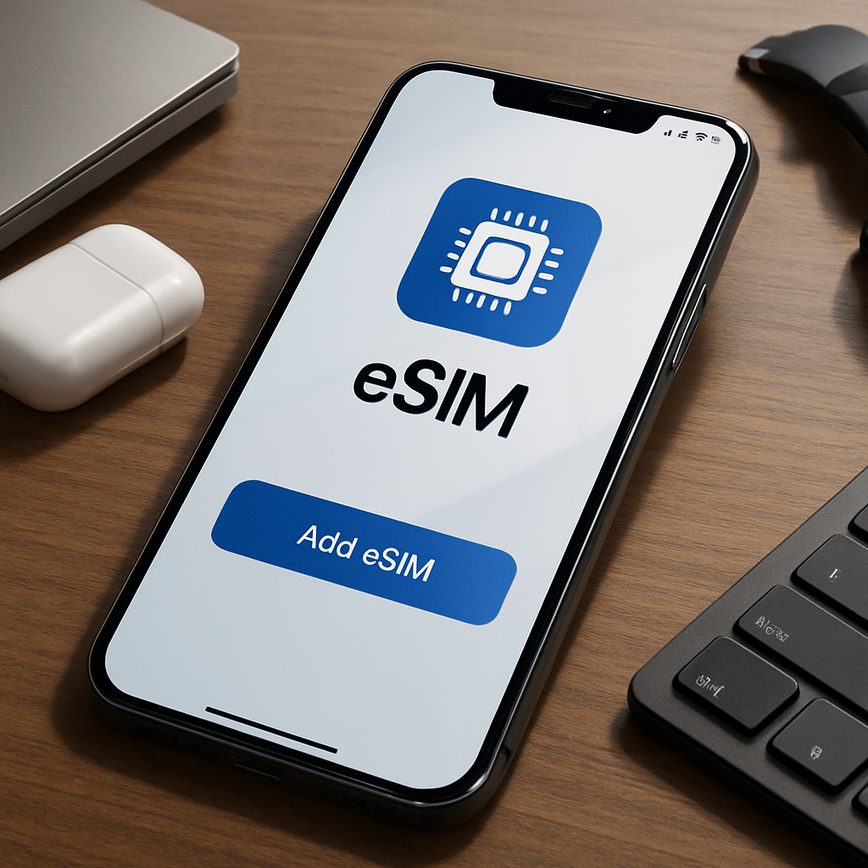
How eSIM enables global digital mobility
30/05/2026
Understanding eSIM Technology
eSIM, or embedded SIM, represents a significant advancement in digital SIM technology that is revolutionizing the way mobile connectivity is managed. Unlike traditional SIM cards which are physical chips that must be inserted into a device, an eSIM is a virtual SIM embedded directly into a device’s hardware, eliminating the need for a removable card. This development not only simplifies device design but also enhances flexibility for users and mobile operators alike.
The primary difference between an eSIM and a traditional SIM card lies in their form and functionality. Traditional SIM cards are tangible cards that store a single subscriber identity used to connect to a mobile network. Users must physically swap these cards when changing devices or carriers. In contrast, an eSIM is soldered onto the device’s motherboard and can store multiple network profiles. This virtual SIM technology allows users to switch carriers or plans remotely without needing to replace physical cards, thereby enabling seamless transitions and connectivity management.
At its core, eSIM technology operates through a small chip embedded in devices such as smartphones, tablets, laptops, and even wearables. This chip contains an integrated secure element that stores mobile network credentials securely and supports over-the-air (OTA) provisioning. OTA provisioning is the process by which carriers can remotely download and activate service profiles on the eSIM. This process provides remarkable convenience, especially for travelers or those frequently changing mobile service providers, as users can activate new plans without visiting stores or waiting for physical SIM delivery.
Another essential component of the eSIM system is the Subscription Manager Data Preparation (SM-DP) server, which manages the secure transfer and installation of carrier profiles onto the embedded SIM. The combination of embedded hardware and advanced remote management capabilities enables users to store multiple carrier profiles on their devices, switching between them as needed. This capability is fundamental to the digital SIM experience, supporting use cases such as dual-network access and instant connectivity.
Overall, eSIM technology marks a shift towards greater digital flexibility and convenience in mobile communications. By moving from physical SIM cards to embedded virtual SIMs, users gain more control over their mobile connectivity, enabling them to adapt quickly to changing needs without the constraints imposed by traditional SIM cards. This innovation is at the heart of the increasing global digital mobility, simplifying how individuals connect and stay connected worldwide.
How eSIM Works
The eSIM, or embedded SIM mechanism, revolutionizes traditional SIM card usage by integrating the SIM directly into a device’s hardware. This eliminates the need for physical SIM cards, allowing for seamless mobile connectivity through a process known as remote SIM provisioning. The core functionality of eSIM lies in its ability to download and activate carrier profiles over the air, enabling users to switch networks or activate new plans without physically swapping SIM cards.
The remote SIM provisioning process involves securely transmitting the user’s subscription credentials from the carrier to the embedded SIM chip within the device. This secure communication ensures that the activation process is both safe and efficient. Once the carrier profile is downloaded, the eSIM activation process is completed automatically, allowing the device to connect to the network instantly. This feature is especially beneficial for global travelers and digital nomads, as it supports multiple profiles, enabling easy switching between carriers in different countries without interruption or delay.
Furthermore, the embedded SIM mechanism supports dynamic updates, meaning carriers can modify or update profiles remotely without user intervention. This flexibility enhances user experience by providing continuous network optimization and eliminating the hassle of physical SIM replacements. Overall, the eSIM functionality not only simplifies mobile connectivity but also offers a more secure, flexible, and convenient way for users to manage their mobile subscriptions worldwide.
Advantages of eSIM Over Traditional SIM
eSIM technology offers significant advantages over traditional SIM cards, making it a game-changer in mobile connectivity. One of the most notable eSIM benefits is its flexibility. Unlike physical SIM cards, eSIMs can be activated and switched between carriers remotely without the need to insert or swap hardware. This flexibility is especially useful for travelers and people who frequently change service providers.
Convenience is another critical advantage of eSIMs. With eSIM, users can manage multiple mobile profiles on a single device, enabling seamless switching between personal and business numbers or local and international plans. This eliminates the hassle of carrying multiple SIM cards or dealing with lost or damaged SIMs. Furthermore, eSIMs enhance the user experience by facilitating instant connectivity and reducing setup time.
Durability also sets eSIM apart. Because it is embedded within the device, it is less prone to physical damage or wear that traditional SIM cards face. This robustness contributes to a longer device lifespan and fewer instances of connection issues related to SIM card faults.
From an environmental perspective, eSIMs reduce plastic waste generated by physical SIM cards and packaging. Their adoption contributes to sustainability efforts by minimizing resource consumption and electronic waste. Overall, the SIM card comparison clearly shows that eSIM technology enhances user convenience, connectivity, and environmental responsibility, offering a smarter, more flexible solution for today’s mobile world.
eSIM and Global Digital Mobility
In today’s interconnected world, eSIM technology plays a pivotal role in enabling true global digital mobility. By allowing devices to switch between network providers remotely and seamlessly, eSIM eliminates the need for physical SIM cards and simplifies the management of mobile connectivity across different regions. This capability is essential for travelers and businesses who require uninterrupted access to mobile networks without the hassle of changing physical SIM cards or dealing with expensive roaming fees.
Global connectivity is greatly enhanced by eSIM because it offers virtually instant access to local carriers worldwide. Instead of purchasing multiple SIM cards or relying on a single provider with limited international reach, users can download and activate profiles from various carriers, ensuring optimal network coverage wherever they go. This flexibility supports digital mobility by giving users the freedom to stay connected to the internet and other communication services across continents without interruption.
One of the standout features of eSIM worldwide adoption is its facilitation of international roaming. Traditional roaming often incurs high costs and complicated billing, but with eSIM, users can select the most cost-effective and efficient roaming options tailored to their travel destinations. Additionally, businesses with global operations can equip their employees with eSIM-enabled devices, ensuring continual connectivity during international assignments, conferences, and remote work activities.
For multinational companies and frequent travelers alike, eSIM technology simplifies the management of multiple phone numbers and data plans under a unified platform. It allows instant switching between carriers without leaving the device or waiting for physical SIM replacement. This adaptability aids in maintaining productivity and communication, reinforcing the notion of digital mobility—where location does not restrict access to digital services.
As the adoption of eSIM technology continues to grow, its role in supporting a truly global digital lifestyle expands. It enables seamless, reliable, and cost-effective mobile connectivity that meets the needs of an increasingly mobile and connected world. eSIM is not just a technological upgrade; it represents a transformation in how we think about and utilize mobile networks on a global scale.
Simplifying International Roaming with eSIM
International roaming has traditionally been a complex and costly experience for travelers. However, eSIM technology revolutionizes this by enabling seamless global SIM access without the hassle of physical SIM swaps. With eSIM roaming, users can digitally switch carriers or plans right from their devices, eliminating the need to purchase and insert new SIM cards when crossing borders. This digital flexibility significantly enhances travel connectivity, ensuring users stay reliably connected worldwide.
By adopting eSIM for international roaming, travelers can easily activate local or international plans on demand, often at more competitive rates. This means no more manual swaps or worrying about losing physical SIMs during trips. The process is streamlined through simple software interfaces, offering immediate access to multiple carrier networks and plans remotely. Such convenience empowers frequent travelers to maintain uninterrupted service while managing costs more effectively.
Moreover, the ability to manage multiple eSIM profiles on one device supports diverse connectivity needs in various countries, making it easier to optimize network performance and expenses. eSIM roaming not only simplifies traditional roaming complexities but also opens up new possibilities for global digital mobility. Ultimately, it transforms international roaming into a user-friendly, agile experience that aligns with the modern traveler’s demand for consistent, affordable travel connectivity anywhere in the world.
Enabling Global Business Operations
eSIM technology is revolutionizing global business operations by providing a seamless and flexible connectivity solution for the modern mobile workforce. As enterprises expand across borders, maintaining consistent and reliable communication becomes paramount. eSIM for businesses enables employees to stay connected worldwide without the need to physically swap SIM cards or purchase local plans, ensuring continuous enterprise connectivity regardless of location.
With eSIM, organizations can centrally manage mobile subscriptions and adapt plans dynamically to meet the changing needs of their global teams. This agility supports a highly mobile workforce, allowing employees to switch networks effortlessly when crossing international boundaries, which reduces downtime and enhances productivity. The technology also offers cost-efficiency by eliminating roaming charges and providing access to competitive global data packages.
Furthermore, eSIM’s remote provisioning capabilities enhance security and control, giving IT departments the ability to monitor and manage device connectivity from a single platform. This robust management ensures compliance with corporate policies and protects sensitive business communications. By leveraging eSIM technology, businesses can drive operational efficiency, empower their mobile staff, and strengthen global enterprise connectivity, ultimately enabling smoother and more effective global business operations.
Future Outlook and Challenges for eSIM Adoption
The future of eSIM technology looks promising as it continues to reshape global digital mobility with its inherent flexibility and convenience. Market trends indicate a growing adoption of eSIMs not only in smartphones but also across IoT devices, wearables, and connected vehicles, further accelerating the demand for seamless connectivity worldwide. Analysts predict that the eSIM market will expand rapidly as consumers and businesses seek more adaptable and user-friendly options for managing mobile connectivity.
However, the path toward widespread eSIM adoption is met with several challenges. One of the major adoption challenges involves navigating diverse telecom regulations across different countries and regions. Regulatory frameworks that were originally designed for traditional SIM cards must be revised or expanded to accommodate eSIM technology, ensuring consumer protection, security, and fair competition. These regulatory hurdles can slow down implementation and create inconsistencies that hinder a truly global eSIM experience.
On the technology front, advancements in eSIM security protocols and interoperability standards will play a crucial role in overcoming barriers to adoption. Ensuring robust encryption, data privacy, and protection against fraud is essential to build trust among users and carriers alike. Additionally, the development of universal standards to allow seamless switching between carriers and devices can enhance the user experience and promote wider acceptance of eSIM solutions.
Market trends also show that strategic partnerships between device manufacturers, network operators, and software providers will be key to successfully leveraging the full potential of eSIM technology. Such collaboration can streamline processes for profile provisioning and management, offering consumers greater freedom and flexibility in choosing their mobile plans. As these ecosystems evolve, eSIMs are expected to catalyze new business models and services, fueling innovation within the telecom industry.
In summary, while the eSIM future is bright with opportunities for enhanced mobility and connectivity, the realization of its full potential depends on addressing regulatory complexities and advancing technological innovations. Aligning market trends with a forward-thinking regulatory landscape and fostering collaboration across stakeholders will be critical to overcoming the challenges that currently slow down widespread eSIM adoption.
Regulatory and Security Considerations
The deployment and widespread adoption of eSIM technology globally bring several regulatory hurdles and security concerns that must be addressed to ensure smooth integration within telecom infrastructures. At the forefront, eSIM security is paramount, as the embedded SIM profiles store sensitive user data and network authentication credentials. Any vulnerabilities could expose users to identity theft, data breaches, or unauthorized access to mobile networks.
Globally, telecom regulations vary significantly, complicating the implementation and management of eSIMs across different jurisdictions. Regulatory bodies enforce strict compliance standards to safeguard user privacy and data protection, mandating that eSIM providers adhere to robust encryption protocols and secure data handling practices. Moreover, compliance with international standards such as GDPR in Europe or similar data protection laws worldwide is crucial to avoid legal penalties and maintain consumer trust.
In addition to privacy concerns, regulators also focus on lawful interception requirements and how eSIM providers can support security agencies in investigations while balancing user rights. eSIM architecture must support secure remote provisioning and lifecycle management without compromising compliance with telecom security policies. Addressing these regulatory and security challenges is essential for enabling the full potential of eSIM technology and fostering a trusted global digital mobility ecosystem.
Technological Innovations Driving eSIM Growth
The rapid advancement of technology has been a key driver in the global adoption of eSIM technology. Among the most influential trends are 5G and the Internet of Things (IoT), which are reshaping how connectivity is delivered and managed. With 5G’s ultra-fast speeds and low latency, eSIM-enabled devices can seamlessly connect to networks worldwide, enhancing user experience and enabling more reliable communication.
Moreover, the growth of IoT ecosystems, consisting of countless smart devices—from wearable health monitors to connected vehicles—relies heavily on the flexibility and security offered by eSIM technology. This connectivity innovation makes it easier to activate and manage cellular plans remotely without the need for physical SIM swaps, which is crucial for the scalability of IoT applications.
Smart devices equipped with eSIM are becoming central to digital mobility, allowing users to stay connected across borders without changing SIM cards. The synergy between 5G networks and eSIMs supports enhanced data rates and more efficient network management, empowering industries to adopt smarter, more connected solutions. As 5G infrastructure expands and IoT adoption rises, eSIM technology is set to become the backbone of global digital connectivity innovation.

I’m a lifelong traveler who fell in love with the freedom that eSIM technology offers. Exploring new places while staying seamlessly connected has become my personal mission, and I love sharing practical tips on managing mobile data abroad. When I’m not testing the latest eSIM platforms, I’m mapping out the next adventure.