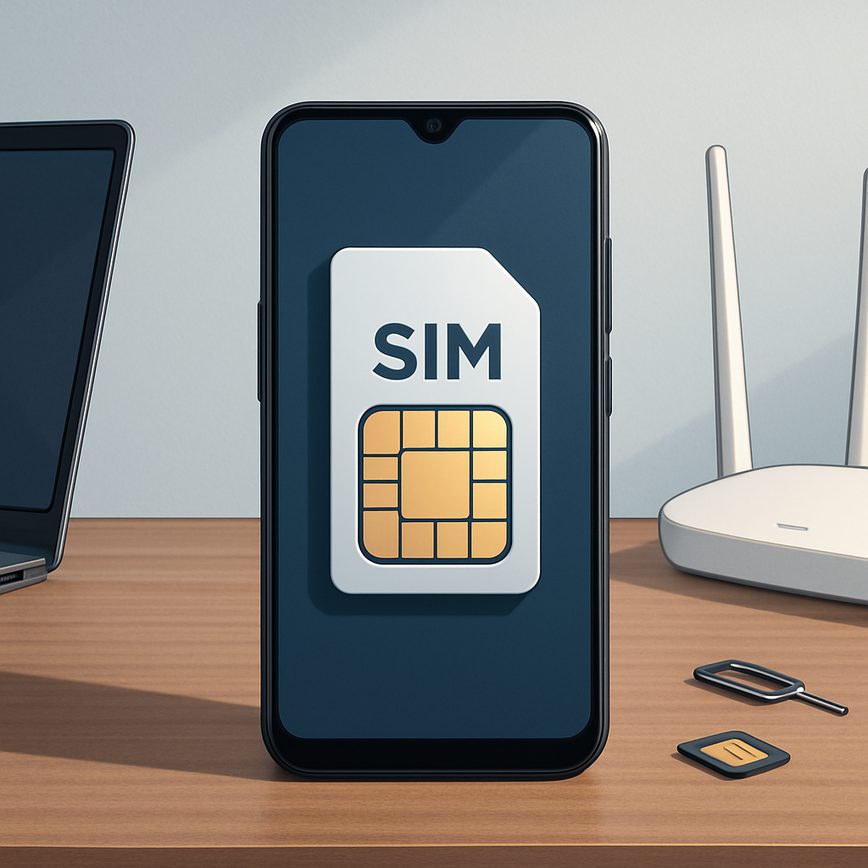
Why eSIM is important for global connectivity
27/03/2026
Understanding eSIM Technology
eSIM technology, also known as embedded SIM or digital SIM, represents a significant advancement in mobile technology. Unlike traditional SIM cards, which are physical chips that users insert into their mobile devices, an eSIM is embedded directly into the device’s hardware. This embedded SIM is programmable remotely, allowing users to activate and switch between mobile network operators without needing to replace a physical card.
The core difference between an eSIM and a traditional SIM card lies in its physical form and flexibility. Traditional SIM cards are removable, small plastic cards containing a unique identification code used to authenticate the subscriber on a cellular network. Users must manually insert and replace these cards when changing service providers or traveling internationally. In contrast, an eSIM eliminates the need for physical swapping by offering a software-based solution embedded within the device’s circuitry.
Technically, the eSIM operates through an integrated circuit soldered onto the device’s motherboard. This embedded chip stores multiple carrier profiles, which can be remotely provisioned, managed, and updated via Over-the-Air (OTA) technology. This capability means users can download a new mobile network profile or switch between carriers with ease, straight from their device settings, without needing to visit a physical store or wait for a SIM card to be delivered.
The adoption of eSIM technology is driven by its convenience, security, and improved device design. Since the SIM is embedded, manufacturers can design more compact and waterproof devices without the limitations imposed by traditional SIM card slots. Additionally, for consumers and businesses alike, the ability to instantly switch mobile operators or use multiple profiles on the same device offers unparalleled connectivity and flexibility in an increasingly globalized world.
In summary, eSIM technology revolutionizes the way mobile devices connect to cellular networks by replacing physical SIM cards with a digital, embedded solution. This advancement not only simplifies network switching but also enhances mobile technology by supporting more versatile, secure, and streamlined connectivity options worldwide.
What is an eSIM?
The eSIM, short for embedded SIM, represents the latest evolution in SIM card technology. Unlike traditional physical SIM cards, which are removable chips inserted into a device, an eSIM is a digital SIM that is embedded directly into the hardware of a smartphone, tablet, or other connected devices. This innovation eliminates the need for a physical card slot, making devices slimmer and more durable.
With the eSIM definition in mind, it operates through software that allows users to activate a cellular plan without physically swapping SIM cards. This means users can switch carriers or service plans at any time with ease, simply by downloading a profile provided by the mobile network operator. The embedded SIM is rewritable, enabling seamless management of multiple lines or carriers on a single device without the inconvenience of handling physical cards.
This shift in SIM card evolution from physical to embedded technology not only enhances user convenience but also supports the increasing demand for global connectivity. Devices equipped with eSIMs can connect to networks worldwide without needing to purchase and insert new SIM cards at each destination, making it ideal for travelers and IoT devices. Overall, the eSIM stands as a significant advancement in how devices communicate and connect in the digital age.
How eSIM Works
The operation of eSIM technology centers on its ability to be remotely provisioned and activated without the need for a physical SIM card swap. The eSIM is embedded directly into a device’s hardware and can hold multiple carrier profiles securely. When a user wants to activate an eSIM, the activation process begins by downloading a carrier profile over the air from the mobile network operator’s server. This is made possible through remote SIM provisioning, a standardized process governed by the GSMA.
Remote SIM provisioning allows the user to switch carriers or plans digitally without physical intervention, simplifying global connectivity. The device’s eSIM chip communicates with the carrier’s network infrastructure to securely authenticate and install the profile. This eliminates the traditional delays and logistics involved with physical SIM distribution. Once the profile is installed, the eSIM takes over the device’s network management, enabling seamless connection to the mobile network just as a regular SIM would.
The eSIM operation includes managing multiple profiles that can be stored simultaneously, though only one is active at a time. Users can toggle between these profiles on their devices, making it especially convenient for travelers who need local connectivity without changing SIM cards. This flexibility and ease in the activation process underline the importance of eSIM technology in modern global communications.
Benefits of eSIM for Global Connectivity
In today’s interconnected world, global connectivity has become essential, especially for international travelers and businesses. One of the most significant advancements in achieving this seamless connection is the eSIM technology. eSIM benefits are many and fundamentally reshape how users can access mobile networks across borders without the hassle of physical SIM cards.
First and foremost, eSIMs facilitate effortless network switching. Instead of physically swapping SIM cards when moving between countries, users can remotely switch to a local carrier’s profile. This instant activation supports continuous service worldwide, eliminating downtime and the need to carry multiple SIM cards. For global connectivity, this means travelers can enjoy reliable data and voice services regardless of location.
Another key advantage lies in cost efficiency. International travel often involves hefty roaming fees, but eSIMs allow users to subscribe to local plans directly from their device without the need to visit a store or purchase a new SIM. This flexibility optimizes spending and helps avoid surprising charges, making eSIM an economical choice for those regularly crossing borders.
Furthermore, eSIMs enhance device security and convenience. As eSIM profiles are digitally managed, users reduce the risks associated with losing or damaging physical SIM cards. Additionally, the digital nature of eSIMs simplifies managing multiple numbers or carriers on a single device, which is especially advantageous for business travelers who need to separate personal and work communications efficiently.
The environmental impact is also notable; eliminating physical SIM cards reduces plastic waste and manufacturing emissions. As global connectivity grows, embracing eSIM technology supports sustainability alongside technological progress, making it a forward-thinking solution.
In summary, the eSIM benefits in global connectivity include seamless and immediate network switching, cost savings on international travel, enhanced security, and environmental friendliness. These advantages collectively empower users to stay connected around the world with unprecedented ease and flexibility, positioning eSIM as a critical component in the future of global communication.
Seamless International Roaming
eSIM technology revolutionizes international roaming by allowing users to switch carriers effortlessly while traveling across countries, eliminating the need for physical SIM swaps. With traditional SIM cards, travelers often face the inconvenience of purchasing and inserting local SIM cards in each destination to avoid exorbitant roaming charges. However, eSIM travel simplifies this process by embedding multiple carrier profiles directly onto a single digital SIM chip within the device.
This advancement enables users to connect to a global mobile network instantly. When crossing borders, travelers can activate new carriers or plans with a few taps on their device, choosing from a range of local or international providers that best suit their data and calling needs. The seamless switch enhances connectivity without interruption, ensuring continuous access to mobile services regardless of location.
Moreover, eSIM travel offers unprecedented flexibility and cost-efficiency. Instead of juggling physical SIM cards, users manage their connections remotely via the device’s settings or dedicated apps. This autonomy also reduces electronic waste associated with traditional SIM cards. In essence, eSIM boosts global mobility by bridging connectivity gaps between different mobile networks, making international roaming simpler, faster, and more reliable than ever before.
Flexibility and Convenience
The eSIM technology revolutionizes how users manage their mobile subscriptions by enabling multiple carrier profiles on a single device. This flexibility means that instead of swapping physical SIM cards, users can seamlessly switch between different carrier profiles stored digitally on their device. Whether traveling internationally or balancing personal and work plans, eSIM offers unmatched convenience.
Flexible subscriptions are one of the standout benefits of eSIM. Users can activate, deactivate, or change carriers without physically visiting a store or waiting for a new SIM card to arrive. This digital approach simplifies managing multiple plans, catering to diverse connectivity needs without the hassle of juggling several physical SIMs.
Moreover, eSIM supports multiple profiles on one device, allowing users to maintain different phone numbers and data plans simultaneously. This capability is particularly useful for frequent travelers and professionals who want to separate personal and business communications without carrying multiple phones. The convenience of managing all these profiles through an intuitive interface enhances the overall user experience.
In summary, the eSIM convenience lies in its ability to combine flexibility and ease of use. By supporting flexible subscriptions and multiple carrier profiles within a single device, it empowers users to stay connected effortlessly, no matter where they are or what their connectivity needs entail.
Future Implications of eSIM in Global Networks
The future of eSIM technology holds transformative potential for global mobile networks and the broader landscape of emerging technologies. As eSIM adoption becomes more widespread, it is poised to redefine how mobile connectivity is managed, offering unprecedented flexibility and efficiency to both consumers and network operators. Unlike traditional SIM cards, eSIMs are embedded directly into devices and can be programmed remotely, which significantly accelerates the ease with which users can switch carriers or plans without physical limitations.
One of the most impactful future implications of eSIM is its role in network evolution. Mobile networks can become more agile and responsive, dynamically optimizing service delivery as users move across regions and networks. This flexibility encourages operators to innovate new pricing models and service bundles, fostering a competitive and consumer-friendly marketplace. Moreover, by reducing reliance on physical SIM distribution, the environmental footprint associated with manufacturing and shipping SIM cards can be minimized, supporting greener telecommunications.
The proliferation of IoT devices further amplifies the importance of eSIM in global connectivity. As billions of connected devices—from smart home appliances to industrial sensors—continue to grow in number, the ability to activate and manage connectivity remotely becomes critical. eSIM technology simplifies large-scale deployment and management of IoT devices by enabling seamless network provisioning without the logistical challenges of physical SIM replacements. This efficiency is key to accelerating digital transformation across industries such as healthcare, transportation, and smart cities.
Furthermore, eSIM’s integration with 5G and future mobile network standards supports advanced use cases requiring reliable, persistent connections with high bandwidth and low latency. As mobile networks evolve, the secure and programmable nature of eSIMs will facilitate better network slicing and personalized connectivity experiences tailored to individual or enterprise needs. This advancement paves the way for more sophisticated applications like augmented reality (AR), virtual reality (VR), and autonomous systems that depend on robust and seamless mobile communication.
In summary, the future of eSIM is intertwined with the evolution of global mobile networks and the expansion of IoT ecosystems. By enabling more flexible, scalable, and sustainable connectivity solutions, eSIM technology is positioned to be a cornerstone in the next generation of digital innovation and network architecture. Its widespread adoption will not only enhance user experience but also empower industries to harness the full potential of connected technologies worldwide.
Impact on Internet of Things (IoT)
The integration of eSIM technology is revolutionizing the way connected devices operate within the Internet of Things (IoT) ecosystem. eSIM IoT solutions enable seamless and reliable connectivity, allowing devices to maintain network access without the need for physical SIM cards. This flexibility is crucial for managing the vast and growing number of connected devices worldwide.
With eSIM IoT, businesses and service providers can remotely provision and manage IoT connectivity, drastically simplifying deployment and reducing operational costs. This remote management capability ensures that devices remain securely connected, regardless of geographic location or network changes, leading to enhanced global IoT connectivity.
Moreover, the compact size and embedded nature of eSIMs make them ideal for small or hard-to-reach devices. This facilitates the expansion of IoT applications in industries such as smart cities, healthcare, automotive, and agriculture. By leveraging eSIM technology, these sectors can scale their connected devices effortlessly, optimizing performance and data collection.
In summary, eSIM IoT technology is a key enabler for efficient and scalable IoT connectivity. It supports the seamless operation of connected devices around the globe, enhancing their management and enabling robust, flexible, and secure connections essential for the future of the Internet of Things.
Advancements in Network Management
eSIM technology is revolutionizing network management by simplifying the process of network provisioning. Traditional SIM cards require physical swapping and manual activation, which can be time-consuming and prone to errors. eSIMs eliminate these challenges by allowing remote provisioning, enabling users and providers to activate or switch network profiles digitally without the need for a physical card. This streamlining of activation processes significantly reduces operational overhead and enhances user experience.
Moreover, eSIM technology facilitates stronger carrier partnerships. By enabling seamless, over-the-air provisioning, carriers can easily collaborate to offer more flexible and competitive service plans. This fosters an environment of cooperation rather than competition, where carriers can quickly onboard roaming agreements and provide global coverage more efficiently. Such partnerships can lead to better pricing, improved service quality, and expanded network reach for consumers worldwide.
In addition to simplifying provisioning and boosting carrier partnerships, eSIM enhances overall network efficiency. Networks can better manage resources by dynamically allocating profiles based on real-time demand and performance metrics. This adaptability results in optimized bandwidth usage and improved load balancing. As a result, the network infrastructure becomes more resilient, scalable, and capable of supporting the increasing demands of a connected global population.
Overall, eSIM-driven advancements in network management are key to building a more flexible, efficient, and interconnected telecommunications ecosystem—benefiting providers and consumers alike.

I’m a lifelong traveler who fell in love with the freedom that eSIM technology offers. Exploring new places while staying seamlessly connected has become my personal mission, and I love sharing practical tips on managing mobile data abroad. When I’m not testing the latest eSIM platforms, I’m mapping out the next adventure.