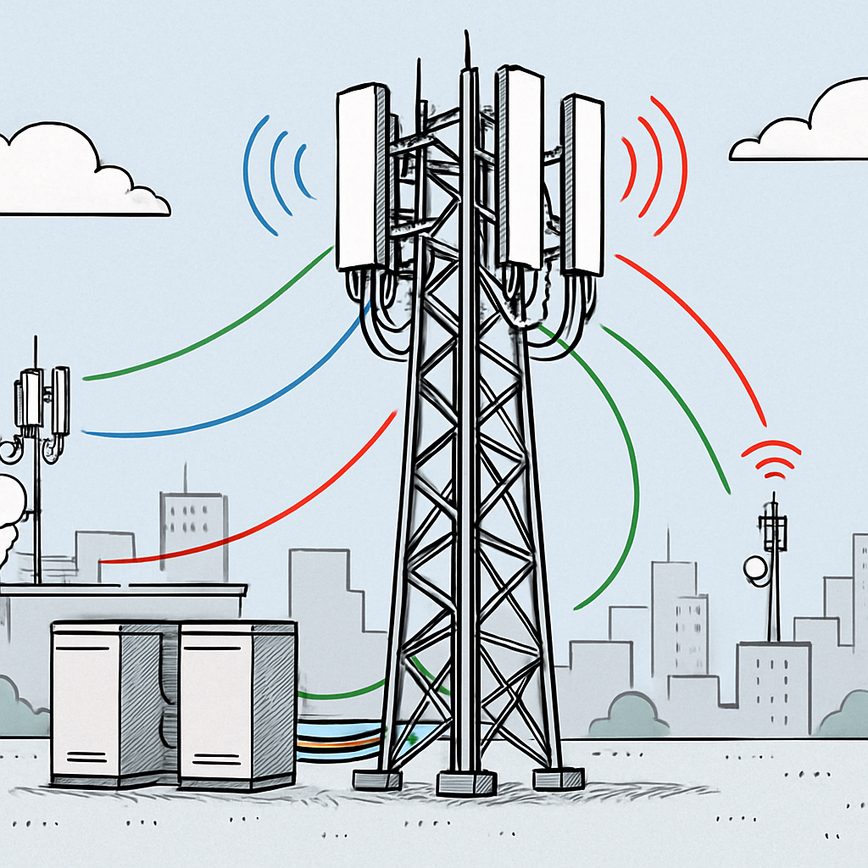
Understanding mobile connectivity architecture
27/05/2026
Introduction to Mobile Connectivity Architecture
Mobile connectivity architecture forms the backbone of modern communication, enabling seamless interaction between devices and networks. This architecture is a complex framework that integrates various components to ensure efficient and reliable mobile connectivity. Understanding mobile connectivity, therefore, is essential for grasping how network architecture supports the growing demand for mobile networks worldwide.
At its core, mobile connectivity architecture is designed to facilitate the transmission of data between mobile devices and network infrastructures. This includes everything from smartphones and tablets to IoT devices that require constant connectivity. The architecture is responsible for managing connections, ensuring data integrity, and optimizing the flow of information across mobile networks. It plays a critical role in delivering services such as voice calls, internet access, messaging, and multimedia streaming.
The importance of mobile connectivity cannot be overstated as it drives the digital economy and supports numerous applications that people rely on daily. Network architecture provides the structural foundation to handle the increasing number of mobile users and the vast amount of data generated. By efficiently orchestrating communication between devices and network nodes, mobile connectivity architecture ensures high performance, low latency, and extensive coverage.
On a high level, mobile networks consist of several key components that work together to establish and maintain connectivity. These include the user equipment (UE), such as mobile phones; the Radio Access Network (RAN), which manages the wireless connections between UEs and the network; the core network, which handles data routing, switching, and service delivery; and external networks, such as the internet. Each component has a specific function that contributes to the overall system’s efficiency and robustness.
Understanding these components and their interaction provides a connectivity overview that highlights how mobile networks maintain continuous service, even with mobile users transitioning between different cells and network technologies. This architectural complexity ensures that mobile devices remain connected, providing users with reliable, uninterrupted access wherever they go.
Fundamental Components of Mobile Networks
Mobile networks rely on several fundamental components to ensure seamless connectivity and communication. One of the key elements is the base stations, which act as the primary points of contact between the network infrastructure and mobile devices. These stations transmit and receive radio signals, enabling data and voice communication over the air.
Mobile devices such as smartphones, tablets, and IoT gadgets connect to base stations to access network services. They initiate communication by sending signals that are picked up by nearby base stations, facilitating mobility by allowing users to move freely while maintaining connectivity.
The core network serves as the backbone of mobile connectivity, managing data routing, authentication, and service delivery. It interlinks base stations and ensures the efficient transfer of information across different parts of the network and the wider internet. This network infrastructure is critical in supporting various services such as voice calls, text messaging, and mobile internet access.
Together, these components—base stations, mobile devices, and the core network—form the essential elements of mobile networks. The base stations provide the interface to mobile devices, which rely on the robust network infrastructure to maintain continuous and reliable connectivity across wide geographic areas. Understanding these components is vital to appreciating how mobile connectivity functions and supports modern communication needs.
Evolution of Mobile Network Technologies
The evolution of mobile network technologies from 2G to 5G marks significant architectural changes and improvements in connectivity and data transmission. The journey began with 2G networks, which introduced digital voice communication, replacing the analog systems. 2G networks utilized circuit-switched architecture primarily optimized for voice, with limited data capabilities such as SMS.
With the advent of 3G, the network architecture shifted towards supporting higher data rates and multimedia services. 3G networks introduced packet-switched data alongside circuit-switched voice, enabling internet access and video calls with improved latency and bandwidth compared to 2G.
The 4G generation brought a transformative change with an all-IP network architecture designed for high-speed data transmission and low latency. Unlike its predecessors, 4G networks support seamless mobile broadband, enabling advanced applications like HD video streaming, online gaming, and real-time communication through technologies such as LTE and WiMAX.
Currently, 5G technology is revolutionizing mobile connectivity by introducing enhanced architecture focused on ultra-reliable low latency communication (URLLC), massive machine-type communications (mMTC), and enhanced mobile broadband (eMBB). It leverages network slicing, edge computing, and massive MIMO to deliver unparalleled data speeds, connectivity density, and energy efficiency, further advancing the capabilities introduced by earlier network generations.
Key Layers in Mobile Connectivity Architecture
Mobile connectivity architecture is structured around several essential protocol layers, each playing a vital role in ensuring smooth and efficient communication within mobile networks. These layers work together cohesively to handle everything from physical signal transmission to complex network management, forming the backbone of mobile connectivity systems.
The physical layer is the foundational layer in mobile connectivity architecture. It is responsible for the actual transmission and reception of raw data bits over a physical medium. This includes handling radio frequency signals, modulation, demodulation, and encoding of data to enable wireless communication between devices and cellular towers. Its primary function is to facilitate the electrical and mechanical aspects required for data transmission across the air interface.
Above the physical layer lies the data link layer, which ensures that data frames are transmitted error-free between neighboring network nodes. This layer manages the establishment, maintenance, and termination of logical links. It also provides error detection and correction mechanisms, flow control, and frame synchronization, ensuring reliable data transfer. In mobile networks, the data link layer is crucial for handling dynamic changes in signal quality and mobility.
The network layer handles the routing and forwarding of data packets across the entire mobile network. It manages logical addressing and determines the best paths for data to travel from the source to the destination. This layer is responsible for handover management, mobility support, and maintaining connectivity as devices move between different cell sites or geographic locations. Its efficient operation is fundamental to maintaining seamless communication in mobile environments.
These protocol layers—physical, data link, and network—are part of a broader stack of protocol layers working together within mobile connectivity architecture. Each layer abstracts specific functions and interfaces with adjacent layers, allowing for modular design and easier troubleshooting. Together, they ensure data integrity, efficient transmission, and reliable connection management, which are critical for delivering high-quality mobile services to end users.
Understanding these key layers is essential for comprehending how mobile networks operate, how data moves within them, and how different technologies integrate to support the vast array of mobile applications and services that users depend on daily.
Physical and Data Link Layers
The physical layer in mobile connectivity architecture is primarily concerned with the radio interface, which facilitates the transmission of signals between mobile devices and network infrastructure. This layer defines the electrical, mechanical, and procedural aspects of signal transmission, including modulation, frequency selection, and power control, ensuring that data can traverse the wireless medium effectively. The radio interface is crucial because it directly affects the quality and reliability of the wireless connection, handling the conversion of digital data into radio waves and vice versa.
Above the physical layer lies the data link layer, which plays a vital role in ensuring reliable data transfer and managing the connection between devices. This layer is responsible for controlling how data packets are framed, addressed, and checked for errors. Link control protocols at this level ensure that any noise or signal degradation during transmission does not result in data corruption, providing mechanisms for error detection and correction. Additionally, the data link layer oversees flow control, ensuring that devices do not overwhelm each other with too much data at once.
Together, the physical and data link layers create the foundation for robust communication in mobile networks. While the physical layer deals with the actual transmission of signals via the radio interface, the data link layer guarantees that data is delivered accurately and in order through link control mechanisms, making mobile connectivity dependable for higher-layer protocols and applications.
Network and Transport Layers
The network and transport layers play crucial roles in mobile connectivity architecture by ensuring efficient routing, mobility management, and reliable data transfer over IP protocols. At the network layer, routing is essential for directing data packets between devices and networks, especially as mobile users move across different access points and networks. Mobility management mechanisms enable seamless handoffs without loss of connectivity, maintaining ongoing sessions despite changes in network attachment points.
Mobile IP protocols are designed to support this dynamic environment by assigning a permanent IP address to each device, while allowing it to communicate through various temporary addresses as it moves. This flexibility ensures uninterrupted service and proper packet delivery paths. Additionally, mobility management helps coordinate signaling and location updates so that the network is aware of the user’s current point of attachment, optimizing routing decisions and reducing latency.
At the transport layer, protocols such as TCP and UDP handle the complexities of managing mobile data traffic. TCP, with its connection-oriented features, provides reliable data transmission with error correction and flow control. However, mobility can introduce challenges like varying latency and packet loss, which impact TCP performance. UDP, being connectionless, is often used for real-time applications where low latency is more critical than reliability. Transport layer protocols may also incorporate enhancements or optimizations to better support mobility, such as faster retransmissions and adaptive congestion control.
Challenges and Future Trends in Mobile Connectivity Architecture
Mobile connectivity architecture is continuously evolving, yet it faces several significant network challenges that must be addressed to meet growing user demands. One of the primary challenges is latency, which affects the responsiveness of applications and services that rely on real-time data transmission. Reducing latency is crucial for applications such as augmented reality, autonomous vehicles, and remote surgery, where even milliseconds can impact performance and safety.
Coverage remains another persistent challenge. Despite advances in cellular networks, certain geographic areas still experience limited or inconsistent connectivity, impacting user experience and operational efficiency. Factors such as terrain, infrastructure limitations, and population density contribute to these coverage gaps, which network providers strive to minimize through innovative deployments like small cells and satellites.
The arrival of 5G has marked a significant step forward in addressing many of these issues. With enhanced bandwidth, improved reliability, and ultra-low latency capabilities, 5G networks provide a foundation for advanced mobile connectivity solutions. Key 5G enhancements include network slicing, which allows operators to create dedicated virtual networks for specific applications, offering better performance and security tailored to diverse needs.
Looking ahead, the future technology of 6G is already in early-stage research and development. Promising to surpass 5G in speed, capacity, and intelligence, 6G aims to integrate artificial intelligence directly into the network architecture, enabling highly adaptive and predictive network management. It is expected to support new use cases such as holographic communications, pervasive sensing, and seamless integration of terrestrial and non-terrestrial networks, pushing the boundaries of mobile connectivity further.
In summary, while network challenges like latency and coverage continue to test mobile connectivity architecture, ongoing advancements in 5G are addressing these issues effectively. Simultaneously, the upcoming 6G networks represent a transformative leap, promising to redefine connectivity standards and unlock unprecedented technological possibilities in the near future.
Common Challenges in Mobile Network Design
Mobile network design faces several common challenges that directly affect user experience and network efficiency. One of the major issues is latency, which refers to the delay in data transmission across the network. High latency can disrupt real-time applications such as video calls and online gaming, making seamless connectivity difficult to achieve. This delay often results from long signal paths and processing times in the network infrastructure.
Coverage issues present another critical challenge. Mobile networks may have gaps where the signal weakens or drops entirely, especially in rural or obstructed urban areas. These coverage gaps can lead to dropped calls, slow data speeds, and an inconsistent connection, frustrating users and limiting network reliability. Addressing these issues involves strategic placement of cell towers and utilizing advanced technologies like small cells and repeaters.
Security is a continuous concern in mobile networks, as they are vulnerable to attacks such as eavesdropping, data interception, and unauthorized access. Ensuring data privacy and protecting network infrastructure requires robust encryption methods, secure authentication protocols, and continuous monitoring for vulnerabilities to safeguard both user data and network integrity.
Scalability is also a significant limitation in mobile connectivity, especially as the number of connected devices grows exponentially. Networks must be designed to handle increased traffic without performance degradation. Scalability challenges demand flexible architecture and investment in technologies like network slicing and cloud-native solutions to support future growth effectively.
Emerging Technologies and Innovations
The rapid evolution of mobile connectivity is being driven by groundbreaking advancements, particularly in 5G technology which continues to enhance speed, latency, and reliability across global networks. As 5G adoption grows, it paves the way for transformative applications, from smart cities to autonomous vehicles, fundamentally altering how devices and users interact.
Looking ahead, 6G development promises to push the boundaries even further with anticipated capabilities such as terahertz communication and ultra-intelligent network orchestration. While still in its infancy, 6G aims to create an even more immersive, interconnected digital experience, supporting seamless integration across diverse environments.
Integral to this future landscape is the Internet of Things (IoT) integration, which connects an expanding array of devices, sensors, and systems to the mobile network. This integration enhances data collection and automation, enabling smarter resource management and more personalized services. The synergy between IoT and advanced mobile connectivity is crucial for sectors like healthcare, manufacturing, and transportation.
Network virtualization techniques also play a pivotal role in this evolution, allowing for more flexible, scalable, and efficient network management. By abstracting hardware resources into virtual networks, operators can dynamically allocate bandwidth, enhance security, and optimize performance tailored to specific applications and user demands. Together, these emerging technologies form the cornerstone of a more connected and innovative wireless future.

I’m a lifelong traveler who fell in love with the freedom that eSIM technology offers. Exploring new places while staying seamlessly connected has become my personal mission, and I love sharing practical tips on managing mobile data abroad. When I’m not testing the latest eSIM platforms, I’m mapping out the next adventure.